
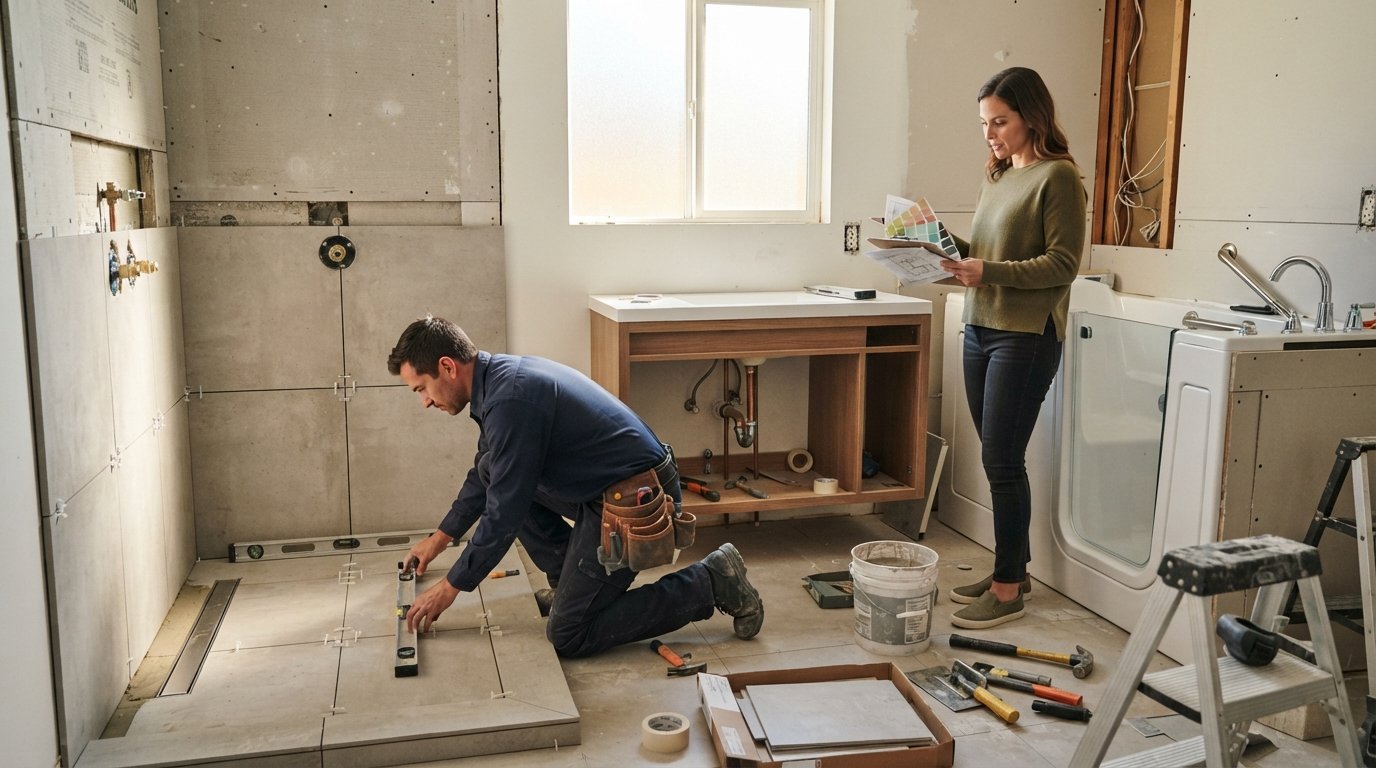
Walk In Tub vs Curbless Shower: Cost Comparison Guide
Compare walk in tub vs curbless shower cost comparison, from $2,500 to $20,000 installed. Call 8333658755 for free local estimates and save.

By Leo Cross
Learn more about Shower and Bathtub Installation or Replacement for guides, costs, and what to expect.
Compare Shower and Bathtub Installation or Replacement Pros Near You

Enter your ZIP code to compare top-rated local professionals and request free quotes.
Choosing between a walk in tub and a curbless shower is one of the most consequential decisions you will make during a bathroom remodel. Both options promise safer access, easier cleaning, and long term independence, but their price tags, installation requirements, and long term value diverge sharply. A homeowner in Ohio might pay $6,500 for a curbless shower conversion, while a neighbor in California could spend $18,000 on a comparable walk in tub setup with electrical and plumbing upgrades. Understanding why those numbers swing so wildly, and what you actually get at each price point, is the difference between a smart investment and a painful surprise.
This walk in tub vs curbless shower cost comparison breaks down real world pricing, hidden expenses, and the factors that push estimates up or down. Whether you are aging in place, recovering from surgery, or simply upgrading a guest bath, the goal is the same: get the right fixture for your body, your budget, and your home's structure. BuySellRemodel helps homeowners compare local contractor quotes so you can see these numbers in your own market before committing.
Typical Cost Ranges for Walk In Tubs and Curbless Showers
Walk in tubs generally cost between $3,000 and $12,000 for the unit alone, with full installed projects landing between $6,000 and $20,000 depending on size, hydrotherapy features, and whether a heater or air jets are added. Curbless showers, by contrast, typically run $2,500 to $8,000 for materials and installation, though high end tile work or structural floor modifications can push that figure past $15,000. The gap narrows when you compare apples to apples: a basic walk in tub with minimal features versus a fully tiled curbless shower with a linear drain and frameless glass.
Several variables explain why two quotes for the same project type can differ by thousands of dollars. Labor rates vary by region, with coastal cities often charging 40 to 60 percent more than the national average. The condition of your existing subfloor matters enormously: a curbless shower requires the floor to be recessed or built up, which may mean cutting joists or pouring a new slab. Walk in tubs are heavier and need reinforced flooring plus a dedicated electrical circuit for pumps and heaters. Permits, water damage repair, and accessibility modifications each add their own line items.
Here is a quick comparison of the core cost categories you will encounter:
- Unit or base materials: Walk in tub $3,000 to $12,000; Curbless shower base and tile $1,200 to $4,500
- Labor and installation: Walk in tub $2,000 to $6,000; Curbless shower $2,500 to $7,000
- Plumbing modifications: Walk in tub $500 to $2,500; Curbless shower $800 to $3,000
- Electrical work: Walk in tub $400 to $1,500; Curbless shower $0 to $800
- Permits and disposal: Walk in tub $150 to $600; Curbless shower $200 to $700
Those ranges assume no major surprises behind the walls. If you discover mold, rotten subfloor, or outdated wiring, expect to add 15 to 30 percent to either project. This is why getting at least three local estimates matters more than comparing national averages. A contractor who inspects your crawlspace or basement can give you a realistic number, while an online calculator cannot.
What Drives the Price Up or Down for Each Option
Walk in tubs carry costs that curbless showers do not. The tub itself is a large, heavy fixture that often requires a wider doorway or a removable door frame to bring inside. It needs a dedicated 20 amp circuit for the pump, heater, and any LED lighting. The door seal and latch mechanism are mechanical parts that wear out, so you should budget for occasional repairs. Hydrotherapy jets, chromotherapy lights, and heated seats can add $2,000 to $5,000. On the other hand, a walk in tub replaces both a tub and a shower, potentially saving you the cost of a separate shower stall in a small bathroom.
Curbless showers save money on the fixture but spend it on the floor. To eliminate the curb, the shower floor must slope to a drain without a raised lip. In a wood framed house, that usually means notching or sistering joists to recess the shower pan, a job that requires a skilled carpenter and a plumber working together. In a slab on grade home, the concrete must be chipped out and a new drain line run. Linear drains cost more than standard center drains but allow for a gentler slope and a more modern look. Frameless glass panels, tile selection, and waterproofing membranes also influence the final bill.
Regional labor markets are another major factor. In areas with a high cost of living, plumbers and electricians charge $100 to $200 per hour, while rural areas may see $60 to $90 per hour. The complexity of your existing plumbing also matters. Moving a drain a few feet is far cheaper than relocating it across the room. If your bathroom is on a second floor, both projects require careful waterproofing to avoid damaging the ceiling below, and that adds labor time.
For homeowners planning a larger renovation, it helps to understand how bathroom costs fit into the broader project budget. Our guide on basement waterproofing methods and cost comparison explains how water management expenses can overlap with bathroom remodels, especially when moisture issues are present.
Installation Complexity and Hidden Expenses
Walk in tub installation looks straightforward on paper: remove the old tub, set the new one, connect the plumbing, and wire the pump. In practice, the tub often does not fit through the bathroom door, requiring the door frame to be removed or a wall opened. The floor may need reinforcement to handle 500 to 800 pounds when filled with water and a person. The electrical work must meet code for wet locations, including GFCI protection and proper grounding. If your water heater is undersized, you may need to upgrade it to fill a 60 to 80 gallon tub, which adds $800 to $2,000.
Curbless showers present a different set of challenges. The most common hidden cost is floor framing modification. A contractor may need to cut joists and install a new header, which requires a structural engineer's approval in some jurisdictions. Waterproofing is critical: a failed membrane can lead to thousands of dollars in rot and mold repair. The slope of the shower floor must be precise, typically a quarter inch per foot, or water will pool. Glass panels must be measured and tempered, and a frameless enclosure can cost $1,500 to $3,500 on its own.
Permits are another area where costs sneak up. Many municipalities require a plumbing permit and an electrical permit for either project. Some require a building permit if you are altering the floor structure for a curbless shower. Permit fees range from $100 to $500 depending on the scope. Skipping permits can save money upfront but creates problems when you sell the home, as unpermitted work may need to be torn out or retroactively approved at a higher cost.
To keep hidden expenses under control, follow these steps before signing a contract:
- Ask the contractor to inspect the subfloor and joist structure during the estimate, not after demolition.
- Confirm whether the quoted price includes permit fees, disposal of the old fixture, and any required electrical upgrades.
- Request a written scope of work that lists every material and labor item, including waterproofing and drain type.
- Set aside a contingency fund of 15 to 20 percent of the project cost for unexpected repairs.
- Verify that the contractor carries liability insurance and workers compensation coverage.
These steps apply to both options, but they are especially important for curbless showers where structural work is common. A thorough estimate now prevents a budget crisis later.
Long Term Value, ROI, and Resale Impact
Walk in tubs are often marketed as a safety solution for aging in place, and they do deliver on that promise. However, their resale value is mixed. Some buyers see them as a medical fixture that takes up too much space and is difficult to clean. Others appreciate the accessibility. In general, a walk in tub will not increase your home's value enough to recoup its cost, but it may make the home easier to sell to a specific demographic. The same is true for curbless showers: they appeal to modern buyers and those with mobility concerns, but the ROI depends on the overall bathroom design.
Curbless showers tend to have a slight edge in resale because they read as a luxury feature rather than a medical device. A well executed curbless shower with large format tile and a frameless glass panel looks like a spa, not a hospital. Walk in tubs, even high end models with jets and lights, often look bulky. That said, if the walk in tub allows a homeowner to stay in their home longer, the personal value far outweighs resale concerns.
Maintenance costs also differ. Walk in tubs have door seals, gaskets, and pumps that may need repair every few years. Curbless showers have fewer mechanical parts, but the grout and tile require sealing and cleaning to prevent mold. A linear drain needs periodic cleaning to avoid clogs. Over a 10 year period, you might spend $500 to $1,500 on walk in tub repairs and $300 to $800 on curbless shower maintenance.
Financing options can make either project more affordable. Some contractors offer payment plans, and specialty lenders provide home improvement loans with fixed rates. If you are comparing quotes, ask each contractor about financing and whether they partner with a lender. BuySellRemodel can connect you with local pros who offer free estimates and transparent pricing, so you can compare offers side by side.
When you are ready to hire, look for a contractor who specializes in bathroom accessibility. General remodelers can do the work, but a specialist will know the code requirements for grab bars, slip resistant flooring, and proper drainage. You can also visit HomeRemodelingsContractors for more resources on planning affordable home improvement projects and finding experienced local contractors.
How to Choose Based on Your Budget and Needs
The right choice depends on three factors: your mobility needs, your bathroom layout, and your budget. If you have trouble stepping over a tub wall, a walk in tub gives you a seated bathing option with a door that swings open. If you prefer showering and want a seamless floor, a curbless shower is the better fit. If you have a small bathroom, a curbless shower may free up space because it eliminates the tub footprint. If you need hydrotherapy for muscle pain, a walk in tub with jets is the only option that provides that feature.
Budget wise, curbless showers are usually less expensive upfront, especially if your floor structure allows a simple recessed pan. Walk in tubs cost more but may be partially covered by insurance if deemed medically necessary. Check with your insurer before assuming you will pay out of pocket. Some Medicare Advantage plans and VA benefits also cover accessibility modifications. Documentation from a doctor stating that the tub is needed for a medical condition can strengthen your case.
Consider the following decision framework:
- Choose a walk in tub if: You need seated bathing, hydrotherapy, or a door instead of a threshold, and you have a reinforced floor plus space for a larger fixture.
- Choose a curbless shower if: You prefer standing showers, want a modern look, have a smaller bathroom, or want to minimize mechanical maintenance.
- Consider a hybrid: A curbless shower with a fold down bench and grab bars offers accessibility without the bulk of a tub.
Whichever you choose, get at least three written estimates. Ask each contractor how they handle unexpected water damage, whether they pull permits, and what warranty they provide on labor and materials. A low bid that excludes waterproofing or electrical work is not a bargain. A higher bid that includes a detailed scope and a solid warranty is often the better value.
Finally, think about how long you plan to stay in the home. If this is your forever home, invest in the option that best meets your long term health needs. If you plan to sell within five years, a curbless shower may appeal to more buyers. Either way, the cost comparison is not just about the sticker price: it is about safety, comfort, and peace of mind.
Use the numbers in this guide as a starting point, then get local quotes to see how they apply to your home. With careful planning and a vetted contractor, you can create a bathroom that works for you today and tomorrow.