
Smart Home Security Systems That Add Resale Value
Smart home security systems that add resale value start with clean wiring and clear documentation. Call (833)-365-8755 for local pro help.

By Liam Weston
Learn more about Home Security and Alarms Install for guides, costs, and what to expect.
Compare Home Security and Alarms Install Pros Near You

Enter your ZIP code to compare top-rated local professionals and request free quotes.
When you list your home, every upgrade gets judged by a simple question: will the next owner pay more for this? Smart home security systems that add resale value pass that test because they solve a real problem (protection and peace of mind) without creating new headaches for the buyer. The wrong system, however, can look like clutter, a subscription trap, or a privacy risk. The difference usually comes down to wiring, documentation, and which features buyers actually ask about during showings.
This guide breaks down what appraisers, agents, and buyers look for in a security setup, how wired and wireless systems compare for resale, and how to install smart home security in a way that raises your asking price instead of raising questions.
Why Buyers Pay More for the Right Security Setup
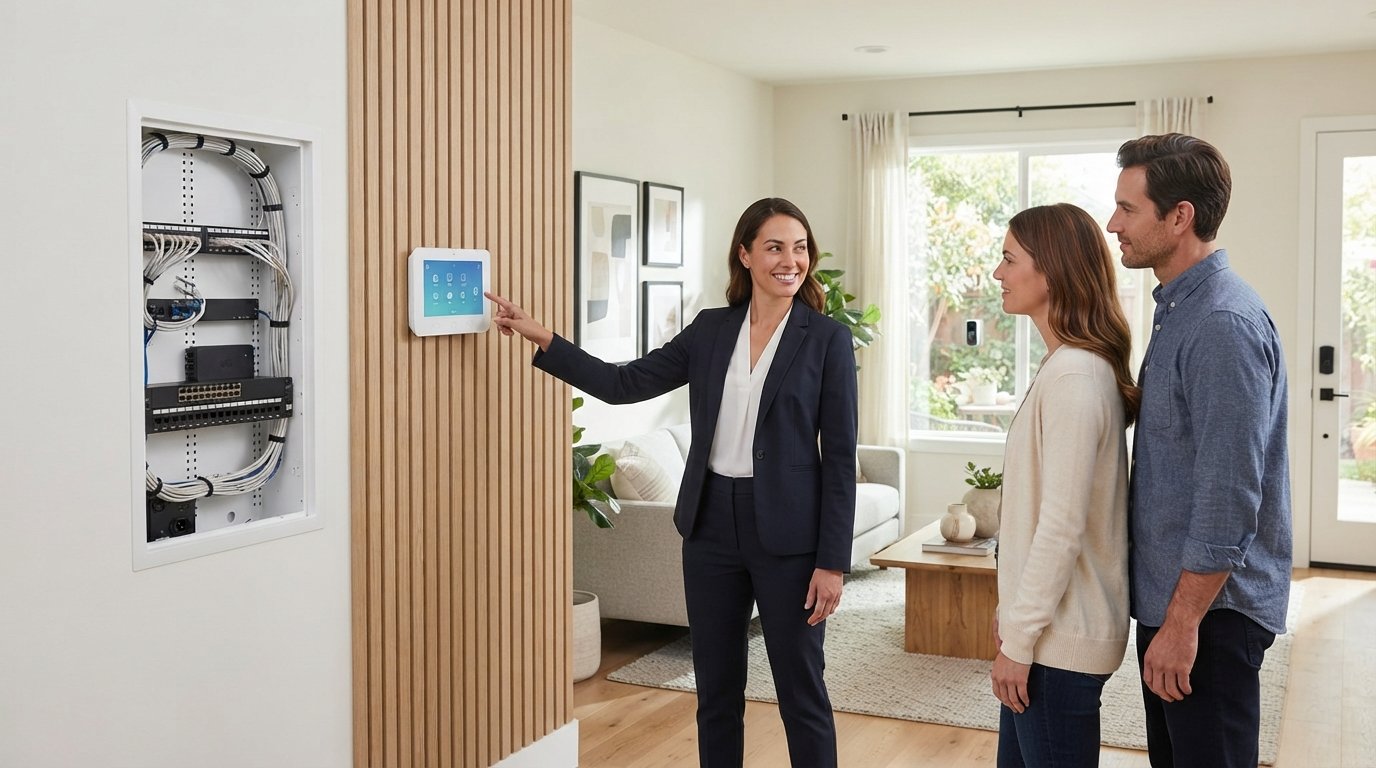
Security ranks among the upgrades buyers notice immediately, but not all security tech is valued equally. A hardwired alarm with a keypad by the door reads as permanent infrastructure, similar to a central vacuum or a built-in sound system. A pile of battery-powered cameras and a drawer full of chargers reads as temporary gadgetry the buyer will have to untangle. The resale premium comes from permanence, integration, and a clean handoff.
Real estate agents consistently report that buyers view security as a value add when it is already installed, tested, and documented. The National Association of Realtors and similar industry surveys have long shown that security systems and smart home features help homes sell faster and support higher offers, especially in suburban markets where buyers prioritize family safety. The key is that the system must feel like part of the house, not a hobby the seller is leaving behind.
There is also a financing angle. Some insurers offer discounts for monitored security, and buyers who are stretching to afford a home appreciate anything that lowers monthly ownership costs. A documented, professionally installed system can become a selling point in the listing description and a talking point during the walkthrough. If you are planning a broader upgrade strategy, our guide on smart home devices that increase resale value explains how security fits alongside thermostats, lighting, and other value-driving tech.
Wired Versus Wireless: Which Holds Value Better at Resale
The wiring decision is the single biggest factor in whether a security system helps or hurts your resale. Wired systems use low-voltage cable run through walls to door and window sensors, motion detectors, and keypads. They are permanent, tamper-resistant, and require no battery swaps. Wireless systems communicate over Wi-Fi, Z-Wave, Zigbee, or cellular, and they can be installed in an afternoon without opening a wall.
For resale, wired systems generally win because they are treated as fixtures. A buyer touring the home sees a keypad and sensors that came with the house and assumes they will keep working. Wireless systems can also add value, but only if they are mounted cleanly, labeled, and documented. Loose cameras sitting on shelves or taped to window frames signal a temporary setup, and buyers often discount those upgrades entirely.
That said, wireless is not a dealbreaker. Many buyers, especially in condos and rentals, prefer systems they can remove or expand without a contractor. The resale-friendly approach with wireless is to mount devices permanently, use adhesive or screw mounts that leave no damage, and leave behind a simple diagram of what connects to what. The worst outcome is a tangle of hubs and apps the buyer cannot decipher.
Here is how the two approaches compare on the factors that matter at resale:
- Permanence: Wired systems read as part of the home; wireless systems read as equipment unless mounted and documented well.
- Maintenance: Wired systems need no batteries; wireless sensors and cameras require periodic battery changes the buyer will inherit.
- Expandability: Wireless is easier to expand, which appeals to tech-savvy buyers; wired is harder to modify but more reliable.
- Transferability: Both can transfer to a new owner, but wired systems usually transfer with the house while wireless accounts often require the buyer to open a new subscription.
A hybrid approach often works best: hardwired door and window sensors for the perimeter, wireless cameras for coverage in spots where running cable is impractical. This gives buyers the permanence of a real alarm system plus the flexibility of modern cameras, and it keeps the installation clean enough to photograph well for listings.
Features Buyers Ask About (and the Ones They Ignore)
Not every smart feature earns its keep at resale. Buyers ask about a predictable set of capabilities during showings, and those are the ones worth prioritizing if you are installing a system before listing. The features that consistently come up include professional monitoring, smartphone alerts, video doorbells, and integration with major platforms like Amazon Alexa, Google Home, and Apple HomeKit.
Video doorbells deserve special mention because they are visible, easy to understand, and immediately useful to a new owner. A hardwired doorbell camera at the front door is one of the highest-visibility security upgrades you can make, and it photographs well in listing images. Smart locks are similar: buyers like the idea of keyless entry and temporary codes for guests or contractors, and the hardware looks like a genuine upgrade rather than a gadget.
On the other hand, some features generate little or no resale premium. Buyers rarely pay extra for glass-break sensors, panic buttons, or advanced geo-fencing automations, even though these can be useful. Niche integrations with obscure platforms, elaborate automation routines that depend on the seller's phone, and systems that require a specific subscription to function at all can actually reduce perceived value because they add complexity without obvious benefit.
Here is a practical ranking of features by resale impact:
- High impact: Video doorbell, smart locks, professional monitoring option, and app-based alerts.
- Moderate impact: Hardwired perimeter sensors, indoor cameras in common areas, and integration with a major smart home platform.
- Low impact: Glass-break sensors, panic buttons, specialty sensors, and complex automation scenes.
If you are building a system for resale, spend your budget on the high-impact items first. They are the features buyers recognize, the ones agents mention in listings, and the ones that show up clearly in photos and walkthroughs. The low-impact items can be added later by the buyer if they want them, and leaving room for expansion is itself a selling point.
Professional Installation Versus DIY Kits: Documentation Wins
Both professional installation and DIY kits can add resale value, but the deciding factor is documentation. Buyers and their agents want to know what equipment is installed, who installed it, whether it is under warranty, and what happens to the account when the house changes hands. A professionally installed system usually comes with an invoice, a warranty, and a monitoring contract that can be transferred or canceled, which makes the handoff simple.
DIY systems can be equally valuable if you create the same paper trail yourself. Keep the manuals, photograph the installation, write down the model numbers, and leave a one-page summary of how the system works and which app controls it. A buyer who sees a labeled, documented DIY setup will treat it as a legitimate upgrade. A buyer who sees unlabeled cameras and a mystery hub will assume they are inheriting a project.
Professional installation also matters for insurance and disclosure. Some insurers require professional monitoring to qualify for discounts, and some states require disclosure of security cameras and monitoring in real estate transactions. A professional installer can provide the paperwork you need for both. For homeowners planning multiple upgrades, working with vetted local pros through a service like HomeRemodelingsContractors can simplify scheduling and keep documentation consistent across projects.
If you go the DIY route, follow these steps to protect resale value:
- Mount devices permanently and neatly, avoiding tape and temporary brackets.
- Label every sensor and camera with its location and model number.
- Create a shared account or transfer instructions so the buyer can take over the system.
- Leave manuals, receipts, and a simple diagram in a folder near the electrical panel.
- Test every device before showings and note the date of the last test.
Documentation is also your defense against disputes after closing. If the buyer claims the system does not work, a dated test record and a clear handoff document protect you. Treat the security system like any other major appliance: it needs a paper trail to count as a value add.
Privacy and Data Concerns Buyers Raise at Showings
Privacy is the quiet dealbreaker in smart home security. Buyers touring a home with cameras everywhere sometimes ask whether the cameras record audio, where the footage is stored, and who has access. Sellers who cannot answer those questions create doubt, and doubt discounts offers. The fix is to choose systems with clear privacy controls and to be transparent in the listing and during showings.
Look for cameras with local storage options, such as a base station with a hard drive, or with clear cloud policies that state how long footage is kept and whether it is encrypted. Avoid systems that require a subscription for basic recording, because buyers may see the subscription as a hidden cost. Also avoid cameras pointed at neighboring properties or into shared spaces, which can create legal and neighborly problems for the new owner.
During showings, disclose the presence of cameras and monitoring, and explain how the buyer will gain control of the account at closing. Some sellers choose to remove indoor cameras before listing to reduce privacy concerns and simplify the handoff. Outdoor cameras and doorbells can stay because they are clearly part of the home's exterior security, but they should be documented and transferred cleanly.
Privacy also affects how buyers value the system. A well-designed setup with clear data policies feels professional and trustworthy. A setup with unclear recording practices feels invasive, and buyers may ask for it to be removed, which turns a value add into a negotiation point. Choose equipment from reputable brands with published privacy policies, and keep the configuration simple enough to explain in a few sentences.
How to Choose a System That Pays You Back
Start with the perimeter. Door and window sensors and a video doorbell protect the most vulnerable points and are the easiest features for buyers to understand. Add smart locks on the main entries, then interior motion detection in hallways and common areas. If budget allows, add outdoor cameras covering the driveway and backyard. This sequence prioritizes resale value because each layer is visible, useful, and easy to document.
Next, decide on monitoring. Professional monitoring adds a monthly cost but also adds resale value because it signals a complete, maintained system. If you prefer no contract, choose a system that offers optional monitoring the buyer can activate. Either way, leave clear instructions so the buyer knows their options. Systems that lock the buyer into a specific provider with no exit tend to reduce perceived value.
Finally, integrate with a major platform. Buyers increasingly expect security to work with Alexa, Google Home, or Apple HomeKit, and integration makes the system feel modern. Avoid proprietary ecosystems that require the seller's account to function. The goal is a system the buyer can adopt in an afternoon, not one that requires a technician and a new contract to use.
If you are planning a larger renovation or want help installing security alongside other upgrades, connecting with experienced local contractors is the fastest way to get it done right. You can request free estimates and compare options before committing, which keeps the project on budget and ensures the installation is documented for resale.
Smart home security systems that add resale value share three traits: they are installed cleanly, they are documented thoroughly, and they are easy for the next owner to adopt. Focus on wired or well-mounted wireless hardware, prioritize the features buyers actually ask about, and be transparent about privacy and data. Do that, and your security upgrade becomes a selling point that supports a higher offer instead of a question mark at the negotiating table.
Learn more about Home Security and Alarms Install for guides, costs, and what to expect.
Compare Home Security and Alarms Install Pros Near You
Enter your ZIP code to compare top-rated local professionals and request free quotes.