
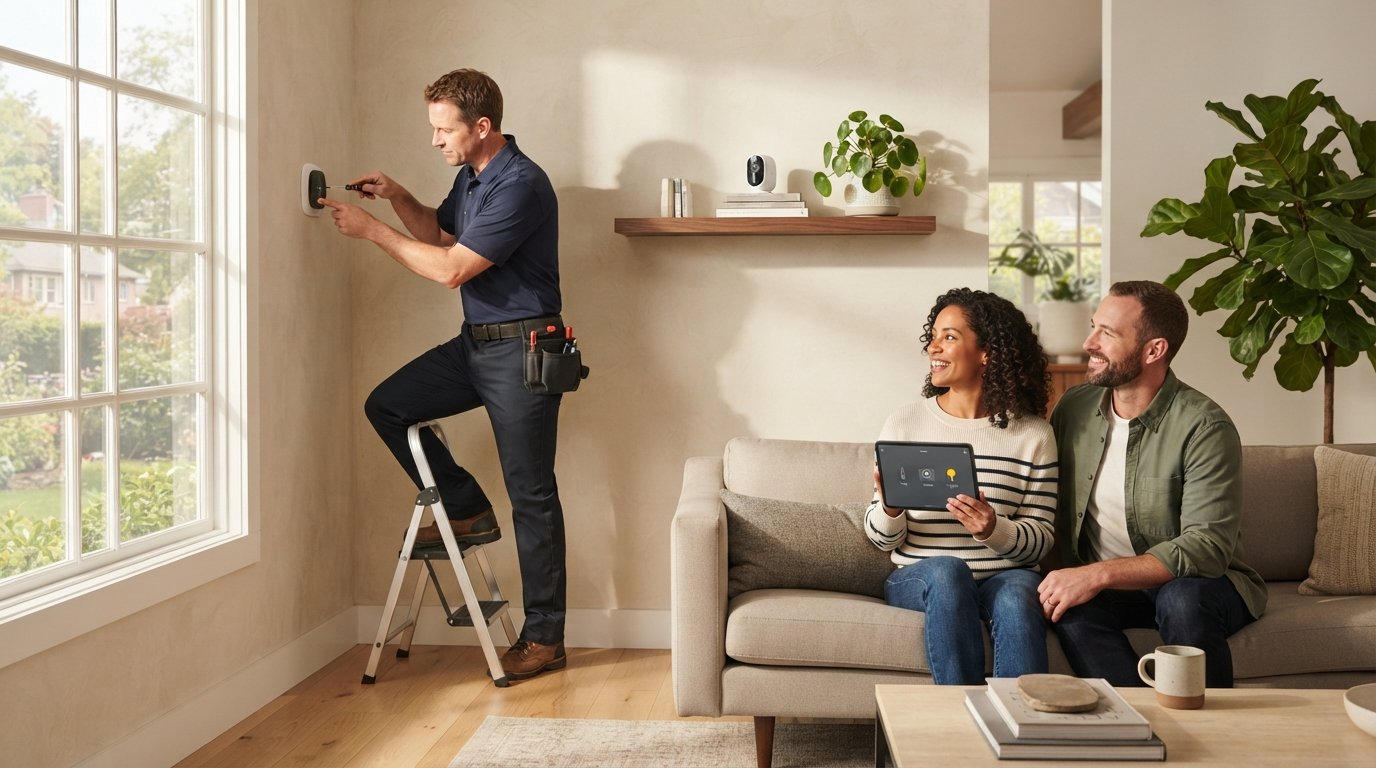
Smart Home Devices That Increase Resale Value in 2026
Discover the specific smart home devices that increase resale value in 2026 and learn which tech upgrades offer the highest return on investment before you sell.

By Oliver Grant
Learn more about Smart Home Installation or Repair for guides, costs, and what to expect.
Compare Smart Home Installation or Repair Pros Near You

Enter your ZIP code to compare top-rated local professionals and request free quotes.
Ask any real estate agent about the hardest part of selling a home in 2026, and they will likely mention buyer expectations. Today's shoppers are not just looking for granite countertops or a fresh coat of paint. They are looking for homes that are efficient, secure, and ready for a connected lifestyle. The good news is that you do not need a full renovation to meet those demands. A strategic selection of smart home devices can differentiate your property in a crowded market and often deliver a return on investment that rivals traditional kitchen upgrades.
However, not every gadget with a Wi-Fi chip will add value. A quirky smart coffee maker might not sway a buyer, but a professionally installed smart thermostat or a robust security system can. This guide focuses on the specific technology that appraisers and agents say moves the needle. We will break down which devices offer the best financial return, which ones to avoid, and how to position your upgrades for the 2026 buyer.
Why Smart Technology Is Now a Selling Point
The shift from novelty to necessity has been rapid. In previous years, smart home tech was a niche interest for early adopters. In 2026, it is a baseline expectation for many demographic groups, particularly millennials and Gen Z, who now represent the largest share of first-time homebuyers. These buyers grew up with smartphones and expect their homes to integrate seamlessly with their digital lives.
This expectation translates directly into property value. Appraisers are beginning to recognize the added worth of permanent, integrated technology. A home with a smart panel, hardwired security cameras, and energy-efficient climate control is often valued higher than a comparable home without these features. Furthermore, these devices signal that the home has been maintained and updated, which reduces the psychological risk for a buyer. When you list your property, a well-chosen set of upgrades can be the deciding factor between a quick sale at asking price and a prolonged listing with price reductions.
To maximize your return, focus on systems that offer universal compatibility and tangible cost savings. The goal is to reduce the buyer's future utility bills and provide peace of mind, not to force them to learn a complex proprietary ecosystem.
The Top Devices with the Highest ROI
If you are planning to sell soon or want to build equity, consider these five categories of devices. They consistently rank highest in surveys of real estate agents regarding buyer appeal and value recovery. Each of these can be positioned as a permanent feature of the home, much like a high-efficiency furnace or a water filtration system.
1. Smart Thermostats for Energy Efficiency
The smart thermostat remains the undisputed king of resale value. Unlike many gadgets that are purely convenient, a smart thermostat offers a quantifiable reduction in energy consumption. Devices like the Nest or Ecobee learn your schedule and adjust heating and cooling automatically. They also allow remote control via a smartphone, so users can adjust the temperature while at the airport or in bed.
Buyers are drawn to this because it addresses the universal pain point of high utility bills. When you market your home, you can highlight the potential savings. Many utility companies also offer rebates for these devices, which adds to their appeal. Because they are mounted on the wall and connected to the HVAC system, they are considered part of the home rather than a removable appliance. This permanence is crucial for appraisal value. In our analysis of smart home improvement projects that pay off, we noted that thermostats often provide a near 100% return on investment when the sale closes.
2. Comprehensive Video Doorbells and Security
Security is a primary concern for families and urban dwellers. A video doorbell is no longer just a luxury; it is a crime deterrent and a package theft solution. When you combine a doorbell with exterior cameras, you create a security ecosystem that buyers find extremely attractive.
The key to maximizing value here is to choose systems that offer local storage or standard protocols, avoiding monthly fees that could deter buyers. Wireless systems are popular, but hardwired systems that are integrated into the home's structure tend to appraise better because they are hidden and require less maintenance. Highlight the ability to monitor the property from anywhere. This feature offers peace of mind that is difficult to quantify but heavily influences a buyer's emotional decision to pay a premium.
3. Smart Lighting and Motorized Shades
Lighting controls are a cost-effective way to add a high-tech feel. Smart switches and dimmers that replace standard wall units are inexpensive and easy to install. They allow homeowners to control the ambiance of a room with voice commands or a phone app. More importantly, they can be programmed to simulate occupancy when the owners are away, which is a powerful security feature.
Motorized shades take this a step further. While more expensive, they offer significant energy savings by blocking heat in the summer and retaining warmth in the winter. They also protect furniture from UV damage. In high-end markets, these are considered premium amenities. For a seller, installing a few smart switches in high-traffic areas like the living room and kitchen can create a modern feel without a massive investment.
4. Smart Water Leak Detectors
Water damage is one of the most expensive home insurance claims. Smart leak detectors are small sensors placed near water heaters, under sinks, and near washing machines. They detect moisture early and send an alert to the homeowner's phone before a small leak becomes a catastrophic flood. Some advanced models can even automatically shut off the main water valve.
This device is a fantastic selling point because it shows a buyer that the home has been protected from a major risk. It also appeals to the practical side of buyers who are worried about maintenance costs. This is a low-cost addition that offers a high perceived value, making it one of the smartest investments you can make before listing your property.
5. Smart Locks and Garage Controllers
Convenience is a major driver for buyers. Smart locks allow entry via keypad codes, fingerprints, or smartphones. This eliminates the worry about lost keys and allows for temporary codes for dog walkers or cleaners. When selling, you can simply program a code for the real estate agent and revoke it after the showing, which is a significant security upgrade over traditional lockboxes.
Similarly, smart garage door controllers allow homeowners to check if the garage is closed from anywhere and control it remotely. These devices are relatively inexpensive and enhance the feeling of a modern, cared-for home. They are the final touch that rounds out a complete smart home package.
What to Avoid: Gadgets That Do Not Add Value
While the devices above are excellent investments, the market is saturated with products that can actually hurt your chances of a sale. The most significant mistake is installing technology that is too niche or overly complex. A home automation system that requires a specific, expensive hub and is incompatible with standard assistants like Alexa or Google Home may be viewed as a liability rather than an asset. Buyers do not want to inherit a complex IT project.
You should also avoid highly personalized items such as smart pet feeders or robotic vacuums. These are considered personal property, not home features. If they are built-in, they can be quirky, but they rarely increase the offer price. Stick to infrastructure upgrades that are invisible and integrated. For example, ensure your Wi-Fi network is robust with multiple access points, but do not try to sell the router itself. Focus on the bones of the tech ecosystem.
Practical Steps to Install and Market These Features
Once you have selected your devices, the installation and marketing strategy are critical to seeing a return. Here is a simple framework to follow:
- Audit Your Current Setup: Check your Wi-Fi coverage and electrical wiring. Most smart devices need a strong 2.4 GHz signal and neutral wires in switch boxes. If you have an older home, you may need to hire an electrician to update wiring, which is a worthwhile investment.
- Prioritize Permanent Fixtures: Install devices that are wired or mounted permanently. Buyers are more likely to value a hardwired security camera system than a plug-in model sitting on a shelf. Permanent fixtures are included in the sale and appraise as part of the home.
- Create a Unified Ecosystem: Choose devices that all work with the same primary assistant, such as Amazon Alexa or Apple HomeKit. This ensures the buyer does not need multiple apps. Document the system and leave a cheat sheet for the new owner.
- Verify Compatibility and Security: Ensure all devices receive regular firmware updates. A secure network is a selling point. Reset all devices to factory settings before closing to protect your personal data and give the buyer a clean slate.
After installation, you need to market these features effectively. Do not just list them in the property description. Create a dedicated fact sheet that explains the benefits. For instance, mention that the smart thermostat saves an estimated 15% on cooling costs. If you have a leak detection system, highlight that it protects against $10,000 in potential water damage. This data helps justify your asking price.
Budgeting and Hiring Professionals
You might assume that installing these devices is a simple DIY task, and for many, it is. However, for a seamless look and foolproof operation, professional installation is often worth the cost. If you are cutting drywall to run wiring for cameras or replacing main electrical panels, hiring a licensed electrician is safer and ensures code compliance. Poor installation can lead to short circuits or fire hazards, which would be disastrous during a home inspection.
When budgeting, allocate funds for the hardware and the installation. A professional can also advise on the best placement for sensors and cameras to maximize coverage and aesthetic appeal. They can ensure that your internet router is positioned to cover the entire property. If you are planning a larger renovation alongside your tech upgrades, consider coordinating with a general contractor who understands low-voltage wiring. A single point of contact can simplify the project and ensure that the drywall, paint, and electrical work are sequenced correctly. For homeowners looking to manage costs effectively, comparing quotes from different professionals is essential to get the job done right without overpaying.
The Bottom Line for 2026 Sellers
Investing in smart home technology is no longer about keeping up with the Joneses; it is about delivering a product that meets the functional demands of the modern buyer. The market is shifting toward homes that are not just beautiful but also intelligent and responsive. By focusing on energy savings, security, and convenience, you can set your property apart.
As you prepare your listing, remember that these devices are a story of efficiency and safety. They tell the buyer that you have cared for the home and that their future here will be cost-effective. While a kitchen remodel might take months and cost tens of thousands of dollars, a curated selection of these devices can be installed in a weekend and provide a comparable boost in appeal. This makes them one of the most accessible and high-yield investments available to a homeowner in 2026. When you finally put the for sale sign in the yard, you can do so with the confidence that your home is equipped for the future. HomeRemodelingsContractors
Learn more about Smart Home Installation or Repair for guides, costs, and what to expect.
Compare Smart Home Installation or Repair Pros Near You
Enter your ZIP code to compare top-rated local professionals and request free quotes.