
Shower Tile Trends and Installation Cost for Modern Bathrooms
Compare shower tile trends and installation cost for modern bathrooms, from large-format tile to waterproofing. Call (833)-365-8755 for free estimates.

By Elena Ellis
Learn more about Tile Installation and Replacement for guides, costs, and what to expect.
Compare Tile Installation and Replacement Pros Near You

Enter your ZIP code to compare top-rated local professionals and request free quotes.
Planning a bathroom remodel often comes down to one high-impact, high-budget decision: the shower. Tile choice and installation approach can make or break both the look and the longevity of the space, and homeowners today are balancing bold design ambitions with practical cost realities. Whether you are drawn to the clean minimalism of large-format slabs or the tactile warmth of zellige, understanding what drives shower tile trends and installation cost for modern bathrooms will help you set a realistic budget, avoid surprise change orders, and get a result that holds up to daily use.
Tile Format and Material Costs Per Square Foot
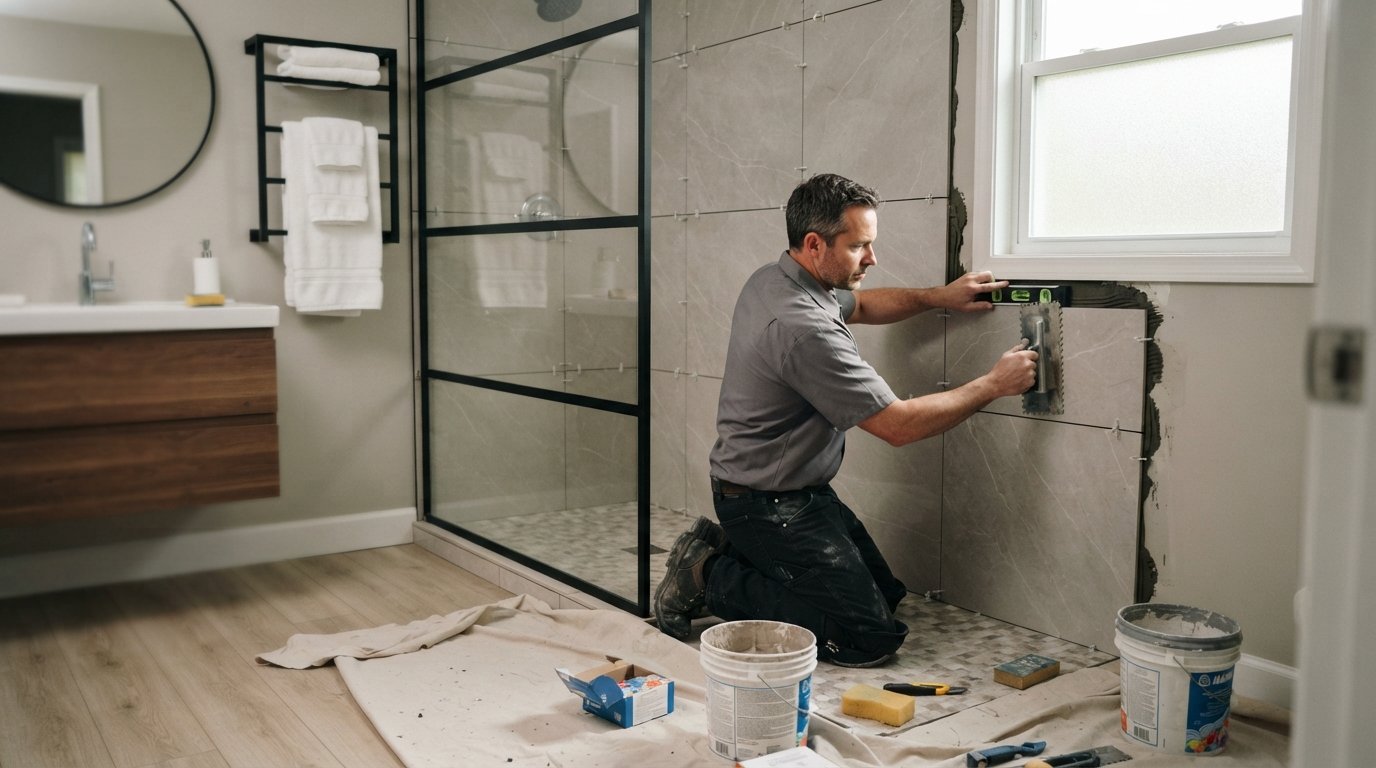
The single biggest variable in shower tile pricing is the material itself, and format (the size and shape of each tile) directly affects both material cost and labor. Large-format tiles, typically 12 by 24 inches or larger, have become a dominant trend because they reduce grout lines and create a seamless, spa-like look. However, they require a flatter substrate and more careful handling, which can offset some of the material savings. Smaller mosaic tiles, often used on shower floors for slip resistance, cost less per square foot but take more time to install, raising labor.
Here is a realistic range for common shower tile materials, installed, based on national averages for mid-range projects:
- Ceramic tile: $2 to $7 per square foot for material; $5 to $12 per square foot installed. Best for budget-conscious projects and low-traffic showers.
- Porcelain tile: $3 to $10 per square foot for material; $7 to $15 per square foot installed. Denser and more water-resistant than ceramic, available in wood-look and stone-look finishes.
- Natural stone (travertine, slate, marble): $5 to $20 per square foot for material; $12 to $25 per square foot installed. Requires sealing and more maintenance but delivers unmatched depth and character.
- Glass mosaic: $10 to $30 per square foot for material; $20 to $40 per square foot installed. Common as accent bands and shower floors; more delicate to cut and set.
Keep in mind that these figures are for the tile and setting materials only; they do not include waterproofing, substrate prep, or specialty features like niches and benches. For a standard 3 by 5 foot shower surround (roughly 50 to 60 square feet of wall tile), material alone can range from $150 for basic ceramic to well over $1,500 for premium stone. When you compare this to the full scope of a bathroom refresh, it helps to see how other elements fit in; our guide on modern bathroom vanity trends and installation costs breaks down how the vanity line item interacts with tile and fixture budgets.
Waterproofing and Membrane Requirements Behind Tile
Tile and grout are not waterproof. This is the most misunderstood point in shower construction, and it is where many budget projects fail. Behind every successful tile installation is a waterproofing system, typically a sheet-applied membrane (like Kerdi) or a liquid-applied coating (like RedGard), applied over a cement backer board or foam board. Skipping or skimping on this step leads to moisture intrusion, mold growth, and failed tile within a few years, turning a $3,000 shower into a $10,000 tear-out.
Waterproofing adds cost, but it is non-negotiable. Expect to pay $1.50 to $4 per square foot for materials and labor dedicated to membrane installation, depending on the system and local labor rates. A bonded waterproofing membrane also requires proper slope to the drain, which means the substrate must be built with a preslope, adding time and skill. This is one area where hiring an experienced tile setter pays for itself; a general handyman may be able to lay tile, but waterproofing failures are the most common cause of shower leaks and callbacks.
Modern trends favor foam backer boards with integrated waterproofing, such as Wedi or Schluter Kerdi-Board, because they are lightweight, easy to cut, and reduce installation time. These systems cost more per sheet than cement board but can lower labor hours, often balancing out. If your contractor proposes tile directly over drywall or greenboard with no membrane, that is a red flag. Ask specifically what waterproofing system will be used and how the pan and curb will be integrated.
Labor Cost Drivers: Niches, Benches, and Curbless Builds
Labor typically represents 50 to 65 percent of a shower tile project, and specialty features are where budgets can spiral. A simple three-wall alcove shower with a standard curb and no extras is the most economical layout. Every added detail introduces cuts, framing, and waterproofing complexity that add hours to the job.
Here are the most common labor premiums to plan for:
- Recessed niche: $150 to $400 extra. Requires framing between studs, waterproofing the box, and carefully mitering or bullnosing tile edges. A popular trend is a tall, vertical niche that spans the shower wall, which costs more but adds storage and visual height.
- Built-in bench: $300 to $800 extra. A framed bench needs waterproofing and tile on all faces; a floating bench is more complex and costly. Benches are increasingly requested for aging-in-place and comfort.
- Curbless (zero-threshold) entry: $500 to $1,500 extra. This requires recessing the floor framing, a sloped shower pan, and often a linear drain, plus coordination with the main bathroom floor tile. It is a top trend for accessibility and modern minimalism but demands precise craftsmanship.
- Accent bands and feature walls: $100 to $500 extra depending on complexity. Herringbone, chevron, and picket patterns add labor because of the higher cut count and layout time.
Beyond features, labor rates vary widely by region and by the tile format. Large-format tiles (24 by 48 inches and up) often carry a 20 to 30 percent labor premium because they require two installers, a flat substrate, and specialized cutting tools. Small mosaics on the shower floor add labor for the same reason in reverse: more pieces, more time. When budgeting, ask your contractor for a line-item breakdown that separates labor for the field tile, the shower floor, and each specialty feature so you can see exactly where the money goes.
Grout and Sealer Choices That Extend Tile Life
Grout is the weakest point in any tiled shower, and the choice of grout and sealer has a direct impact on maintenance and longevity. Cement-based grout is porous and requires regular sealing, typically every one to two years, to resist staining and moisture. Epoxy grout, which has become a leading trend, is far more stain-resistant, does not require sealing, and is stronger, but it costs more and is more difficult to install, especially on vertical surfaces and with small mosaics.
For modern bathrooms, epoxy grout is often worth the premium in wet areas like shower floors and lower walls. Expect to pay $3 to $8 per square foot extra for epoxy grout installation compared to cement grout. If you choose cement grout, plan on a penetrating sealer applied at installation and reapplied annually; a $30 bottle of sealer and an hour of time each year is cheap insurance against regrouting.
Sealer technology has also improved. Topical sealers form a film on the surface and can peel; penetrating sealers soak into the grout and stone, leaving breathability while repelling water. For natural stone tile, a penetrating sealer is essential and should be reapplied according to the manufacturer's schedule. When interviewing contractors, ask which grout brand and type they use and whether sealing is included in the quote. A quality installation with epoxy grout and proper waterproofing can extend the life of your shower tile by a decade or more, which is the real cost saver in the long run.
Budgeting Your Shower Tile Project
Pulling these variables together, a realistic budget for a complete shower tile installation (demo, waterproofing, tile, grout, and basic fixtures) ranges from about $3,500 for a simple alcove with ceramic tile to $12,000 or more for a large walk-in with stone, a linear drain, a bench, and a niche. The national average lands around $6,000 to $8,000 for a mid-range project. These figures assume professional installation; DIY can save labor but carries significant risk when waterproofing is involved.
To keep costs predictable, get at least three written estimates that itemize material, labor, waterproofing, and specialty features. Ask about the substrate condition; if the existing shower has water damage or the framing is out of level, expect change orders. Build a 10 to 15 percent contingency into your budget for surprises behind the wall. And confirm licensing and insurance before work begins; a reputable contractor will provide both without hesitation.
If you are ready to move from planning to hiring, platforms like HomeRemodelingsContractors help homeowners compare local pros who specialize in bathroom tile and waterproofing, so you can get free estimates and choose a contractor with the right experience for the job.
Shower tile trends and installation cost for modern bathrooms ultimately come down to informed trade-offs: larger tiles for fewer grout lines, epoxy grout for lower maintenance, and specialty features for comfort and accessibility. By understanding what drives price and where you can save without sacrificing waterproofing, you can create a shower that looks current, performs reliably, and fits your budget.