
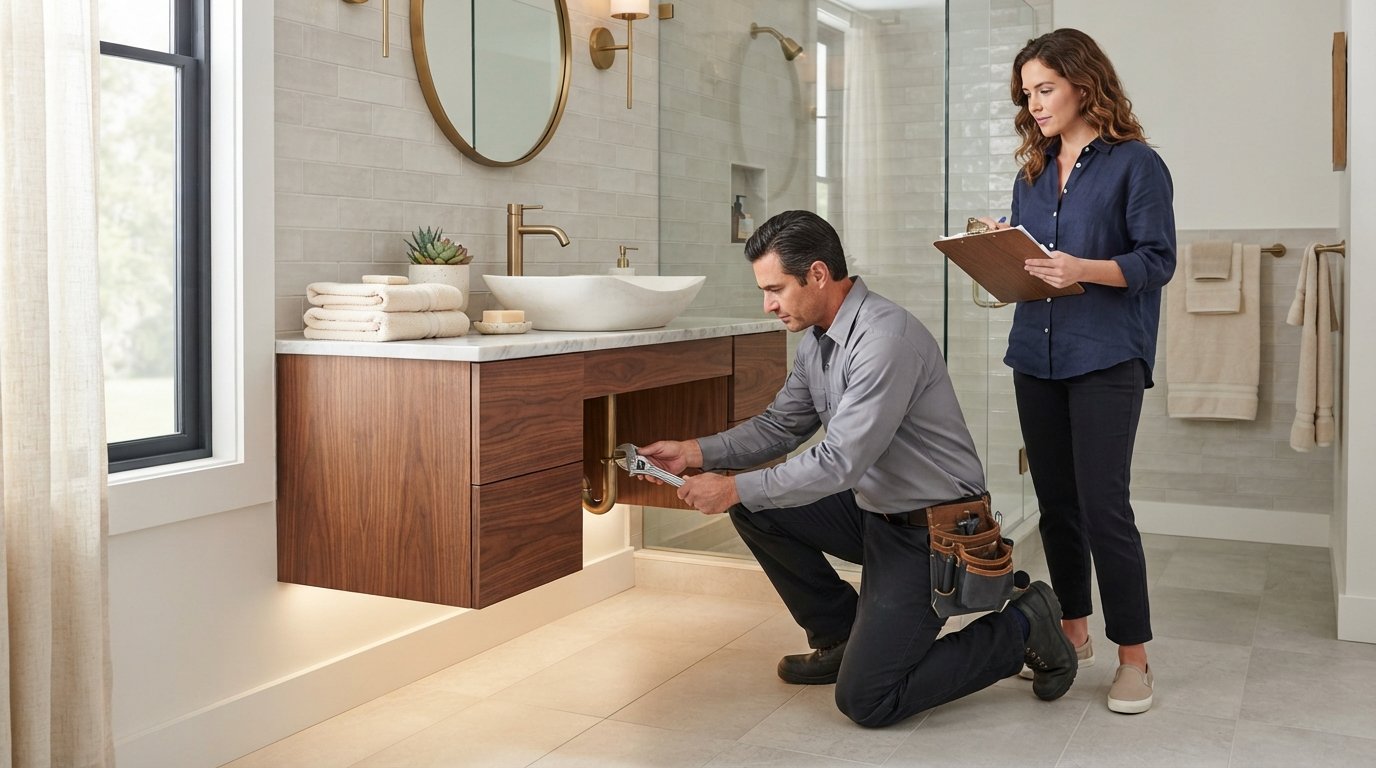
Modern Bathroom Vanity Trends and Installation Costs for 2026
Explore modern bathroom vanity trends and installation costs, from floating cabinets to smart storage, and learn how to budget for a professional install.

By Leo Cross
Learn more about Bathroom Remodel for guides, costs, and what to expect.
Compare Bathroom Remodel Pros Near You

Enter your ZIP code to compare top-rated local professionals and request free quotes.
A bathroom vanity is more than a place to wash your hands. It sets the tone for the entire room, provides essential storage, and often serves as the visual anchor of your daily routine. If you are planning a bathroom refresh this year, understanding both the design direction and the real numbers behind modern bathroom vanity trends and installation costs will help you make confident choices. Whether you are drawn to a floating walnut cabinet or a sculpted stone basin, the right vanity can transform a tired bathroom into a functional retreat. But before you fall in love with a showroom display, it pays to know what drives the price and how to plan a project that fits your budget.
What Is Driving Modern Vanity Design in 2026
Modern bathroom vanities have evolved far beyond the standard oak cabinet with a ceramic top. Today's designs blend furniture-like craftsmanship with smart storage and durable materials. Homeowners are treating the vanity as a focal point, similar to a kitchen island, and manufacturers have responded with options that feel custom without the custom price tag. The shift toward warmer minimalism is also influencing color palettes, hardware, and lighting integration.
One of the biggest changes is the rise of the floating vanity. By mounting the cabinet to the wall and leaving floor space open, a floating vanity makes even a small bathroom feel larger. This style works especially well in powder rooms and guest baths where visual clutter is a concern. Paired with a wall-mounted faucet, the look is clean and contemporary.
Another trend is the integration of smart features. LED mirrors with anti-fog technology, built-in night lights, and even Bluetooth speakers are appearing in more vanity designs. While these upgrades add convenience, they also affect installation complexity and cost. A vanity that requires an electrical outlet inside the cabinet or a hardwired mirror will need a licensed electrician, which adds to the overall project budget.
Material choices are also shifting. Quartz and sintered stone tops are replacing granite in many modern bathrooms because they resist stains and require no sealing. For the cabinet itself, thermofoil and laminate offer affordable alternatives to solid wood, while rift-sawn oak and walnut provide a high-end furniture look. The key is balancing aesthetics with the wear and tear of daily use.
Popular Styles and Features Homeowners Are Choosing
When you walk through a home improvement store or browse online, certain vanity styles stand out. Knowing which ones are trending can help you narrow your search and communicate your vision to a contractor. Here are some of the most requested features in modern bathroom vanities:
- Floating or wall-mounted cabinets: These save floor space and create a modern, airy feel. They often include under-cabinet lighting for a spa-like effect.
- Integrated sinks: Seamless countertops with molded sinks reduce crevices where mold can grow, making cleaning easier.
- Open shelving: A mix of drawers and open shelves lets you display rolled towels or decorative items while keeping daily essentials within reach.
- Matte finishes: Matte black, brushed brass, and brushed nickel hardware are replacing polished chrome in many contemporary bathrooms.
- Smart storage: Pull-out trays, hidden outlets for hair dryers, and dividers for makeup or toiletries are becoming standard in mid-range and luxury vanities.
These features do more than look good. They address real pain points like limited storage, difficult cleaning, and the need for better lighting. A vanity with a pull-out drawer for a curling iron, for example, can reduce clutter and make your morning routine smoother. When you prioritize features that match how you actually use the bathroom, you are more likely to be happy with your investment years down the road.
It is also worth considering the size of your space. A double vanity works well in a master bathroom, but it can overwhelm a small guest bath. In those cases, a single sink with a narrower depth (18 to 20 inches) may be a better fit. Measure your available wall space and account for door swings and traffic flow before you commit to a size.
Understanding Installation Costs: What You Will Actually Pay
The cost to install a bathroom vanity varies widely based on the size, material, and complexity of the job. According to recent industry data, the national average for professional vanity installation ranges from $200 to $800 for a standard single vanity, while double vanities or custom setups can run $1,000 to $2,500 or more. These figures typically cover labor only, not the vanity itself. The vanity unit can cost anywhere from $300 for a basic big-box model to $3,000 or more for a custom piece with premium stone and cabinetry.
Several factors influence the final bill. The first is whether you are replacing an existing vanity or installing one in a new location. A simple swap where the plumbing and electrical already exist is the least expensive scenario. If you need to move plumbing lines, add an outlet, or relocate a drain, expect to pay significantly more. Second, the type of sink and faucet matters. A vessel sink may require a different countertop cut and taller faucet, while an undermount sink needs precise fabrication. Third, the countertop material plays a role. Quartz and natural stone are heavier and may require two installers, increasing labor time.
Here is a general breakdown of what you might expect to pay for installation labor alone, based on project complexity:
- Simple replacement (same size and location): $200 to $500. This includes removing the old vanity, setting the new one, connecting existing plumbing, and sealing the countertop.
- Upgrade with new countertop and faucet: $500 to $1,200. Additional labor for cutting the countertop for the sink, installing a new faucet, and adjusting plumbing connections.
- Relocation or custom build: $1,200 to $3,000+. Moving plumbing, adding electrical for a mirror or lighting, and installing a custom vanity with a furniture-grade finish.
These numbers are national averages. In high-cost metropolitan areas, labor rates can be 30 to 50 percent higher. It is always wise to get multiple estimates and ask what is included. Some contractors quote a flat fee, while others charge by the hour plus materials. A detailed written estimate should specify whether the price includes removing and disposing of the old vanity, patching and painting the wall, and connecting the drain and water lines.
How to Plan Your Vanity Project and Stay on Budget
Planning is the difference between a smooth installation and a stressful one. Start by setting a realistic budget that includes the vanity, countertop, faucet, plumbing supplies, and labor. A common mistake is to spend the entire budget on the vanity itself and then scramble to cover installation costs. A good rule of thumb is to allocate 40 to 50 percent of your total budget to the vanity and top, and the remaining 50 to 60 percent to labor, plumbing, electrical, and any wall repairs.
Next, measure your space carefully. Note the width, depth, and height of your current vanity and the available wall space. Check where the plumbing lines and electrical outlets are located. If you are considering a floating vanity, confirm that the wall has adequate framing to support the weight. A contractor can help you assess this during a site visit.
Once you have your measurements and budget, gather inspiration and choose a style. Then request free estimates from local contractors. This is where a service like HomeRemodelingsContractors can be helpful. It connects homeowners with experienced local pros who can provide accurate quotes and handle the installation from start to finish. By comparing multiple estimates, you can spot outliers and ask better questions about what each quote includes.
Before work begins, clear the bathroom of personal items and prepare for a day or two without use of the sink. Most vanity replacements take a few hours to a full day, but if plumbing or electrical work is involved, it may take longer. Plan to be without the bathroom for at least a full day, and have a backup sink available if needed.
Common Pitfalls to Avoid During Installation
Even a straightforward vanity swap can run into trouble if you overlook key details. One frequent issue is failing to turn off the water supply before disconnecting the old plumbing. This can lead to a flooded floor and costly water damage. Always locate the shut-off valves and test them before you start. If they are old or corroded, have a plumber replace them first.
Another pitfall is choosing a vanity that is too large for the space. A vanity that blocks a door or makes it hard to open a cabinet can be a daily annoyance. Leave at least 21 inches of clear space in front of the vanity for comfortable standing, and ensure the doors can open fully. If you have a small bathroom, consider a corner vanity or a pedestal sink to save space.
Finally, do not underestimate the importance of proper sealing. Water damage is the enemy of any bathroom. Make sure the countertop is sealed against the wall and the sink is sealed to the countertop. Use a high-quality silicone caulk that resists mold and mildew. If you are installing a tile backsplash, seal the grout as well. These small steps protect your investment and keep your bathroom looking fresh for years.
When to Hire a Professional vs. DIY
Some homeowners enjoy tackling DIY projects, and installing a vanity can seem like a manageable weekend task. However, it involves plumbing, electrical, and sometimes structural work. If you are simply swapping an identical vanity in the same spot and you are comfortable with basic plumbing, you might handle it yourself. But if you need to move pipes, add an outlet, or install a heavy stone countertop, hiring a licensed professional is the safer and often more cost-effective choice.
Professional installation ensures the work meets local building codes and can save you from costly mistakes. A licensed plumber will properly connect the drain and water lines, and an electrician can safely install GFCI outlets or hardwired lighting. Many contractors also offer a warranty on their labor, giving you peace of mind. When you factor in the risk of water damage or electrical hazards, the cost of professional installation is often money well spent.
To find a qualified pro, ask for referrals from friends or family, read online reviews, and verify licenses and insurance. Get at least three written estimates and ask for references from recent projects. A reputable contractor will be happy to provide this information and will communicate clearly about timelines and costs.
Modern bathroom vanity trends and installation costs are closely linked. The style you choose, the materials you select, and the complexity of the install all influence your final price. By planning ahead, setting a realistic budget, and working with experienced professionals, you can create a beautiful, functional vanity that enhances your bathroom for years to come. Take the time to compare estimates and ask questions, and you will be well on your way to a successful remodel.