
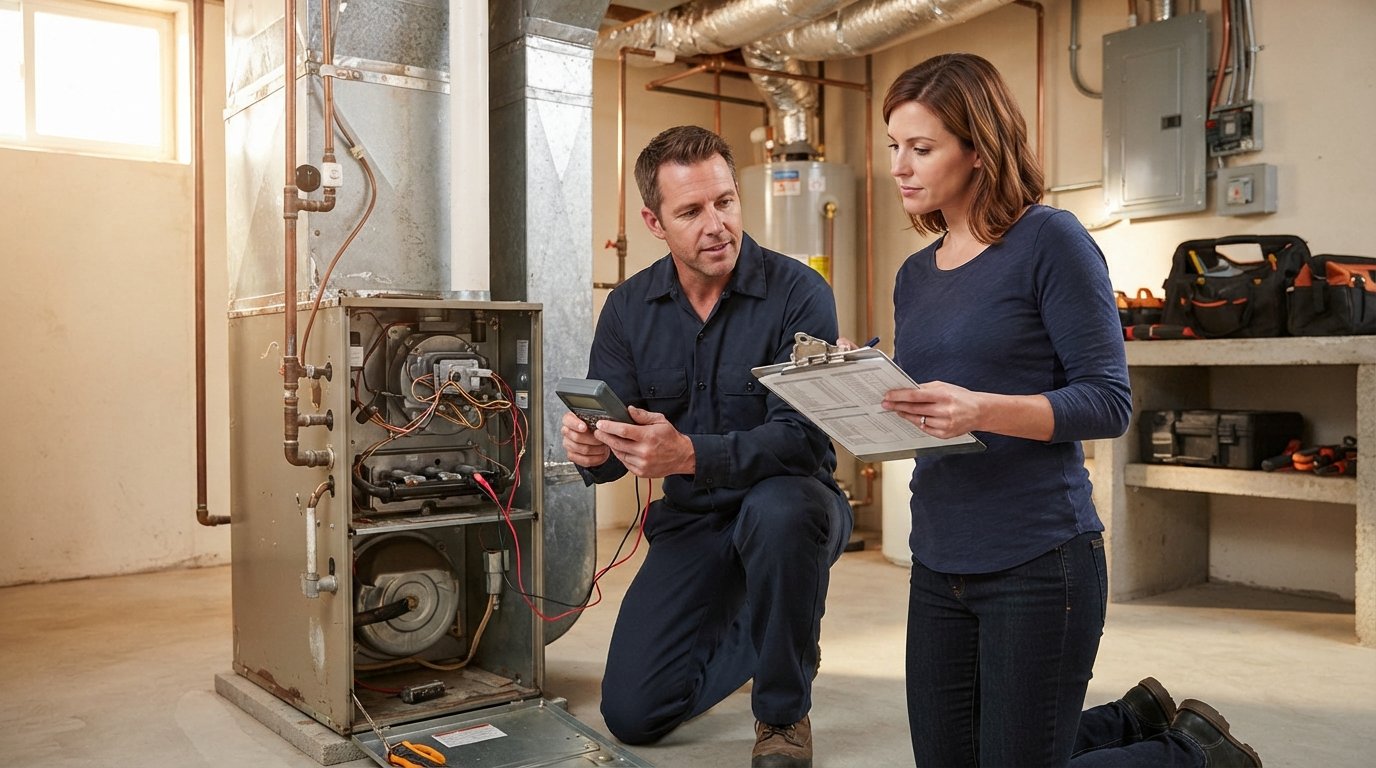
Repair or Replace Major Home Systems: A Homeowner's Guide
Deciding between repair and replace for major home systems? Get expert tips on costs, lifespan, and safety. Call 8333658755 for guidance.

By Owen Carter
Learn more about Water Heater Repair or Maintenance for guides, costs, and what to expect.
Compare Water Heater Repair or Maintenance Pros Near You

Enter your ZIP code to compare top-rated local professionals and request free quotes.
Your furnace dies on the coldest night of the year. Your roof is leaking into the attic during a spring storm. The water heater is making a rumbling sound that seems to get louder every month. These are the moments when every homeowner faces the same difficult question: do you call a repair technician for a quick fix, or do you bite the bullet and invest in a full replacement? The answer is rarely simple, and getting it wrong can cost you thousands of dollars in wasted money, repeated repairs, or unnecessary upgrades.
This guide will walk you through how to choose between repair and replace for major home systems. We will look at the financial, practical, and safety factors that should drive your decision. Whether you are dealing with an aging HVAC unit, a failing roof, or a temperamental water heater, the framework here will help you make a confident choice that protects your home and your wallet.
The 50 Percent Rule and Other Financial Benchmarks
One of the most widely used rules of thumb in the home improvement industry is the 50 percent rule. The idea is simple: if the cost of a repair exceeds 50 percent of the cost of a full replacement, you should seriously consider replacing the system. This is not a hard-and-fast law, but it provides a useful starting point for your analysis.
For example, if a new furnace costs $4,000 and your repair quote is $2,200, you are well past the 50 percent threshold. In that case, putting that money toward a new unit often makes more sense, especially if the existing equipment is already old. On the other hand, if the repair is $600 and the system is only five years old, repairing is almost always the smarter move.
However, the 50 percent rule does not account for everything. You also need to factor in the age of the system, its remaining lifespan, and the likelihood of future repairs. A 15-year-old air conditioner that needs a $900 repair might still be a candidate for replacement because another breakdown is probably just around the corner. Conversely, a 10-year-old furnace with a $1,200 repair might be worth fixing if the unit is otherwise in good shape and you plan to stay in the home for several more years.
To apply this rule effectively, gather at least two or three repair estimates and one or two replacement quotes. This gives you a clear picture of the financial landscape. If you are unsure how to find reliable contractors for these estimates, consider using a service that connects you with vetted local professionals. For instance, HomeRemodelingsContractors helps homeowners plan affordable home improvement projects and connect with experienced local contractors, making it easier to compare options and get the job done right.
Age and Expected Lifespan: The Ticking Clock
Every major home system has an expected lifespan. Knowing these ranges helps you assess whether a repair is a short-term patch or a genuine long-term solution. Here are typical lifespans for common systems:
- HVAC systems (furnaces and air conditioners): 15 to 20 years
- Water heaters (tank): 8 to 12 years
- Water heaters (tankless): 20 years or more
- Roofs (asphalt shingles): 20 to 30 years
- Roofs (metal): 40 to 70 years
- Plumbing pipes (copper): 50 years or more
- Electrical panels: 25 to 40 years
If your system is already at or near the end of its expected lifespan, a repair is often just a temporary bandage. You might get another year or two out of it, but you are likely to face another breakdown soon. In these cases, replacing the system proactively can save you the stress of an emergency failure and may even reduce your energy bills if you upgrade to a more efficient model.
On the other hand, if your system is well within its expected lifespan and has been properly maintained, a repair is usually the better choice. For example, a 10-year-old water heater that needs a new heating element is still a good candidate for repair. But a 12-year-old water heater that is leaking from the tank itself is not worth fixing; the tank is corroded, and no repair will extend its life significantly.
It is also worth considering how well the system has been maintained. A well-maintained HVAC unit can often last beyond its expected lifespan, while a neglected one may fail prematurely. If you have kept up with annual tune-ups and filter changes, you may feel more confident investing in a repair.
Efficiency and Operating Costs: The Hidden Expense
When you repair an old system, you are also committing to its ongoing operating costs. Older systems are often far less efficient than modern replacements. A furnace from 15 years ago might operate at 70 percent efficiency, while a new high-efficiency model can reach 96 percent or higher. That difference translates into real money on your utility bills every month.
Let us say your old furnace costs $1,200 per year to operate. A new, high-efficiency furnace might cut that cost by 30 percent, saving you $360 annually. Over five years, that is $1,800 in savings, which can offset a significant portion of the replacement cost. When you factor in these energy savings, the financial case for replacement becomes stronger, especially if you plan to stay in your home for several years.
The same logic applies to air conditioners, water heaters, and even windows and insulation. If your system is inefficient and you are paying high energy bills, a repair might keep it running, but it will not improve its efficiency. A replacement, on the other hand, can reduce your monthly costs and lower your carbon footprint.
To estimate potential savings, you can use online energy calculators or ask a contractor for an energy audit. They can compare your current system's efficiency rating with that of a new model and give you a realistic estimate of annual savings. This data can be a powerful tool when deciding whether to repair or replace.
Safety and Health Concerns: When Repair Is Not an Option
Some issues are not just about money or efficiency; they are about safety. Certain problems with major home systems can pose serious risks to you and your family. In these cases, replacement is often the only responsible choice.
For example, a cracked heat exchanger in a furnace can leak carbon monoxide into your home, a colorless and odorless gas that can be fatal. If a technician finds a cracked heat exchanger, do not opt for a repair. The only safe solution is to replace the furnace. Similarly, a roof with structural damage or widespread rot may not be repairable in a way that guarantees your home's safety. A partial repair might just be a temporary fix before the next storm causes a collapse.
Electrical systems are another area where safety must come first. An outdated electrical panel that cannot handle modern electrical loads may be a fire hazard. If your panel is recalled or known to be dangerous (such as certain models of Federal Pacific panels), replacement is the only safe option. Attempting to repair such a panel is not only risky but may also violate local building codes.
Water heaters can also be dangerous. A gas water heater with a faulty pilot light or a leaking tank can lead to gas leaks, explosions, or water damage. If you smell gas or see water pooling around the base of the tank, turn off the gas and call a professional immediately. In many cases, the heater will need to be replaced.
When safety is on the line, do not try to save money with a repair. The potential cost of a disaster, both in terms of health and property, far outweighs the savings.
Long-Term Plans and Home Value
Your decision should also align with your long-term plans for the home. Are you planning to sell in the next year or two, or do you intend to stay for a decade or more? The answer can shift the calculus.
If you are selling soon, you might lean toward a repair to get the system working for the sale, especially if the market is hot and buyers are willing to overlook older systems. However, you should disclose any known issues to buyers. A brand-new system can be a selling point, but you may not recoup the full cost in the sale price. In some cases, a home warranty or a credit to the buyer might be a better option than a full replacement.
If you plan to stay in the home for many years, replacement often makes more sense. You will enjoy the benefits of a new, efficient, and reliable system for years to come. Plus, you will avoid the cycle of repeated repairs that can plague an aging system. New systems also come with warranties, giving you peace of mind.
From a home value perspective, certain upgrades are more attractive to buyers than others. A new roof or HVAC system is often seen as a major plus because it is a big-ticket item that buyers will not have to worry about. A new water heater is also a selling point, though less dramatic. If you are considering a replacement, think about which systems are most likely to impress buyers and which are most critical to the home's functionality.
For a deeper dive into specific systems, such as water heaters, you can check out our guide on repair or replace your water heater. It provides detailed criteria for that particular appliance.
Getting Professional Advice and Multiple Quotes
Even with all the guidelines above, the decision can still be tough. That is why it is crucial to get professional advice. A qualified technician can assess the condition of your system, identify any underlying issues, and give you a realistic estimate of how long a repair will last. They can also tell you about any safety hazards you might not be aware of.
However, do not rely on a single opinion. Get at least two or three quotes for both repair and replacement. This will help you gauge the market rate and ensure you are not being overcharged. It also gives you the chance to ask questions and compare different options. For example, one contractor might offer a repair with a one-year warranty, while another might recommend replacement with a 10-year warranty. Understanding these differences will help you make an informed choice.
When you are gathering quotes, be wary of contractors who push for replacement without explaining why. A good contractor will walk you through the pros and cons of each option and help you understand the trade-offs. They will also be transparent about costs and timelines.
If you need help finding reputable contractors in your area, consider using a platform that pre-screens professionals. BuySellRemodel connects homeowners with experienced local contractors for remodeling, repairs, and upgrades. They offer free estimates and make it easier to find the right pro for your project. You can contact them to get started.
A Step-by-Step Decision Framework
To simplify the process, here is a step-by-step framework you can use when facing a repair-or-replace decision:
- Assess the age of the system. Is it near or past its expected lifespan? If yes, replacement is more likely.
- Get repair estimates. How much will the fix cost? Compare it to the cost of a new system using the 50 percent rule.
- Consider efficiency. Will a new system save you money on energy bills? Calculate potential savings.
- Check for safety issues. Are there any hazards that make repair unsafe? If so, replace immediately.
- Think about your long-term plans. How long do you plan to stay in the home? If short-term, repair might suffice; if long-term, replacement may be better.
- Get multiple quotes. Compare repair and replacement options from at least three contractors.
- Ask about warranties. A new system often comes with a warranty, while repairs may have limited coverage.
- Make the call. Weigh all factors and choose the option that best fits your budget and needs.
This framework is not a one-size-fits-all solution, but it provides a structured way to think through the decision. Every home and every situation is unique, so use your judgment and seek professional advice when needed.
The Bottom Line: Balancing Cost, Safety, and Convenience
Choosing between repair and replace for major home systems is rarely a black-and-white decision. It requires you to balance immediate costs against long-term savings, convenience against safety, and your current needs against your future plans. By using the 50 percent rule, considering the age and efficiency of the system, and prioritizing safety, you can make a choice that you will not regret.
Remember that the cheapest option upfront is not always the most economical in the long run. Sometimes, investing in a new system today can save you money, stress, and hassle tomorrow. And when in doubt, do not hesitate to consult with trusted professionals who can provide personalized guidance for your specific situation.
For more resources on home improvement planning, budgeting, and hiring contractors, explore the guides and tools available at BuySellRemodel. They are designed to help you make informed decisions and get your projects done right.