
Hardwood Floor Refinishing vs Replacement: Cost and Durability
Compare hardwood floor refinishing vs replacement cost and durability. Call 8333658755 for free local estimates and expert guidance.

By Leo Cross
Learn more about Hardwood Floor Refinishing for guides, costs, and what to expect.
Compare Hardwood Floor Refinishing Pros Near You

Enter your ZIP code to compare top-rated local professionals and request free quotes.
Your hardwood floors have lost their luster. Maybe the finish is worn thin in the hallway, water stains ring the kitchen, and pet scratches map a decade of life across the living room. The big question is whether to refinish what you have or tear it out and start over. The answer hinges on three things: the current thickness of your wear layer, the extent of the damage, and how long you plan to stay in the home. Get those right, and you can save thousands while adding years of life to your floors. Get them wrong, and you risk throwing money at boards that were never going to bounce back.
In this guide, we break down hardwood floor refinishing vs replacement cost and durability in plain numbers, explain when each option makes sense, and show you how to plan the project without overspending. Whether you are sprucing up a starter home or restoring original 1920s oak in a forever house, the decision framework below will help you choose with confidence.
The Real Difference Between Refinishing and Replacement
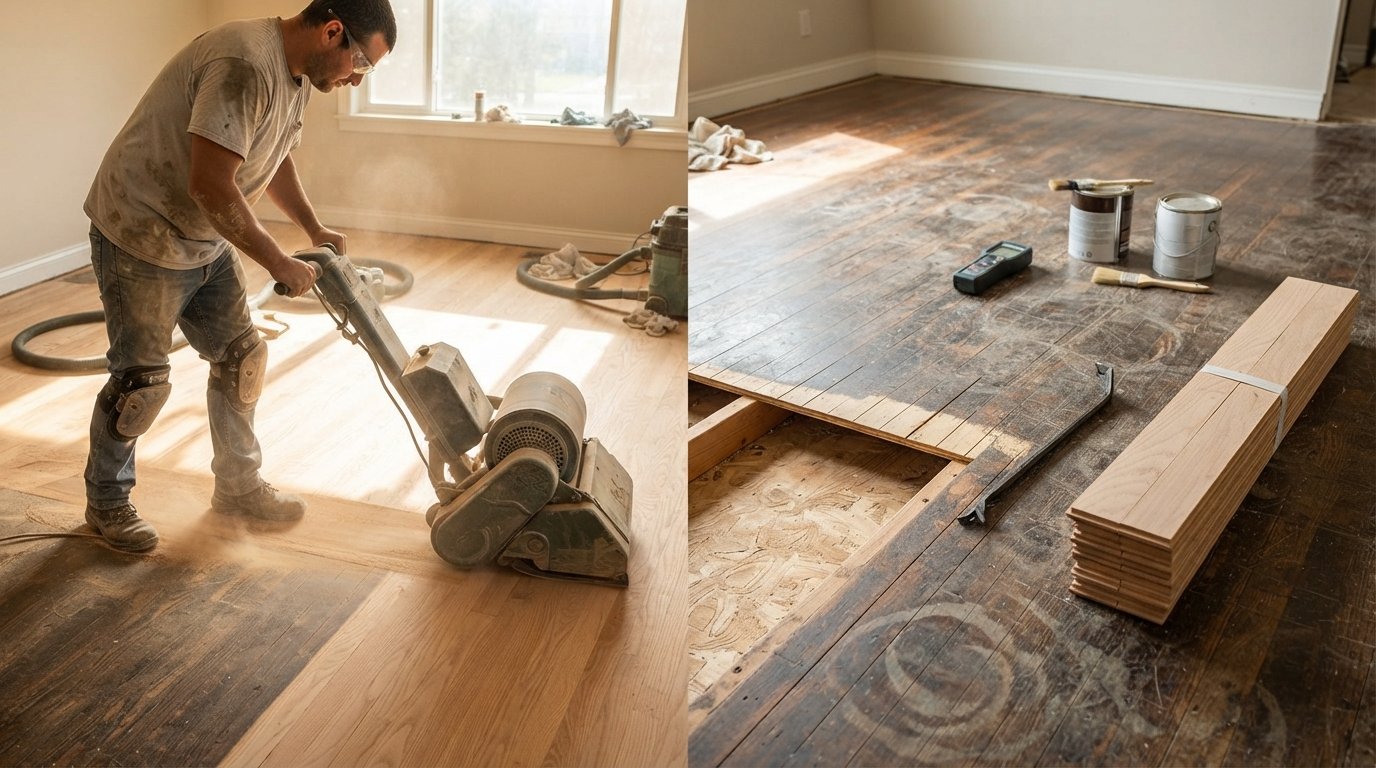
Refinishing means sanding down the existing finish and a whisper of the wood surface, then applying new stain and protective coats. You keep the original boards, so you keep the character, the patina, and the history. Replacement means pulling up the old flooring and installing new planks, which gives you a fresh surface but discards the existing material. The gap in cost and disruption is significant, but so is the gap in what each option can fix.
Think of refinishing as a reset button for the surface. It removes shallow scratches, dullness, light stains, and worn finish. It cannot fix deep gouges, cupped boards, water damage that has penetrated the wood, or gaps caused by structural movement. Replacement is the heavier hammer. It solves all of those problems because you are starting with new material, but it also means new material costs, more labor, and a longer timeline.
Here is the practical way to frame the choice. If the damage is mostly cosmetic and the boards are thick enough to sand again, refinishing almost always wins on cost and speed. If the damage is structural, the boards are too thin, or you want a different species or width, replacement is the honest answer. Most homeowners land somewhere in the middle and need a professional assessment to know which side of the line they are on.
Hardwood Floor Refinishing vs Replacement Cost and Durability: The Numbers Side by Side
Cost is usually the first thing homeowners ask about, and for good reason. The spread between these two options is wide enough to change the entire scope of a renovation budget. The figures below reflect typical U.S. ranges for mid-grade materials and professional labor, but your local market and the condition of your floors will move the numbers up or down.
- Refinishing: $1.50 to $4.00 per square foot, including sanding, staining, and sealing. A 500 square foot room typically runs $750 to $2,000.
- Replacement: $6.00 to $12.00 per square foot for solid hardwood, including removal and disposal of old flooring, new material, and installation. That same 500 square foot room runs $3,000 to $6,000 or more.
- Site-finished vs prefinished: Prefinished planks cost more per square foot but install faster, which can narrow the labor gap. Site-finished floors cost less in material but add drying time and dust.
- Hidden costs: Replacement may require new subfloor repair, transition strips, baseboard removal, and door trimming. Refinishing may require a few board replacements, which adds $200 to $600 depending on how many boards need to be woven in.
Durability is where the comparison gets more interesting. A properly refinished floor with a quality polyurethane or water-based finish will last 10 to 15 years in a normal household, and longer if you maintain it well and keep pets' nails trimmed. A new solid hardwood floor, installed correctly, can last 30 to 50 years or more, and it can be refinished multiple times over its life. So replacement wins on total lifespan, but refinishing wins on cost per year of added life in many cases.
There is also a hidden durability factor: the thickness of the wear layer. Solid hardwood planks are usually 3/4 inch thick, which gives you several refinishing cycles over the life of the floor. Engineered hardwood has a thinner wear layer, sometimes as little as 2 millimeters, which may only tolerate one or two light sandings. If you have engineered flooring, check the wear layer before committing to refinishing. A flooring contractor can measure it and tell you whether there is enough material to sand safely.
When Refinishing Is the Smarter Choice
Refinishing shines when the bones of your floor are still good. If the boards are flat, firmly attached, and free of deep water damage, you can usually restore the surface and enjoy a floor that looks nearly new for a fraction of the replacement cost. This is especially true for older homes with original hardwood, where the wood quality often exceeds what you can buy today.
Refinishing also makes sense when you want to change the color or sheen without changing the floor. Going from a golden oak to a dark walnut stain, or from glossy to matte, is a refinishing job, not a replacement job. It is also the better choice when you are preparing a home for sale and want to freshen the floors without blowing the budget. Buyers notice shiny, clean floors, and a refinish delivers that impression for far less than new flooring.
Consider refinishing when:
- The wear layer is thick enough for at least one more sanding.
- Damage is limited to surface scratches, dullness, or light stains.
- You want to keep the original wood character and patina.
- You are working within a tight budget or preparing to sell.
- The floor is structurally sound with no cupping, buckling, or soft spots.
One more point in refinishing's favor: it is faster. Most rooms are back in service within three to five days, including dry time. Replacement can take one to three weeks depending on material availability and subfloor work. If you need to stay in the home during the project, that difference matters.
When Replacement Beats Refinishing
Replacement is the right call when the floor has problems that sanding cannot solve. Deep gouges, pet urine stains that have soaked into the wood, water damage from a leak, and boards that have cupped or buckled are all signs that the surface is not the only issue. Sanding a damaged floor can actually make things worse by exposing soft, compromised wood.
Thin wear layers are another dealbreaker. If your engineered floor has a 2 millimeter wear layer and it has already been refinished once, there may not be enough material left to sand again without hitting the core. In that case, replacement is the only durable option. The same goes for floors with widespread gaps, squeaks caused by loose subfloor, or a history of moisture problems that keep coming back.
Replacement also makes sense when you want a different look or material. If you have always wanted wider planks, a different species, or a completely different color family, replacement gives you a clean slate. It is also the better choice for high-traffic commercial spaces or homes with large pets, where a new, thicker wear layer will hold up longer.
Think about replacement when:
- The wear layer is too thin for another sanding.
- There is deep water damage, pet stains, or rot.
- Boards are cupped, buckled, or heavily gapped.
- You want a different species, width, or finish.
- The subfloor needs repair that requires removing the flooring anyway.
If you are weighing a larger renovation, it helps to see how flooring fits into the bigger budget picture. Our guide on HVAC replacement cost and energy savings shows how homeowners prioritize systems upgrades alongside cosmetic work, which is a useful frame when you are deciding where to spend first.
Durability Factors That Change the Math
Durability is not just about the finish. It is about the wood species, the finish type, the installation quality, and how the floor is used. Oak and hickory are harder than pine or fir, so they resist dents better. Brazilian cherry and other exotic hardwoods are harder still, but they cost more and can be harder to refinish cleanly. If you are choosing new flooring, species selection is one of the biggest levers you have on long-term durability.
Finish type matters too. Water-based polyurethane dries faster and has lower odor, but oil-based finishes often build a slightly thicker film and can be more forgiving in high-traffic areas. Hardwax oil finishes look natural and are easy to spot-repair, but they require more frequent maintenance. The right choice depends on your household: kids, pets, and heavy foot traffic push you toward a more durable finish, while a low-traffic guest room can handle something lighter.
Installation quality is the quiet durability killer. A floor that is nailed or stapled properly, with the right expansion gaps and moisture barriers, will outperform a floor that was rushed. If you are replacing, this is where a vetted contractor earns their keep. If you are refinishing, the sanding and coating process matters just as much: uneven sanding, skipped grits, or thin finish coats will shorten the life of the job no matter how good the wood is.
One more factor: moisture control. Hardwood floors move with humidity. If your home has wide swings in moisture, even a perfect installation can cup or gap over time. A whole-home humidity plan, or at least a consistent indoor humidity level, will extend the life of both refinished and new floors.
How to Decide: A Simple Framework
When you are stuck between refinishing and replacement, run through this sequence. It forces you to confront the variables that actually change the answer.
- Measure the wear layer. If it is thick enough for another sanding, refinishing stays on the table. If not, replacement is the durable choice.
- Assess the damage. Surface-level wear points to refinishing. Structural damage, deep stains, or widespread cupping point to replacement.
- Check the budget and timeline. Refinishing is cheaper and faster. Replacement costs more and takes longer but resets the clock.
- Consider your plans for the home. Selling soon? Refinish. Staying for decades and want a different look? Replacement may be worth it.
- Get professional quotes for both. A contractor can spot subfloor issues and wear-layer limits that you cannot see from the surface.
That last step is where most homeowners gain clarity. A good contractor will tell you honestly whether refinishing will hold up or whether you are better off replacing. They will also flag hidden costs, like subfloor repair or board replacement, that change the math. Getting two or three quotes is standard practice, and it protects you from both overspending and underspending on a job that will not last.
If you are planning a broader renovation and want to compare costs across trades, it helps to work with a platform that connects you to local pros who can give free estimates. HomeRemodelingsContractors helps homeowners plan affordable home improvement projects and connect with experienced local contractors, covering remodeling, repairs, upgrades, and free estimates so you can compare options and move forward with confidence.
Planning the Project Without Surprises
Once you have decided, the next step is planning. For refinishing, the main variables are dust control, drying time, and furniture moving. Most contractors use dust-containment systems, but you should still expect some disruption. You will need to clear the room, keep pets and kids off the floor for the recommended cure time, and plan for a few days of limited access. The payoff is a floor that looks dramatically better for a modest investment.
For replacement, the planning is bigger. You will need to choose material, schedule delivery, and coordinate removal and disposal of the old floor. If the subfloor needs repair, that adds time and cost. You may also need to remove and reinstall baseboards, trim doors, and handle transitions to other rooms. A good contractor will walk you through the sequence so you know what to expect each day.
Budgeting tip: always add a 10 to 15 percent contingency for flooring projects. Hidden issues, like a soft subfloor or a few boards that need to be custom-matched, are common. Having a cushion means you can handle them without derailing the project. It also gives you room to upgrade the finish or add a moisture barrier if the contractor recommends it.
Finally, think about maintenance. Refinished floors need gentle cleaning, felt pads on furniture, and periodic recoating every few years in high-traffic areas. New floors need the same care, plus a longer break-in period for the finish to fully cure. Either way, a little maintenance goes a long way toward protecting your investment.
Hardwood floor refinishing vs replacement cost and durability comes down to the condition of your wood and your long-term plans. If the wear layer is thick and the damage is surface-level, refinishing delivers the best value and keeps the character you already love. If the floor is too thin, too damaged, or you want a different look, replacement is the durable, long-term answer. Get professional quotes for both, check the wear layer, and let the numbers guide you. With the right information and a trusted local contractor, you can restore or replace your floors with confidence and stay within budget.