
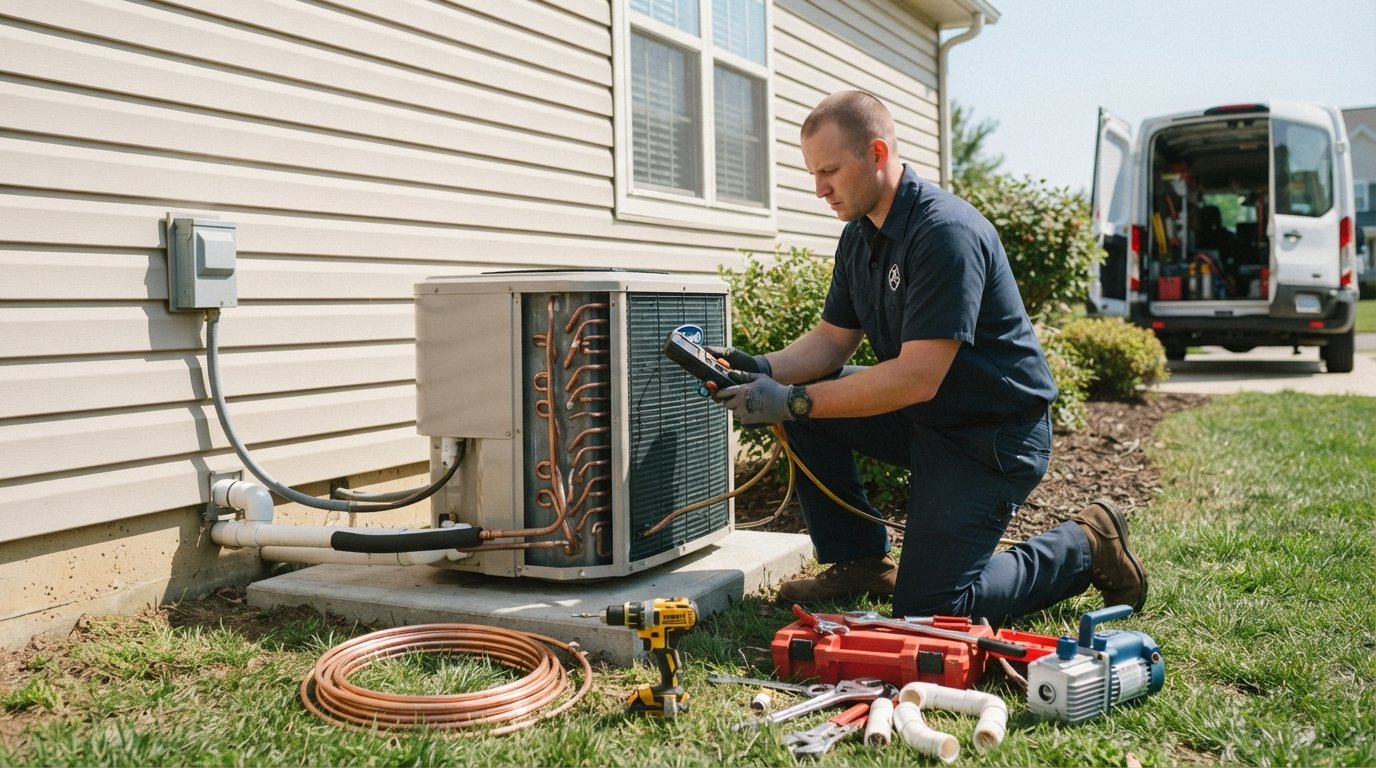
HVAC Replacement Cost and Energy Savings in 2026
HVAC system replacement cost and energy efficiency benefits explained: realistic 2026 prices, rebates, and monthly savings that pay you back.

By Liam Weston
Learn more about Heating System Installation or Replacement for guides, costs, and what to expect.
Compare Heating System Installation or Replacement Pros Near You

Enter your ZIP code to compare top-rated local professionals and request free quotes.
A failing air conditioner in July or a furnace that quits in January forces a decision fast, and most homeowners have no idea what a fair price looks like. The national average for a full HVAC system replacement lands between $5,000 and $12,500, but that range hides a lot: equipment tier, home size, duct condition, and whether you qualify for federal tax credits. Meanwhile, the energy efficiency benefits of a modern system can cut monthly heating and cooling bills by 20 to 40 percent, which quietly pays back a meaningful share of the project over time. This guide breaks down real numbers, rebate programs, and the planning steps that keep you from overpaying.
What Drives HVAC System Replacement Cost in 2026
HVAC pricing is not random. Contractors build quotes from four buckets: equipment, labor, materials, and permits. Equipment is the biggest single line item, and it swings wildly based on efficiency rating and brand tier. A builder-grade 14.3 SEER2 air conditioner costs far less than a variable-speed 18 SEER2 heat pump, even though both cool the same square footage. Labor adds 30 to 50 percent on top of equipment in most markets, and it climbs higher if your install requires duct modifications, a new concrete pad, or electrical panel upgrades.
Home size matters more than most people expect. A 1,200-square-foot ranch might need a 2-ton system, while a 3,000-square-foot two-story home often needs 5 tons or a zoned setup with two units. Each additional ton adds roughly $1,000 to $2,500 in equipment and labor. Regional climate also plays a role: homeowners in Phoenix or Miami pay more for cooling capacity, while homeowners in Minneapolis or Buffalo pay more for high-output furnaces and heat pumps rated for cold climates.
Here is a realistic breakdown of what most homeowners pay for common configurations in 2026:
- Entry-level split system (AC plus gas furnace): $5,000 to $8,000 installed for a 1,500 to 2,000 square foot home.
- Mid-tier high-efficiency system: $8,000 to $12,000, including a 16 to 17 SEER2 AC and a 96 percent AFUE furnace.
- Premium variable-speed heat pump: $12,000 to $18,000, often eligible for the full $2,000 federal tax credit.
- Ductless mini-split (single zone): $3,000 to $5,500 installed, with multi-zone systems running $8,000 to $15,000.
- Full system plus duct replacement: $15,000 to $25,000, common in homes built before 1980 with leaking or undersized ducts.
Those numbers assume no surprises. In practice, older homes often need a new condensate drain line, a fresh thermostat with communicating capabilities, or a permit that adds $150 to $500. Always ask for a line-item quote rather than a single lump sum, because that is how you spot padding. If you are bundling HVAC work with other projects, our roof replacement cost guide explains how to sequence major exterior upgrades so you only pay for scaffolding and permits once.
How Energy Efficiency Benefits Lower Your Monthly Bills
Efficiency ratings are not marketing fluff. SEER2 measures cooling efficiency, AFUE measures furnace efficiency, and HSPF2 measures heat pump heating efficiency. A system rated 14.3 SEER2 is the current minimum, but upgrading to 18 SEER2 can reduce cooling costs by roughly 20 percent in a typical home. Moving from an old 10 SEER unit (common in homes built before 2006) to a modern 16 SEER2 system can cut cooling consumption by nearly 40 percent.
The savings compound when you pair efficiency with smart controls. A programmable or smart thermostat trims 8 to 12 percent off heating and cooling bills on its own by reducing runtime when nobody is home. Variable-speed compressors and blowers go further: instead of blasting on and off at full power, they run at low capacity for longer stretches, which stabilizes humidity and temperature while drawing fewer amps. Homeowners in humid climates often notice the comfort difference before they notice the bill difference, because a properly sized variable-speed system removes moisture far more effectively.
Real-world savings depend on your starting point. The table below shows typical annual savings after replacing an older system with a high-efficiency unit:
- Replacing a 10 SEER AC with a 16 SEER2 unit: $400 to $700 saved per cooling season in a 2,000 square foot home.
- Replacing a 70 percent AFUE furnace with a 96 percent model: $250 to $500 saved per winter.
- Switching from electric resistance heat to a cold-climate heat pump: $800 to $1,500 saved annually in many markets.
- Adding a smart thermostat and sealing ducts: $150 to $350 saved per year with minimal upfront cost.
Over a 15-year system lifespan, those numbers add up to $6,000 or more in avoided utility costs. That does not erase the upfront price of replacement, but it changes the math considerably. A $10,000 install that saves $600 per year effectively costs $1,000 less after five years, before you count rebates or tax credits.
Federal Tax Credits and Utility Rebates Worth Claiming
The Inflation Reduction Act reshaped HVAC incentives, and in 2026 homeowners can still claim meaningful money back. The Energy Efficient Home Improvement Credit covers 30 percent of project costs, up to $2,000 per year for qualifying heat pumps and heat pump water heaters, and up to $600 for furnaces, air conditioners, and boilers. There is also a $1,200 annual cap on most categories combined, so timing matters if you are replacing multiple systems.
Utility rebates stack on top of federal credits in many states. Xcel Energy, Duke Energy, Con Edison, and dozens of regional cooperatives offer $300 to $1,500 for high-efficiency equipment, and some add extra for smart thermostats, duct sealing, or load-management enrollment. The catch is paperwork: most rebates require an invoice with model and serial numbers, proof of installation by a licensed contractor, and submission within 60 to 90 days.
To capture every dollar available, follow this sequence:
- Ask your contractor for the AHRI certificate number for the exact equipment being installed.
- Check the ENERGY STAR and DSIRE databases for federal, state, and utility programs in your ZIP code.
- Confirm which incentives require a licensed contractor versus a DIY install.
- Submit rebate forms immediately after installation while the paperwork is fresh.
- Keep copies of everything for tax filing, since the IRS may request documentation.
Stacked correctly, credits and rebates can shave $2,000 to $4,000 off a heat pump replacement. That is often the difference between choosing a mid-tier system and a premium one, and it is a strong argument for upgrading efficiency rather than replacing like-for-like.
Choosing the Right Contractor and System Size
The single biggest mistake homeowners make is accepting a quote based on square footage alone. Proper sizing requires a Manual J load calculation, which factors in insulation, window area, roof color, ceiling height, and local design temperatures. A contractor who skips the Manual J and simply matches the old system's tonnage is guessing, and an oversized unit will short-cycle, wear out faster, and leave your home clammy in summer.
When you request estimates, ask each contractor three questions: Will you perform a Manual J calculation? Will you inspect and pressure-test the ducts? What is the labor warranty length, and does it cover refrigerant leaks? Contractors who answer confidently and provide written documentation are usually the ones worth hiring. You can compare vetted local pros and request free estimates through platforms like HomeRemodelingsContractors.com, which connects homeowners with experienced contractors for remodeling, repairs, and upgrades.
Timing also affects price. HVAC demand peaks in late spring and mid-winter, and contractors charge full rate or add emergency premiums during those windows. Scheduling replacement in March, April, September, or October often saves 10 to 15 percent and gives you more leverage to negotiate. If your system is 12 to 15 years old, planning a proactive replacement before it fails is almost always cheaper than waiting for a mid-summer breakdown, when you have no negotiating room and limited equipment choices.
Financing Options That Make Replacement Affordable
Very few homeowners pay $10,000 out of pocket in one transaction, and they do not have to. Most HVAC contractors offer financing through Synchrony, Wells Fargo, or GreenSky, with promotional periods ranging from 12 to 60 months. Zero-percent promos are common for 12 to 18 months, but read the fine print: if you miss the payoff deadline, deferred interest can retroactively apply to the full purchase amount.
Other paths include home equity lines of credit, which typically carry lower rates than contractor financing, and local utility on-bill repayment programs that attach the cost to your monthly utility statement. Some states and municipalities also offer Property Assessed Clean Energy (PACE) financing, which lets you repay efficiency upgrades through a property tax assessment. PACE is convenient but can complicate a future home sale, so disclose it to your real estate agent early.
Whichever route you choose, compare the total cost of financing against the projected energy savings. If a $12,000 system financed at 7 percent over five years costs $14,300 total, but saves $600 per year in utilities, your effective net cost after five years is closer to $11,300. Running that math before you sign keeps the decision grounded in reality rather than monthly payment psychology.
Long-Term Value and Maintenance After Replacement
A new HVAC system is not a set-and-forget purchase. Annual maintenance, typically $100 to $250, keeps the warranty valid and preserves efficiency. Dirty filters, low refrigerant, and neglected condensate lines are the top three causes of premature failure, and all three are cheap to prevent. Changing filters every 60 to 90 days and scheduling a professional tune-up each spring and fall will extend system life by three to five years on average.
Efficiency also degrades if the duct system leaks. The average home loses 20 to 30 percent of conditioned air through duct leaks, poorly sealed joints, and disconnected runs in attics and crawlspaces. Sealing and insulating ducts costs $1,500 to $3,000, but it can improve effective efficiency by 15 percent or more, which means your new high-efficiency equipment actually delivers the performance you paid for.
Finally, think about resale. A documented HVAC replacement with a transferable warranty is a selling point that appraisers and buyers notice, especially in hot or cold climates where system age is a common negotiation lever. Keeping the installation invoice, AHRI certificate, and maintenance records in a folder gives you proof of value when it matters. Replacing an HVAC system is one of the few home improvements that pays you back every single month through lower bills and better comfort, and planning it carefully turns a stressful emergency into a smart long-term investment.