
Exterior Door Replacement Cost and Security Features for 2026
Exterior door replacement cost and security features explained, plus free estimates. Call 8333658755 to compare trusted local pros today.

By Leo Cross
Learn more about Door Installation for guides, costs, and what to expect.
Compare Door Installation Pros Near You

Enter your ZIP code to compare top-rated local professionals and request free quotes.
A front door that sticks, leaks, or rattles is more than a nuisance. It is a daily reminder that your home's first line of defense may be failing. Exterior door replacement cost and security features sit at the center of every smart upgrade decision, because the right door does two jobs at once: it protects what matters most and it pays you back through lower energy bills and stronger curb appeal. Whether you are dealing with a warped frame, a break-in scare, or simply a dated entry that drags down your home's look, understanding what you will spend and what you will gain puts you in control of the project from day one.
What Drives the Price of a New Exterior Door
The sticker price on a door slab rarely tells the whole story. Installation, framing, hardware, and finishing often add up to more than the door itself. Homeowners who plan ahead avoid the shock of a mid-project budget blowout by understanding each cost layer before signing anything.
Material choice is the biggest single factor. Steel doors typically land at the lower end of the range, fiberglass sits in the middle, and solid wood or custom architectural designs push toward the top. Size and configuration matter too: a standard 36-inch single door costs far less than a double entry with sidelights and a transom. Labor varies by region, wall condition, and whether the installer must reframe the opening or simply swap the slab.
Here is a practical breakdown of what most U.S. homeowners can expect to pay in 2026, including materials and professional installation:
- Steel entry door: $500 to $1,500 installed, a budget-friendly pick with solid security when paired with a reinforced frame.
- Fiberglass door: $1,200 to $3,500 installed, offering durability, low maintenance, and convincing wood-grain textures.
- Solid wood door: $2,000 to $5,000 or more installed, prized for warmth and character but requiring regular sealing.
- Custom or oversized entry: $4,000 to $10,000 and up, including double doors, sidelights, and specialty glass.
Those figures assume a straightforward replacement into an existing opening. If the frame is rotted, the wall is out of square, or you are adding a door where none existed, expect labor and carpentry costs to climb. A reputable contractor will inspect the opening before quoting, which is why free estimates matter so much. Platforms that connect homeowners with vetted local pros, such as trusted local remodeling contractors, make it easier to compare real numbers instead of guesswork.
Do not overlook the small line items. Door hardware, weatherstripping, threshold plates, paint or stain, and disposal of the old door can add a few hundred dollars. Ask each bidder to itemize these so you can compare apples to apples.
Security Features That Actually Matter
A beautiful door with a flimsy lock is an open invitation. Burglars look for the easiest point of entry, and the front door is often it. The good news is that meaningful security upgrades cost far less than most people assume, and many can be bundled into the replacement project itself.
Start with the lock. A single-cylinder deadbolt with a Grade 1 or Grade 2 rating from ANSI offers the best resistance to picking, drilling, and kicking. Cheap builder-grade locks fail quickly under force. Pair the deadbolt with a reinforced strike plate and a heavy-duty metal box that anchors deep into the wall stud, not just the soft frame.
Next, consider the door material and construction. Solid core doors resist impact far better than hollow ones. Fiberglass and steel doors with multi-point locking systems create three or more locking points along the frame, making them dramatically harder to force. Many modern entries also include concealed hinges and security glazing that resists shattering.
Smart technology adds another layer. Keyless entry, video doorbells, and app-controlled locks let you grant access remotely, monitor deliveries, and receive alerts when someone approaches. These features integrate well with broader smart home systems and often lower homeowner insurance premiums. If you are weighing broader upgrades, our roof replacement cost guide explains how exterior investments work together to protect your home and your budget.
Finally, never underestimate the frame. A reinforced frame with a solid core and proper shimming can double the forced-entry resistance of an otherwise ordinary door. When you request estimates, ask specifically how the installer plans to secure the strike side and the hinge side. That single question separates thorough pros from quick-fix crews.
How to Budget Without Surprises
Smart budgeting starts before you shop. Set a total project ceiling, then work backward: door, hardware, labor, permits if required, and a contingency of 10 to 15 percent for hidden damage. Older homes frequently hide rot, insect damage, or outdated framing behind the trim, and discovering it mid-project is far cheaper when the money is already set aside.
Timing matters as well. Off-season scheduling, choosing in-stock standard sizes, and opting for paint-ready finishes instead of factory custom colors can shave hundreds off the bill. If your project is part of a larger renovation, bundling exterior door replacement with siding, roofing, or window work often reduces total labor costs because crews are already on site.
Financing options deserve a look too. Many contractors offer payment plans, and some home improvement marketplaces provide free estimates that let you compare multiple bids side by side. Getting three quotes is not just a negotiating tactic; it is how you learn the fair market range for your specific home, region, and door type.
Keep a simple spreadsheet with columns for material, labor, hardware, permits, and contingency. As bids come in, fill in each column. Patterns emerge quickly: one contractor may be low on labor but high on materials, while another bundles everything into one tidy number. The goal is not always the cheapest bid; it is the clearest, most complete one.
Choosing the Right Door for Your Home
Function should lead, but style matters for resale. A door that matches your home's architecture feels intentional, while a mismatched entry can look like an afterthought. Colonial homes suit paneled wood or fiberglass with classic hardware. Modern homes pair well with sleek steel, large glass panels, and minimalist pulls. Craftsman bungalows call for warm wood tones and simple, sturdy lines.
Color psychology plays a role too. Deep reds, blacks, and navy blues create a confident, welcoming impression, while neutral tones blend quietly into the facade. If you plan to sell within a few years, a bold but classic color often delivers the best return on investment.
Energy performance is another factor worth weighing. Look for doors with a proper ENERGY STAR rating, insulated cores, and quality weatherstripping. A well-sealed door reduces drafts, lowers heating and cooling costs, and keeps out noise and pests. Those savings accumulate quietly month after month, offsetting part of the upfront cost.
Finally, think about daily life. Do you need a pet door, a mail slot, or a keypad for the kids? Do you want glass that lets in light but blocks prying eyes? Small functional choices made before installation are far cheaper than retrofits afterward.
Installation: Where Projects Succeed or Fail
Even a premium door performs poorly if installed badly. Gaps, misaligned hinges, and poor flashing lead to drafts, water damage, and security weak points. This is not a weekend DIY job for most homeowners; proper installation requires precise measurement, shimming, insulation, and sealing.
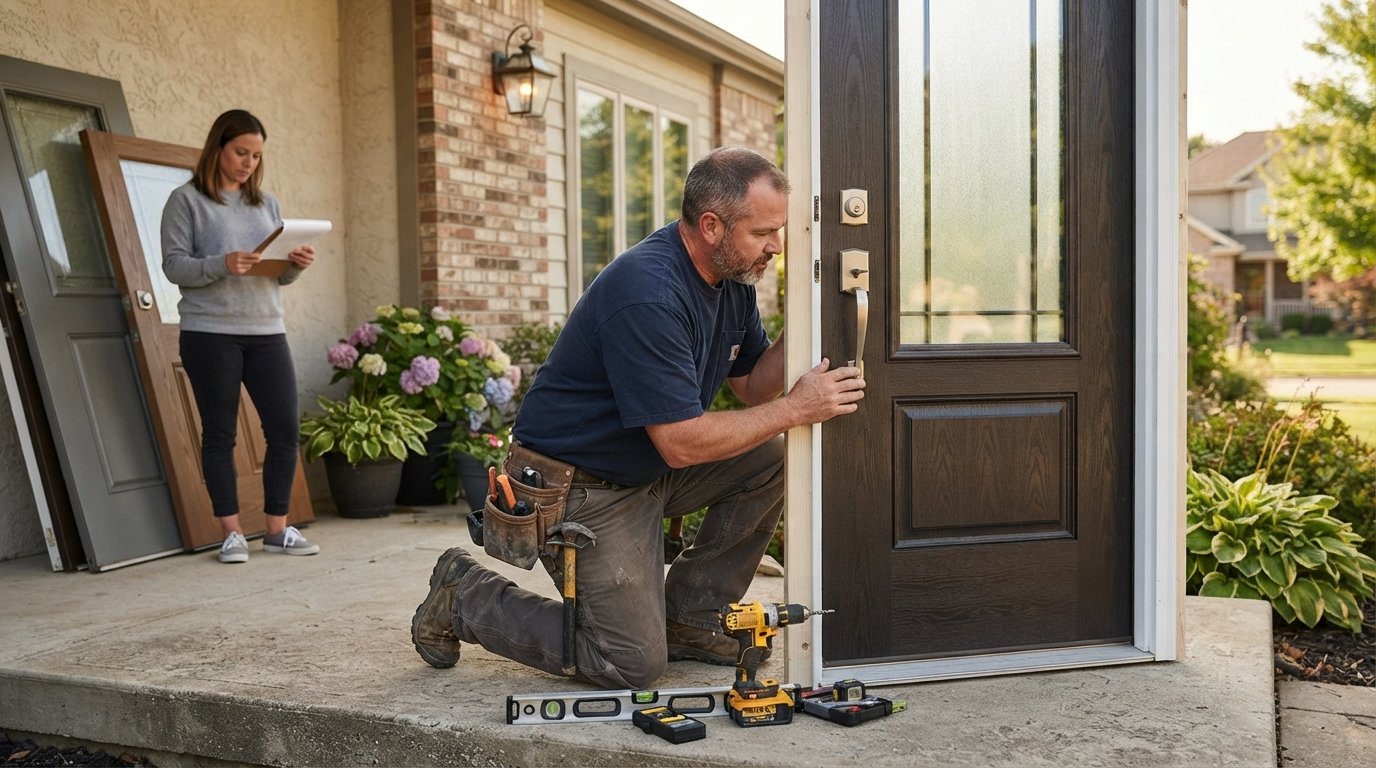
A quality installer will remove the old door, inspect and repair the frame, set the new unit plumb and level, insulate the perimeter, and test the lock and swing before finishing. They will also walk you through maintenance: lubricating hinges, checking weatherstripping, and touching up paint or stain as seasons change.
Before hiring, verify licensing, insurance, and references. Ask how long the work will take and who handles cleanup and disposal. A written contract should spell out the scope, timeline, payment schedule, and warranty. If a contractor pressures you to pay in full upfront or skips the paperwork, walk away.
This is where a matching service saves real time. Instead of cold-calling strangers, you can compare vetted local professionals, read about their specialties, and request free estimates in minutes. The right pro turns a stressful project into a smooth, predictable one.
Security and Cost: Getting the Best of Both
The smartest approach treats cost and security as one conversation, not two. A mid-range fiberglass door with a Grade 1 deadbolt, reinforced strike plate, and multi-point locking often costs less than a luxury wood door with basic hardware, yet it delivers superior protection and lower maintenance. Spend where it counts: the frame, the lock, and the installation.
Insurance companies notice. Many offer discounts for impact-rated doors, smart locks, and monitored security systems. Ask your agent what documentation they need, and keep receipts. Those discounts can offset a meaningful share of the project over time.
Ultimately, an exterior door replacement is one of the few home improvements that pays you back in safety, comfort, and curb appeal simultaneously. Plan the budget carefully, prioritize proven security features, and hire an experienced local professional who treats your entryway like the critical system it is. Do that, and every time you turn the key, you will feel the difference.