
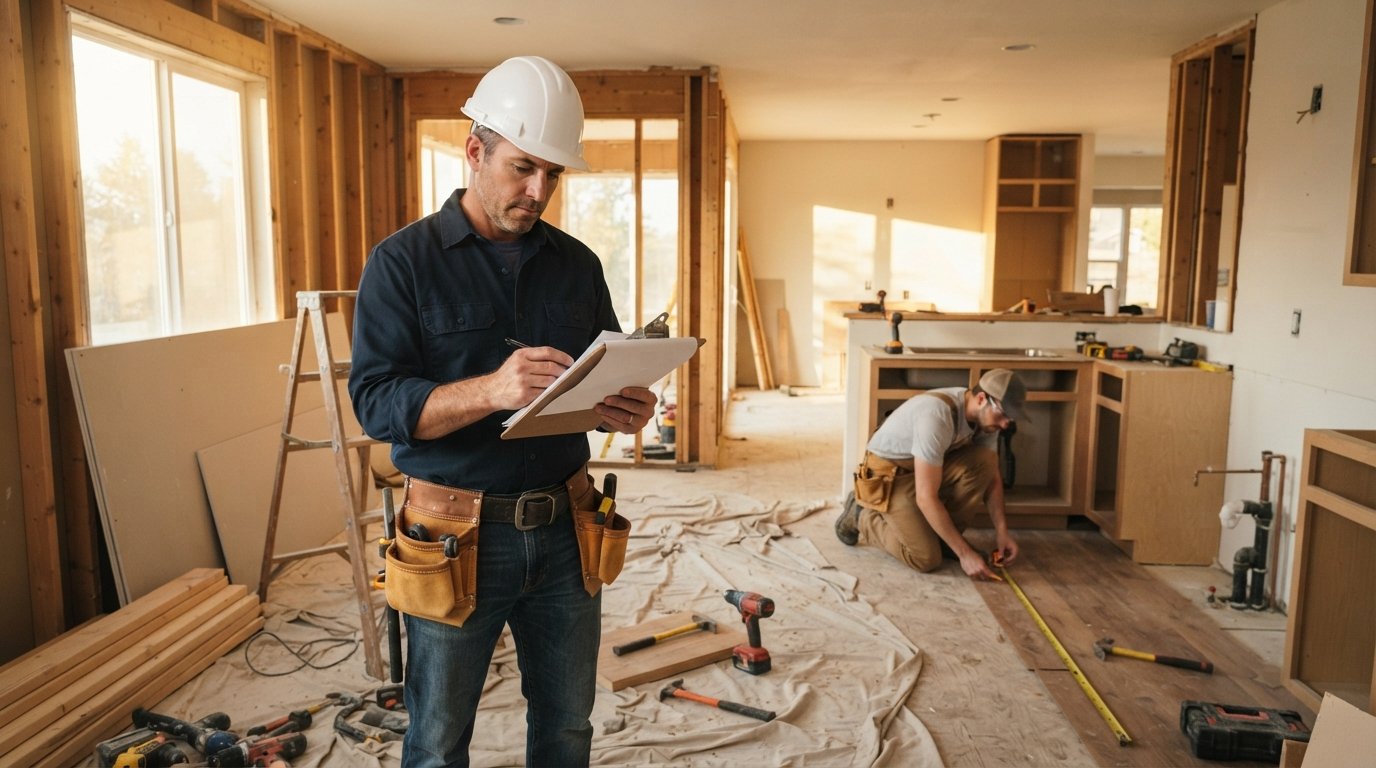
Full House Renovation Cost Per Square Foot: 2026 Pricing
Full house renovation cost per square foot ranges from $100 to $300 in 2026. Call 8333658755 to compare local contractor estimates and avoid surprise bills.

By Valerie Nguyen
Learn more about Home Remodeling for guides, costs, and what to expect.
Compare Home Remodeling Pros Near You

Enter your ZIP code to compare top-rated local professionals and request free quotes.
Planning a full house renovation is one of the most significant financial decisions a homeowner can make. Whether you are updating a dated property, reconfiguring a floor plan, or restoring a home before listing it on the market, the first question is almost always the same: how much does a full house renovation cost per square foot? In 2026, most homeowners spend between $100 and $300 per square foot for a complete renovation, with the national average landing near $150 to $200 per square foot depending on scope, materials, and region. That range is wide because a "full renovation" can mean anything from cosmetic surface updates to a down-to-studs rebuild of every system in the home.
Understanding what drives that number is the key to building a realistic budget. A kitchen alone can run $150 to $400 per square foot of kitchen space, while a bathroom often costs $250 to $600 per square foot because of tile, plumbing, and waterproofing. When you renovate the entire house at once, you also pay for shared systems: HVAC replacement, electrical panel upgrades, plumbing reroutes, and roofing. Those costs do not scale linearly with square footage, which is why larger homes often have a lower per-square-foot cost than smaller ones. This guide breaks down the real numbers, the variables that move them, and how to plan a project that fits your budget without cutting corners that hurt later.
What a Full House Renovation Actually Includes
A full house renovation is not a single service; it is a bundle of trades working in sequence. Before you can compare quotes, you need to define scope. A cosmetic renovation typically covers paint, flooring, light fixtures, and maybe new countertops. A mid-range renovation adds new cabinets, appliances, bathroom fixtures, and some drywall repair. A high-end or down-to-studs renovation replaces insulation, wiring, plumbing, drywall, and often reconfigures walls.
The per-square-foot cost climbs sharply as you move from cosmetic to structural. According to industry data, cosmetic updates average $50 to $100 per square foot, mid-range renovations run $100 to $200, and full gut renovations range from $200 to $400 or more. The difference is not just materials; it is labor, permits, engineering, and the cost of bringing an older home up to current building codes. Homes built before 1980 often contain asbestos, lead paint, or aluminum wiring, all of which require specialized abatement before the visible work begins.
Scope also determines timeline. A cosmetic renovation of a 2,000-square-foot home might take six to eight weeks. A full gut renovation of the same home can take six to ten months. During that time, you may need to live elsewhere, which adds $2,000 to $6,000 per month in temporary housing, storage, and meals. Smart homeowners factor these soft costs into the per-square-foot math from day one.
National Average Costs Per Square Foot in 2026
For 2026, the national average for a full house renovation sits between $150 and $250 per square foot for a mid-range project. That means a 2,000-square-foot home typically costs $300,000 to $500,000 to renovate completely. A 1,200-square-foot home often costs more per square foot, sometimes $200 to $300, because fixed costs like permits, design fees, and equipment mobilization are spread across fewer square feet.
Here is a practical breakdown by renovation level for a typical 2,000-square-foot single-family home:
- Cosmetic refresh: $100,000 to $200,000 ($50 to $100 per square foot). Paint, flooring, fixtures, minor repairs.
- Mid-range renovation: $200,000 to $400,000 ($100 to $200 per square foot). New kitchen and baths, some systems, updated finishes.
- High-end renovation: $400,000 to $700,000 ($200 to $350 per square foot). Custom cabinetry, stone surfaces, smart home integration, structural changes.
- Luxury or historic restoration: $700,000 and up ($350 to $500+ per square foot). Custom millwork, imported materials, full system replacement, architect-led design.
These ranges assume you are hiring licensed contractors and pulling permits. Unpermitted work may look cheaper upfront, but it can complicate a future sale, void insurance claims, and force you to redo work. If you are comparing renovation to a home addition, note that addition costs often run higher per square foot because they include foundations, exterior walls, and roofing from scratch. Our guide on home addition cost per square foot explains how that math differs from renovating existing space.
How Location Changes the Price
Geography is one of the biggest variables in renovation pricing. Labor rates, permit fees, and material delivery costs vary dramatically by state and city. In high-cost coastal markets like San Francisco, New York, or Boston, full renovations routinely exceed $300 per square foot and can reach $500 or more. In midwestern and southern markets like Ohio, Texas, or Georgia, the same scope might cost $120 to $200 per square foot.
Permit costs also vary. A full renovation permit in a major city can cost $3,000 to $10,000, while rural counties may charge a few hundred dollars. Some jurisdictions require design review, historic preservation approval, or energy compliance inspections that add time and fees. Always ask your contractor whether their quote includes permit fees, or whether those are billed separately.
Material availability matters too. In remote areas, delivering tile, cabinetry, and appliances can add 5 to 15 percent to material costs. In dense urban areas, you may pay for parking permits, elevator reservations, and debris removal that suburban homeowners never see. When you request free estimates through a platform like HomeRemodelingsContractors, you can compare local bids side by side and see how your market stacks up against the national average.
Line-Item Costs Inside a Full Renovation
To understand why per-square-foot pricing varies so much, it helps to see the individual trades. A full renovation includes multiple line items, each with its own labor and material split. The following list shows typical 2026 costs for a 2,000-square-foot home:
- Demolition and debris removal: $5,000 to $15,000. Includes dumpsters, labor, and disposal fees.
- Structural work: $10,000 to $50,000. Beam replacements, wall removal, foundation repairs.
- HVAC replacement: $8,000 to $20,000. New furnace, AC, ductwork, and vents.
- Electrical and plumbing: $15,000 to $40,000. Rewiring, panel upgrade, new pipes, fixtures.
- Drywall, paint, and trim: $10,000 to $25,000. Hanging, finishing, priming, and painting.
- Flooring: $8,000 to $30,000. Hardwood, tile, luxury vinyl, or carpet.
- Kitchen: $30,000 to $100,000. Cabinets, countertops, appliances, lighting.
- Bathrooms: $20,000 to $80,000 each. Tile, vanities, showers, toilets, plumbing.
- Roofing: $8,000 to $25,000. Shingles, underlayment, flashing, gutters.
- Windows and doors: $10,000 to $40,000. Replacement windows, exterior doors, interior doors.
Notice that kitchens and bathrooms dominate the budget. In many full renovations, those two rooms alone account for 30 to 45 percent of total cost. If your budget is tight, consider phasing the project: renovate one bathroom and the kitchen first, then save for the remaining rooms. Phasing reduces the amount of temporary housing you need and lets you spread costs across multiple years.
Another cost driver is whether you move plumbing or electrical. Keeping fixtures in their existing locations saves thousands in labor and materials. Moving a toilet six feet can cost $2,000 to $5,000 because it requires cutting concrete or subfloor, rerouting drain lines, and patching. If you can live with the current layout, you will save significantly.
Permits, Inspections, and Hidden Costs
Permits and inspections are non-negotiable in most jurisdictions. A full renovation typically requires a building permit, electrical permit, plumbing permit, and mechanical permit. Some cities also require a demolition permit and a separate permit for roofing or siding. Permit fees are usually based on project value, often 1 to 3 percent of construction cost, with minimum fees of $200 to $500.
Inspections happen at multiple stages: foundation, framing, rough electrical, rough plumbing, insulation, drywall, and final. Each inspection must pass before the next phase can proceed. If work fails inspection, you pay for re-inspection and the contractor's time to correct it. This is one reason hiring an experienced, licensed contractor matters. A contractor who knows local code requirements will build inspection checkpoints into the schedule and avoid costly delays.
Hidden costs also include change orders. Once walls are open, contractors often find rot, mold, outdated wiring, or plumbing that does not meet code. A good contract includes a contingency of 10 to 20 percent of the total budget for these discoveries. On a $300,000 renovation, that means setting aside $30,000 to $60,000. Homeowners who skip the contingency often run out of money before the project is finished.
How to Lower Your Per-Square-Foot Cost
There are legitimate ways to reduce renovation costs without sacrificing quality. The most effective strategy is to prioritize function over fashion. Spend money on things you cannot easily change later, such as plumbing, electrical, insulation, and roofing. Save on things you can upgrade later, such as light fixtures, paint colors, and cabinet hardware.
Another strategy is to keep the existing footprint. Adding square footage triggers foundation, framing, roofing, and HVAC costs that can double your per-square-foot price. If you can reconfigure interior walls instead of adding on, you will save significantly. Similarly, refinishing existing hardwood floors instead of replacing them can save $5 to $15 per square foot.
You can also save by handling some work yourself. Painting, demolition, and landscaping are common DIY tasks that reduce labor costs. However, be honest about your skills and available time. A botched DIY job often costs more to fix than hiring a professional from the start. If you are unsure where to draw the line, consult a licensed contractor during the planning phase.
Finally, get multiple bids. Prices for the same scope can vary by 20 to 40 percent between contractors in the same market. When you request free estimates, make sure each contractor bids on the exact same scope of work so you can compare apples to apples. Ask for a written, itemized estimate that lists materials, labor, permits, and timeline. Avoid contractors who give verbal quotes or ask for large upfront payments before work begins.
Renovation ROI: What You Get Back
Not all renovation spending translates into higher home value. According to national remodeling impact data, the highest ROI projects are typically garage door replacement, entry door replacement, and minor kitchen remodels, which can return 70 to 100 percent of cost at resale. Major upscale projects, such as high-end kitchens and bathrooms, often return 50 to 70 percent. Full house renovations rarely return dollar for dollar unless the home was severely distressed before the work began.
That does not mean full renovations are a bad investment. If you plan to stay in the home for many years, the value is in comfort, energy efficiency, and functionality. A new HVAC system, updated insulation, and modern windows can cut utility bills by 20 to 40 percent. A reconfigured layout can make a small home feel larger without adding square footage. These benefits do not show up in a resale appraisal, but they improve daily life.
If your goal is to maximize resale value, focus on the areas buyers care about most: kitchens, bathrooms, curb appeal, and energy efficiency. A mid-range kitchen remodel and a refreshed primary bathroom often deliver better returns than a full gut renovation. Consult a local real estate agent or appraiser before committing to a large project so you understand your specific market.
Planning Your Budget and Hiring the Right Team
The most successful renovations start with a realistic budget and a clear scope. Before you call contractors, write down what you want to change, what you want to keep, and what you are willing to compromise on. Then set a budget that includes construction costs, permits, design fees, contingency, and temporary housing. A common rule is to keep total project cost under 10 to 15 percent of your home's value, though this varies by neighborhood and market.
When you are ready to hire, look for licensed, insured contractors with verifiable references and a portfolio of similar projects. Ask for proof of insurance, a written contract, and a detailed payment schedule tied to milestones. Never pay more than 10 to 20 percent upfront, and always hold a final payment until the punch list is complete and inspections have passed.
If you are unsure where to start, use a contractor matching service to compare local professionals who have experience with full renovations in your area. The right team will help you refine your scope, identify cost-saving opportunities, and navigate permits and inspections. The wrong team can turn a dream renovation into a financial nightmare. Take your time, ask questions, and trust your instincts.
A full house renovation is a major undertaking, but with careful planning and realistic expectations, it can transform your home and your daily life. Know your per-square-foot numbers, build in a contingency, and hire professionals you trust. That combination gives you the best chance of finishing on time, on budget, and with a home you love.