
Eco Friendly Home Renovations That Add Long Term Value
Eco friendly home renovations that add long term value start with insulation, HVAC, and durable materials. Call 8333658755 to compare local pros.

By Andrew Hayes
Learn more about Home Remodeling for guides, costs, and what to expect.
Compare Home Remodeling Pros Near You

Enter your ZIP code to compare top-rated local professionals and request free quotes.
Homeowners today face a quiet dilemma: they want to upgrade their homes, but they also want to keep utility bills low, reduce their environmental footprint, and protect resale value. The good news is that these goals are not in conflict. In fact, the most durable renovations on the market right now are the ones that combine efficiency, comfort, and smart financial planning. Eco friendly home renovations that add long term value are not about trendy gimmicks or expensive solar arrays that take decades to pay back. They are about targeted upgrades that lower operating costs, improve indoor comfort, and appeal to the next buyer.
This guide walks through the highest-impact green renovations, how to budget for them, and how to hire the right professionals without overpaying. Whether you are planning a kitchen refresh, an HVAC replacement, or a full exterior update, the principles are the same: spend where it counts, verify the numbers, and choose materials and systems that keep working for years after the dust settles.
Why Green Renovations Pay Off Financially
Energy efficiency is no longer a niche preference. Utility costs have climbed steadily, and buyers now ask for efficiency documentation during showings. A home that costs less to run is easier to sell and easier to finance. According to industry data, efficient homes often sell faster and command a premium in competitive markets, especially in regions with extreme heat or cold where monthly bills can swing by hundreds of dollars.
The financial logic is simple. Every dollar you save on monthly utilities is a dollar of disposable income, and that translates into a higher affordable purchase price for a buyer. If a renovation cuts $80 per month from a power bill, that is nearly $1,000 per year in savings, which supports a meaningfully larger mortgage at current rates. That is why appraisers and real estate agents increasingly flag efficiency upgrades as value drivers rather than cosmetic extras.
There is also a durability angle. Eco friendly materials such as engineered hardwood, recycled-content insulation, and low-VOC paints tend to hold up better against moisture, pests, and wear. Renovations that last longer lower the total cost of ownership, which is exactly what long term value means. Instead of replacing a cheap fixture every five years, you install something that performs for fifteen.
Insulation and Air Sealing: The Highest Return First Step
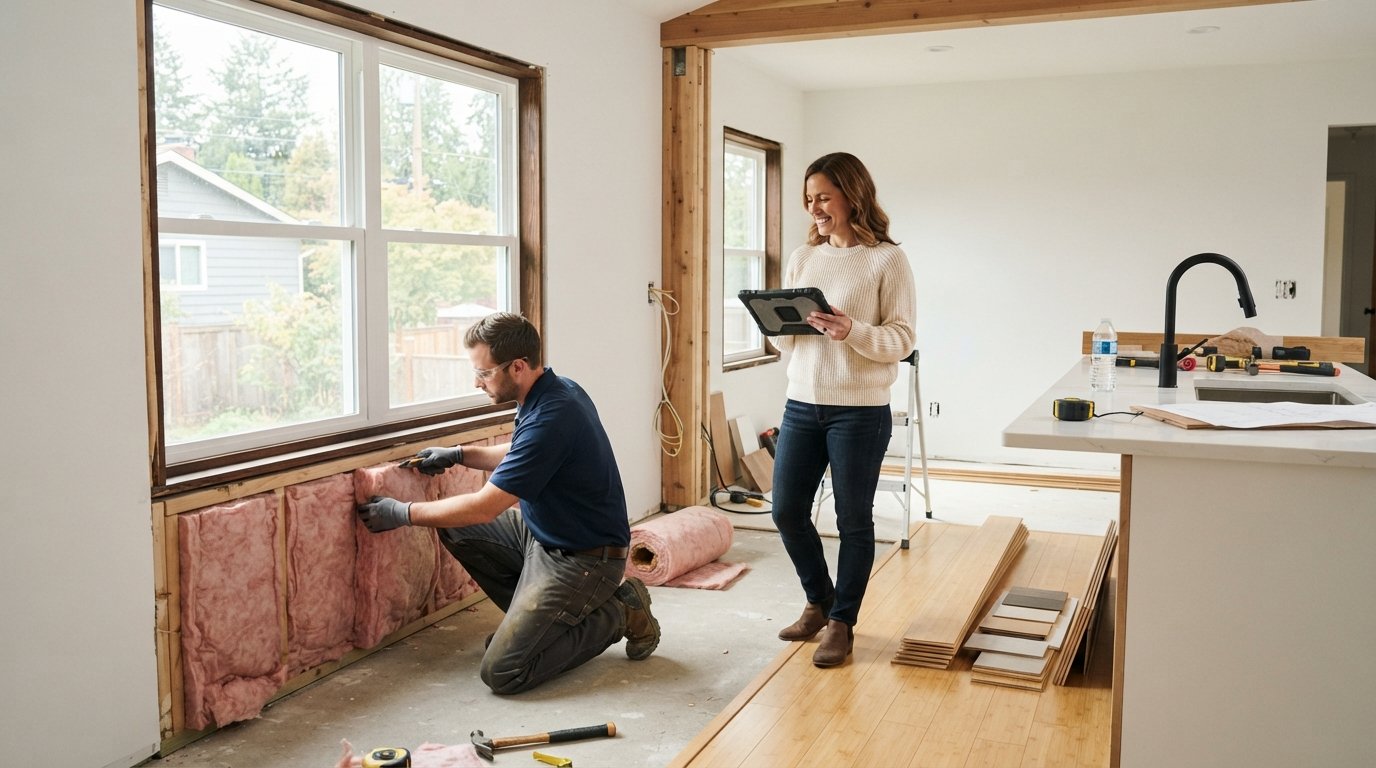
Before you consider solar panels or a new roof, fix the envelope. Insulation and air sealing are the least glamorous green upgrades and the most cost-effective. Most homes leak air through attic penetrations, rim joists, and recessed lighting, which forces heating and cooling systems to work harder than necessary. Sealing those gaps and adding insulation can cut heating and cooling costs by 10 to 20 percent, according to the Department of Energy, and the payback period is often under three years.
Attic insulation is the usual starting point. Blown-in cellulose or fiberglass brings most older attics up to modern R-values quickly and affordably. Crawl space and basement rim joists come next, followed by duct sealing if your ducts run through unconditioned space. These are not visible upgrades, but they make every other renovation perform better. A new HVAC system installed in a leaky house will still struggle, while a modest system in a tight house runs comfortably and efficiently.
Homeowners often ask whether air sealing causes moisture problems. The answer depends on climate and construction. In humid regions, sealing must be paired with proper ventilation to avoid trapping moisture, which is why a qualified contractor should assess your home before work begins. If you are unsure how local rules affect exterior work, the guide on HOA rules for exterior renovations explains how to check approvals before you commit to a project.
Windows and Doors: Where Efficiency Meets Curb Appeal
Windows and doors are the visible face of an efficiency upgrade. Old single-pane windows lose heat in winter and gain it in summer, and they often leak air around the frames. Modern double or triple pane units with low-E coatings and argon fill reduce that transfer dramatically. The upfront cost is real, typically several hundred dollars per window installed, but the combination of lower bills, better comfort, and improved curb appeal makes this one of the most balanced green renovations available.
Doors matter just as much and are often overlooked. A solid, well-sealed exterior door stops drafts, improves security, and boosts the entry appearance that buyers notice immediately. If your current door is hollow or warped, replacing it with an insulated fiberglass or steel unit is a straightforward win. Pair the door with a storm door in harsh climates and weatherstripping everywhere.
One caution: window replacement rarely pays for itself through energy savings alone. The value comes from the combination of comfort, noise reduction, reduced maintenance, and resale appeal. If your windows are functional but drafty, adding storm windows or cellular shades may deliver most of the benefit at a fraction of the cost. The right choice depends on how long you plan to stay and how visible the windows are.
HVAC Replacement and Heat Pumps: The Efficiency Engine
Heating and cooling account for roughly half of a typical home energy bill, so HVAC decisions drive long term value more than almost anything else. When an old furnace or air conditioner reaches the end of its life, replacing it with a high-efficiency heat pump is often the smartest move. Heat pumps move heat rather than generating it, which makes them two to four times more efficient than resistance heating in mild and moderate climates.
Modern cold-climate heat pumps now perform well in freezing temperatures, which has expanded their reach into northern states. Many models qualify for federal tax credits and local utility rebates, which can offset a significant portion of the installed cost. If you pair a heat pump with a well-sealed envelope, you may be able to downsize the system, reducing both equipment cost and operating cost.
Maintenance is the other half of the equation. A system that is never serviced loses efficiency year over year. Annual tune-ups, clean filters, and proper refrigerant levels keep performance near the rated numbers. When you are comparing contractors for a replacement, ask for a Manual J load calculation rather than a rule-of-thumb sizing estimate. Proper sizing is the difference between a system that runs comfortably for fifteen years and one that cycles constantly and fails early.
If you are coordinating multiple trades for a larger project, working with a platform that connects homeowners to vetted local professionals can save time and reduce guesswork. HomeRemodelingsContractors helps homeowners plan affordable improvements and compare experienced contractors for remodeling, repairs, and upgrades, which is a practical starting point when you need several estimates for efficiency work.
Water Efficiency: Low-Flow Fixtures and Tankless Systems
Water heating is the second largest energy expense in most homes, and it is one of the easiest categories to improve. Low-flow showerheads, faucet aerators, and dual-flush toilets reduce consumption without sacrificing performance. These items cost little and install in minutes, which makes them ideal for homeowners who want immediate savings before tackling bigger projects.
Tankless water heaters are a larger investment but offer continuous hot water and a longer service life, often twenty years compared with ten for a tank unit. They also free up floor space, which matters in smaller homes. The tradeoff is higher upfront cost and the need for adequate gas supply or electrical capacity. In many cases, a high-efficiency tank unit with a heat pump is the better financial choice, especially in colder climates.
Outdoors, smart irrigation controllers and rain barrels reduce landscape water use significantly. Native plants and drought-tolerant landscaping cut outdoor consumption even further, and they require less maintenance over time. These changes are visible, attractive, and inexpensive compared with hardscape renovations, which makes them a smart complement to any green remodel.
Materials That Last: Flooring, Cabinets, and Countertops
Material choice determines how long a renovation stays attractive and functional. Eco friendly options have moved well beyond the early days of limited styles. Today you can find durable, beautiful products that compete with conventional materials on price and outperform them on longevity.
Here are categories worth prioritizing:
- Flooring: Engineered hardwood, bamboo, cork, and luxury vinyl made with recycled content offer durability and moisture resistance. Look for low-VOC adhesives and finishes.
- Cabinets: Cabinet boxes made from plywood or recycled-content panels resist moisture better than particleboard. Refacing existing cabinets is often the greenest option because it avoids landfill waste.
- Countertops: Recycled glass, quartz composites, and sealed concrete provide durable surfaces with varied aesthetics. Avoid high-VOC sealers.
- Paint and finishes: Low-VOC and zero-VOC paints improve indoor air quality and dry with minimal odor, which matters for bedrooms and children's spaces.
The common thread is durability plus low emissions. A material that lasts twenty years and off-gasses for one week is far greener than a cheaper product that fails in five years and must be replaced. When you compare quotes, ask contractors about product warranties and expected service life, not just the sticker price. Those questions separate a short term patch from a long term upgrade.
Indoor Air Quality and Moisture Control
Efficiency upgrades can backfire if they trap moisture or pollutants. A tight house needs controlled ventilation, and that means proper bathroom fans, kitchen exhaust, and in some cases a heat recovery ventilator. These systems bring in fresh air while recovering heat from the outgoing air, which keeps efficiency high and indoor air healthy.
Moisture control is equally important. Fix leaks promptly, grade soil away from the foundation, and use dehumidifiers in damp basements. Mold remediation is far more expensive than prevention, and mold problems can derail a sale or trigger health concerns. If you notice persistent musty odors or visible growth, address the source before investing in cosmetic renovations. A dry, well-ventilated home protects every other upgrade you make.
Radon testing is another low-cost step with high value. Radon is invisible and common in many regions, and mitigation systems are affordable compared with the risk. Buyers increasingly ask about radon results, so having a test on file can be a selling point.
Solar, Batteries, and Smart Energy Management
Solar panels have become more affordable and more efficient, but they are not right for every home. Roof orientation, shading, local utility rates, and net metering policies all affect the payback period. In sunny states with strong incentives, solar can pay back in seven to ten years and add resale value. In cloudy regions with low rates, the math is less compelling.
Battery storage adds resilience during outages and allows you to use solar power at night. It also increases upfront cost, so it makes sense mainly where outages are frequent or where time-of-use rates reward storage. Smart thermostats, smart lighting, and energy monitoring systems are cheaper entry points that help you understand and reduce consumption. These devices also appeal to buyers who value convenience and control.
If you pursue solar, get multiple quotes and ask for production estimates based on your actual roof and usage data. Avoid any installer that pressures you into signing before you have reviewed the numbers. The best projects are the ones where the financial case is clear before the first panel goes up.
How to Budget and Sequence Green Renovations
Sequencing matters as much as selection. Spending on cosmetic updates before fixing efficiency problems wastes money, because you may have to open walls again later. A practical order looks like this:
- Audit and seal the envelope: insulation, air sealing, and duct sealing first.
- Address moisture and air quality: ventilation, drainage, and any remediation.
- Upgrade major systems: HVAC, water heating, and windows or doors as needed.
- Improve visible surfaces: flooring, cabinets, countertops, and paint.
- Add optional generation and smart controls: solar, batteries, and monitoring.
This order front-loads the work that reduces operating costs and protects the rest of the investment. It also lets you phase the project over multiple years if cash flow is tight. Many homeowners complete envelope work one year, systems the next, and finishes after that, which spreads cost while capturing savings early.
Budgeting should include a contingency of at least 10 to 15 percent for surprises, because older homes often reveal hidden issues once walls open. Get at least three written estimates for any significant project, and compare not just price but scope, warranty, and licensing. Free estimates are widely available, and comparing them carefully is the single best way to avoid overpaying.
Finally, document everything. Keep receipts, permits, and product specifications in one folder. When you sell, that documentation proves the quality of the work and supports your asking price. Efficiency upgrades with paperwork are worth more than verbal claims.
Eco friendly home renovations that add long term value reward homeowners who think in decades rather than seasons. Start with the envelope, upgrade systems when they fail, choose durable low-emission materials, and hire contractors who explain their numbers. Do that, and your home becomes cheaper to run, healthier to live in, and easier to sell whenever the time comes. The greenest renovation is the one you only have to do once.