
How to Vet a Contractor for Emergency Home Repairs
Emergency repairs leave no room for guesswork. Learn how to vet a contractor fast, from license checks to insurance documentation. Call (833)-365-8755 for help finding a vetted local pro.

By Leo Cross
Learn more about General Contracting for guides, costs, and what to expect.
Compare General Contracting Pros Near You

Enter your ZIP code to compare top-rated local professionals and request free quotes.
When a burst pipe floods your kitchen or a storm tears shingles off your roof, the pressure to act fast can push you toward the first contractor who answers the phone. That urgency is exactly what unscrupulous operators count on. Vetting a contractor for emergency repairs is not about slowing down, it is about running a compressed, high-yield checklist that lets you say yes to the right pro and no to the wrong one without losing hours. The steps below are built for speed and for the realities of insurance claims, storm chasers, and tight timelines.
Start With the First 24 Hours: What to Verify Before Anyone Swings a Hammer
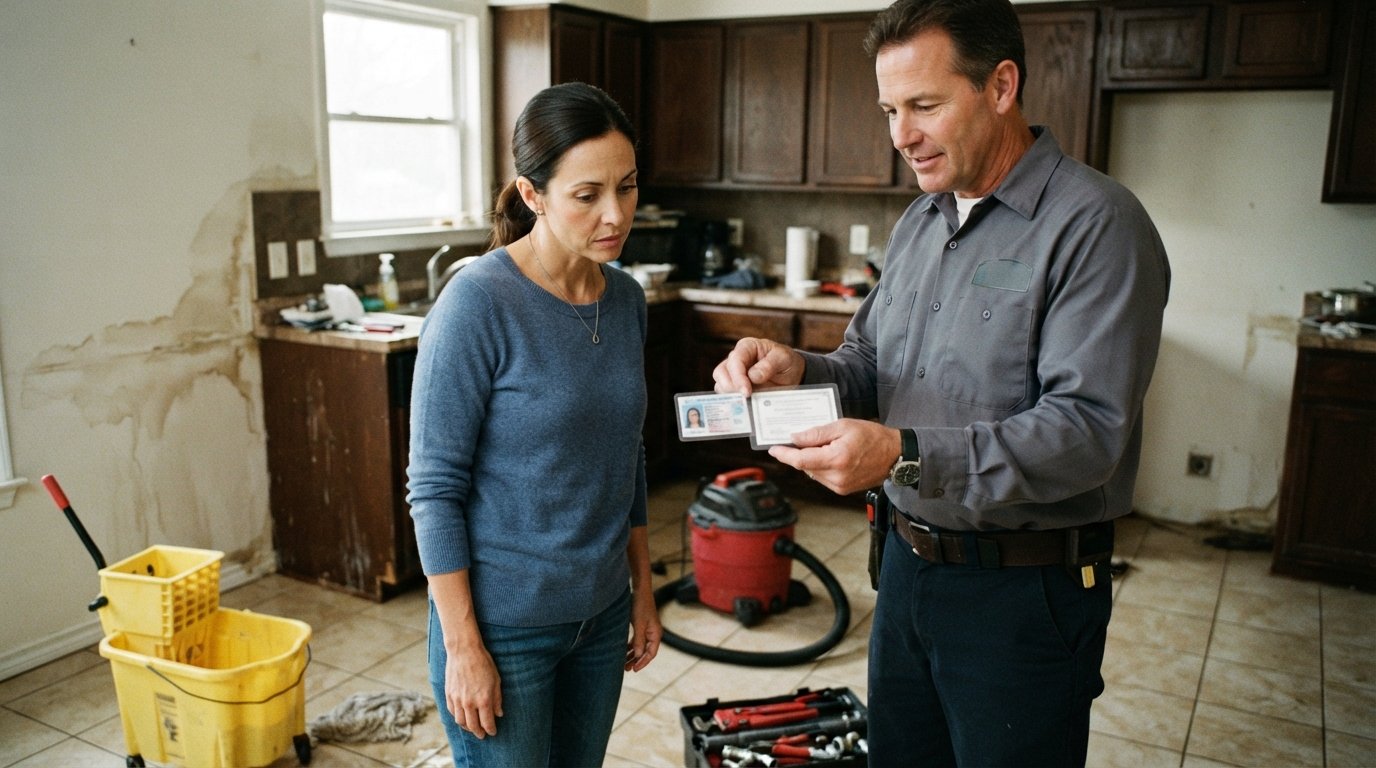
In the immediate aftermath of water, fire, or storm damage, your first job is to stop further loss and document what happened, not to hand over a deposit. Before you let any contractor begin work, confirm three things: identity, license, and insurance. Ask for the contractor's full legal name, company name, and state or local license number. In most states, you can verify a license in minutes through a online database. If the contractor cannot produce a license number on the spot, treat that as a stop sign, not a yellow light.
Next, request a certificate of insurance that lists general liability and workers compensation coverage. Call the insurer directly using the number on the certificate, not the number the contractor gives you, to confirm the policy is active. This matters enormously in emergency work, where the risk of further damage or injury is high. A contractor who is uninsured can leave you holding the bill for a worker injury or a botched repair. For a deeper look at why a pre-screened network saves time and reduces this risk, see our guide on the benefits of using a vetted contractor network.
Finally, document the damage yourself before work begins. Take dated photos and video of every affected area, keep receipts for any emergency materials you buy, and write a short timeline of what happened. This record supports your insurance claim and gives you a baseline to compare against the contractor's scope of work. In the first 24 hours, your goal is to stabilize the property (shut off water, board up windows, tarp a roof) and to gather the paperwork that proves who you are hiring and what needs fixing.
Red Flags of Storm Chasers and Door-to-Door Repair Crews
Emergency situations attract transient crews who move from neighborhood to neighborhood after major storms. They often arrive uninvited, offer steep discounts, and pressure homeowners to sign immediately. The classic warning signs are worth memorizing because they appear again and again in complaints filed with state attorney generals and consumer protection agencies.
- No local address or a P.O. box only: Legitimate local contractors have a physical business address and can tell you how long they have operated in your area.
- Cash-only demands or large upfront deposits: A reputable emergency contractor may ask for a modest materials deposit, but demands for half or more of the project cost in cash before work starts are a major red flag.
- High-pressure sales tactics: Phrases like "we are only in your neighborhood today" or "this price expires in an hour" are designed to prevent you from checking references or licenses.
- No written contract or a contract with blank spaces: Never sign a document that lacks a scope of work, start and end dates, payment schedule, and warranty terms.
- Out-of-state plates and no verifiable references: Ask for three local references from the past six months and actually call them.
Door-to-door crews are not automatically fraudulent, but the burden of proof shifts to them. A legitimate contractor will happily wait while you verify a license and call an insurer. If a crew resists those checks or disappears when you ask for a written contract, walk away. The few hours you save by hiring them can turn into months of fighting to recover a deposit or fix shoddy work.
Insurance Claim Documentation an Emergency Contractor Should Provide
Emergency repairs and insurance claims are tightly linked, and the contractor you hire will shape how smoothly your claim moves. Before work begins, ask the contractor what documentation they will provide for your insurer. A professional emergency contractor should be comfortable with the claims process and should offer a detailed, itemized estimate that separates emergency mitigation (drying, boarding, tarping) from permanent repairs. This distinction matters because many policies handle mitigation and reconstruction differently.
Ask for a written scope of work that includes quantities, materials, and labor line items, not just a lump sum. Request photos of the damage before and after mitigation, and ask whether the contractor will communicate directly with your adjuster. Some contractors will prepare a scope that matches the insurer's estimating software format, which can speed approval. You should also confirm that the contractor will not ask you to sign a document assigning your insurance benefits (an assignment of benefits, or AOB) without your full understanding, since these agreements can transfer control of your claim.
Keep your own file with the contract, the itemized estimate, the certificate of insurance, and all correspondence. If the contractor promises to "handle everything with the insurance company," get that promise in writing and confirm who is responsible for what. A contractor who is vague about documentation or who discourages you from contacting your insurer directly is a risk you do not need during an emergency.
How to Compare Emergency Estimates Under Time Pressure
In a true emergency, you may not have time for five bids, but you should still get at least two written estimates for anything beyond basic mitigation. The goal is not to find the cheapest number, it is to compare scope, timeline, and terms so you can spot gaps and lowball bids. A very low estimate often signals missing line items (like permits, disposal fees, or code-required upgrades) that will reappear later as change orders.
Use a simple comparison framework to keep the process fast and fair:
- Scope: Does each estimate cover the same work, including cleanup, permits, and materials? Note anything missing from the cheaper bid.
- Timeline: When can each contractor start, and how long will the work take? Emergency work should come with a clear schedule.
- Payment terms: Compare deposit amounts and milestone payments. Never pay in full upfront, and hold a final payment until the work passes inspection.
- Warranty and follow-up: Ask what happens if the repair fails or mold appears weeks later. Get the warranty in writing.
If one estimate is dramatically lower than the others, ask the contractor to explain the difference line by line. Sometimes a lower price reflects a simpler but adequate approach, and sometimes it reflects cut corners. The same logic applies when you compare bids for planned projects, which is why it helps to understand affordable home improvement planning and local contractor connections before you sign. In an emergency, prioritize a contractor who can start soon, documents the work clearly, and communicates with your insurer, even if the price is not the absolute lowest.
Put the Vetting Steps in Writing Before You Sign
The final safeguard is a written contract that captures everything you verified verbally. The contract should include the contractor's legal name and license number, a detailed scope of work, the total price and payment schedule, start and completion dates, warranty terms, and a statement about who is responsible for permits. Read it before you sign, and do not accept blank spaces or verbal side agreements. If the contractor pressures you to skip the contract because the job is urgent, that pressure is itself a red flag.
Keep copies of every document, including the license verification and insurance confirmation, in one folder. If a dispute arises later, this file is your evidence. The same discipline that protects you in an emergency also protects you in planned projects, and it is the habit that separates a stressful repair from a manageable one.
Emergency repairs reward preparation. By verifying identity, license, and insurance in the first hours, recognizing storm-chaser red flags, demanding claim-ready documentation, and comparing written estimates under pressure, you can move fast without gambling on your home. When you need to find a pro quickly, starting with a network of vetted local contractors can shorten the search and reduce the risk, so you can focus on getting your home back to normal.