
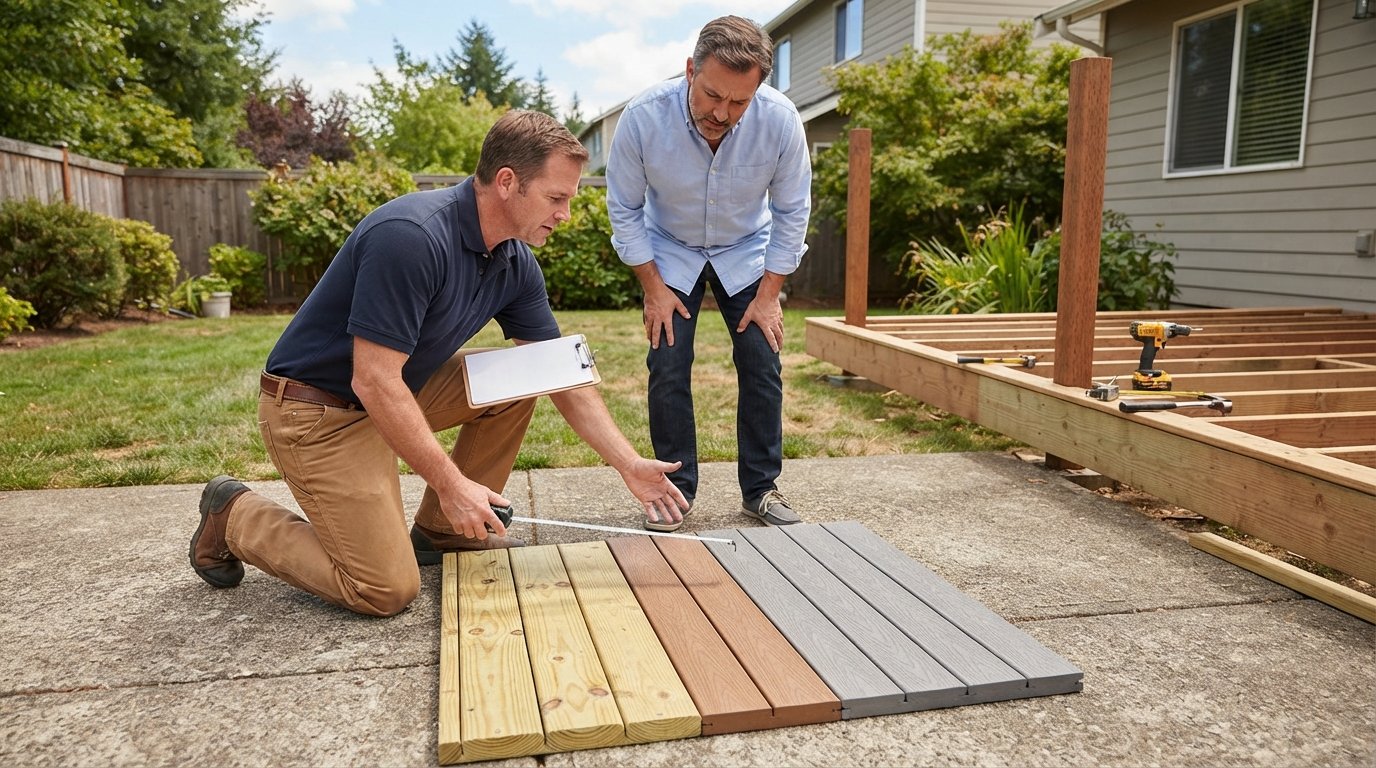
Decking Materials Wood vs Composite vs PVC: Which Wins?
Compare decking materials wood vs composite vs PVC on cost, lifespan, and upkeep so you pick the right surface for your climate and budget.

By Oliver Grant
Learn more about Deck or Porch Remodel or Addition for guides, costs, and what to expect.
Compare Deck or Porch Remodel or Addition Pros Near You

Enter your ZIP code to compare top-rated local professionals and request free quotes.
Choosing the right decking material is one of the most consequential decisions in any outdoor remodeling project. It shapes how your deck looks, how long it lasts, how much maintenance you sign up for, and how much money leaves your bank account over the next decade. The three main contenders, wood, composite, and PVC, each bring distinct strengths and trade-offs. Understanding those differences before you commit can save you thousands of dollars and countless weekends of work.
This guide breaks down the decking materials wood vs composite vs PVC comparison in practical terms: upfront cost, lifespan, maintenance demands, aesthetics, and resale impact. Whether you are replacing a worn-out deck or building new, the goal is the same: match the material to your climate, your budget, and your willingness to maintain it. If you decide partway through planning that you would rather hand the job to a professional, platforms like HomeRemodelingsContractors help homeowners compare local pros and request free estimates, which takes a lot of the guesswork out of the process.
Wood Decking: Classic Look, Hands-On Care
Wood has been the default decking material in North America for decades, and for good reason. It is widely available, relatively affordable at the entry level, and it accepts stains and paints in virtually any color. The most common species used for decks are pressure-treated pine, cedar, and redwood, each with its own price point and performance profile. Pressure-treated pine is the budget option and dominates the big-box store shelves. Cedar and redwood cost more but naturally resist rot and insects, and they weather to an attractive silver-gray if left unfinished.
The catch with wood is maintenance. A wood deck needs cleaning, sanding, and re-staining every two to three years in most climates, and more often in harsh sun or heavy moisture. If you skip that schedule, boards cup, splinter, and gray out, and the structure becomes vulnerable to rot and insect damage. Wood also expands and contracts with the seasons, which can loosen fasteners over time. On the positive side, wood is easy to repair board by board, and many homeowners genuinely enjoy the natural grain and warmth that no synthetic product fully replicates.
Cost is where wood shines at the outset. Pressure-treated pine typically runs in the low end of the decking price range per square foot installed, while cedar and redwood sit in the middle. Over a 20-year horizon, though, the math shifts once you add stain, sealant, cleaners, and your own labor (or the cost of hiring someone to do it). Wood is also the material most sensitive to local climate: in the humid Southeast or the rainy Pacific Northwest, decay pressure is high, while in arid regions it can last considerably longer with basic care.
Composite Decking: The Low-Maintenance Middle Ground
Composite decking is engineered from a blend of wood fibers and plastic, which gives it the look of wood without the annual staining ritual. It became popular in the 1990s and has improved dramatically since then. Early composites were prone to fading, staining, and mold, but modern capstock composites (a protective polymer shell over a composite core) resist all three far better. Most manufacturers back their products with 25-year to 30-year limited warranties, which tells you something about expected durability.
Maintenance for composite is genuinely light: an occasional scrub with soap and water is usually enough, and you never need to stain or seal it. That convenience is the primary reason homeowners choose composite over wood. It also does not splinter or crack the way aged wood does, which matters if you have kids or pets. The trade-offs are cost and heat. Composite typically costs more than pressure-treated wood upfront, sometimes 30 to 50 percent more, and darker colors can get uncomfortably hot underfoot in full sun.
Composite also expands and contracts, so installers must leave proper gaps at board ends and against solid structures. It is heavier than wood, which makes installation more labor-intensive, and it is not as easy to spot-repair if a board is damaged. Aesthetic options have improved to the point where many composites convincingly mimic tropical hardwoods, with variegated coloring and subtle grain patterns. If you want the wood look with a fraction of the upkeep, composite is usually the sweet spot, and it is a common recommendation when homeowners ask contractors to compare long-term value against a wood deck.
PVC Decking: Maximum Durability, Premium Price
PVC (polyvinyl chloride) decking is 100 percent plastic, with no wood fiber in the mix. That distinction matters because it removes the organic material that mold, mildew, and insects feed on. PVC boards are fully capped, meaning the color runs through or is protected by a solid polymer shell, so they resist fading and staining better than any other category. They handle moisture, salt air, and pool chemicals exceptionally well, which makes them a favorite in coastal and lakeside markets.
The maintenance profile is essentially the same as composite: soap, water, and a brush a couple of times a year. PVC does not need sealing, staining, or painting, and it will not rot, splinter, or be eaten by termites. It is also the most dimensionally stable of the three in humid conditions. The downsides are price and feel. PVC is the most expensive decking option per square foot, often significantly more than composite, and its surface can feel more plastic-like than composite's wood-fiber blend, though newer products have closed that gap considerably.
PVC boards can also be more slippery when wet than wood or some composites, so texture matters when you shop. Like composite, PVC expands and contracts and requires proper fastening and gapping techniques. For homeowners in extreme climates or high-moisture environments who want the longest possible service life with the least possible fuss, PVC is often worth the premium. For everyone else, it comes down to whether the added durability justifies the added cost.
Side-by-Side Comparison: Cost, Lifespan, and Maintenance
Numbers make the wood vs composite vs PVC decision easier to evaluate, though exact prices vary by region, deck size, and current material costs. The table below reflects typical installed costs per square foot in the U.S. and general performance expectations. Always get local quotes, because labor rates and material availability swing widely from market to market.
- Pressure-treated wood: Lowest upfront cost, 10 to 15 year typical lifespan with care, requires re-staining every 2 to 3 years.
- Cedar or redwood: Moderate upfront cost, 15 to 20 year lifespan, natural rot resistance but still needs periodic sealing.
- Composite: Higher upfront cost, 25 to 30 year lifespan, minimal maintenance (soap and water), strong warranty coverage.
- PVC: Highest upfront cost, 30 plus year lifespan, minimal maintenance, best resistance to moisture and fading.
When you total 20 years of ownership, the gap between wood and the synthetics narrows considerably. Wood wins on day-one price, but the recurring costs of stain, sealant, cleaners, and labor add up fast, especially if you pay someone to maintain it. Composite and PVC cost more at purchase but ask almost nothing afterward. The break-even point typically lands somewhere between year 8 and year 12, depending on climate and whether you do the work yourself.
It is also worth thinking about resale. A well-maintained deck of any material adds usable outdoor living space, which buyers value. Composite and PVC decks tend to photograph better and signal low future maintenance to buyers, which can be a subtle selling point. For more on how material choices affect home value, our guide on hardwood vs laminate flooring and home value covers similar trade-offs for interior surfaces, and the logic carries over to decks: durability and low maintenance usually read as value.
How to Match Material to Your Situation
The best decking material depends less on which product is objectively superior and more on your specific circumstances. Climate, budget, DIY appetite, and how long you plan to stay in the home all push the decision in different directions. Here is a practical way to think it through.
- Assess your climate first. Humid, rainy, or coastal environments punish wood and reward PVC. Dry, mild climates let wood perform well with basic care.
- Set a realistic total budget. Compare 20-year costs, not just purchase price. Include stain, sealant, cleaning supplies, and labor if you will hire help.
- Be honest about maintenance. If you will not re-stain every few years, wood is the wrong choice. Composite or PVC removes that risk entirely.
- Consider how long you will stay. Short-timeline homeowners may prefer wood's lower entry cost; long-term owners usually come out ahead with composite or PVC.
- Check local codes and HOA rules. Some communities restrict certain materials or colors, so verify before you buy.
Once you have narrowed the field to one or two materials, get at least three local quotes on the same scope of work. Deck pricing varies enormously based on framing condition, railing choices, stairs, and site access, so comparing bids on identical specifications is the only fair way to judge. Ask each contractor about fastener types, joist spacing, and flashing details, because those hidden elements determine how long any deck surface lasts. If you would rather hand off the entire process, a service like BuySellRemodel connects homeowners with vetted local contractors and free estimates, which can shorten the search considerably.
One more factor worth weighing: the feel underfoot. Wood is warm and slightly forgiving. Composite is firm and consistent. PVC can be the hottest of the three in direct sun and the slickest when wet. Walk on sample boards at a showroom or a neighbor's deck before you commit, because texture and temperature are personal preferences that no spec sheet captures.
Common Mistakes to Avoid When Choosing Decking
Homeowners frequently regret deck decisions for predictable reasons. Skipping the framing inspection is a big one: no surface material will survive if the substructure is rotting or underbuilt. Choosing a dark color in a scorching climate is another, since dark boards absorb heat and can become unusable barefoot. Under-budgeting for railing and stairs is a third, because those elements can add 30 percent or more to the project cost and are often quoted separately.
It also pays to read warranty language carefully. Some composite and PVC warranties cover the board but not labor, and some require specific cleaning products or prohibit certain power washing techniques. Wood warranties are usually limited to manufacturing defects and exclude normal weathering. Understanding what is actually covered prevents unpleasant surprises down the road.
Finally, do not overlook ventilation and drainage. Trapped moisture under any deck surface shortens its life, and proper spacing, flashing, and airflow are what separate a 30-year deck from a 10-year one. A good contractor will build those details into the quote without being asked. If a bid seems unusually low, ask what is being left out.
Whichever material you select, the decking materials wood vs composite vs PVC decision ultimately comes down to trading upfront cost against long-term convenience. Wood rewards homeowners who enjoy maintenance and want the lowest entry price. Composite offers a balanced middle path with realistic wood looks and light upkeep. PVC delivers maximum durability and minimum fuss for those willing to pay for it. Match the material to your climate, your budget, and your tolerance for weekend chores, get several local estimates on identical scopes, and you will end up with a deck that fits both your home and your lifestyle.