
Winter Home Maintenance Checklist to Prevent Costly Repairs
Use this winter home maintenance checklist to prevent costly repairs, from frozen pipes to ice dams, and avoid surprise bills this season.

By Leo Cross
Learn more about Weatherization for guides, costs, and what to expect.
Compare Weatherization Pros Near You

Enter your ZIP code to compare top-rated local professionals and request free quotes.
Frozen pipes that burst behind a finished wall. Ice dams that force meltwater through your ceiling. A furnace that quits on the coldest night of the year. Every winter, homeowners across the country learn the hard way that a few hours of fall preparation can mean the difference between a quiet season and a five-figure insurance claim. The good news is that most cold-weather failures are predictable, which means they are preventable. This winter home maintenance checklist to prevent costly repairs walks you through the tasks that matter most, room by room and system by system, so you can protect your investment before the first hard freeze arrives.
What separates a home that sails through winter from one that suffers? It is rarely luck. It is a consistent routine of inspections, small fixes, and early intervention. The tasks below take a weekend or two to complete, but they routinely save homeowners thousands in emergency repairs, temporary housing, and water damage remediation. If you would rather hand off the heavy lifting to a professional, services like HomeRemodelingsContractors can connect you with vetted local tradespeople for inspections, repairs, and upgrades.
Start With the Roof and Gutters
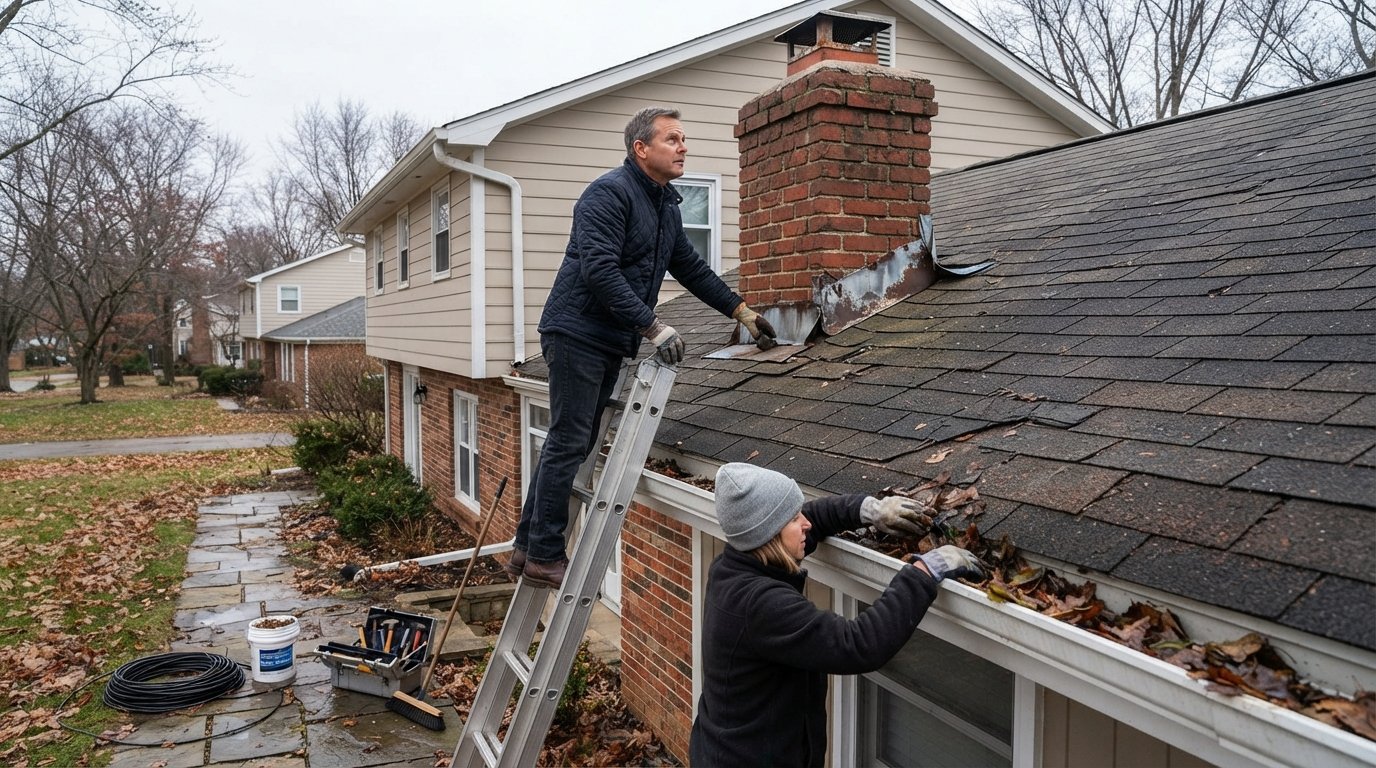
Your roof takes the brunt of winter weather, and it is also the most expensive system to replace. Before the snow flies, inspect the roof surface from the ground with binoculars or, if it is safe, from a ladder. Look for cracked or missing shingles, lifted flashing around chimneys and vents, and any dark patches that suggest trapped moisture. Even a small breach can let meltwater seep into the attic, where it soaks insulation and stains ceilings below. If you spot damage, schedule a repair immediately: roofers are far easier to book in October than in January, and emergency rates during a storm can double or triple the normal cost.
Gutters matter just as much as the roof itself. When leaves and debris clog the channels, water backs up under the shingles and freezes, forming ice dams that push water into the house. Clean gutters thoroughly, then flush them with a hose to confirm they drain freely. While you are up there, check that downspouts direct water at least six feet away from the foundation. If they dump right at the base of the house, add extensions or splash blocks. This single step prevents basement flooding, foundation cracks, and soil erosion, all of which are costly to repair after the ground thaws.
Do not forget the attic side of the equation. Proper insulation and ventilation keep the roof deck cold, which stops snow from melting and refreezing at the eaves. If your attic is warm in winter, ice dams are almost guaranteed. Add insulation to bring the attic floor up to current recommendations, and make sure soffit and ridge vents are not blocked by boxes or insulation batts. For a deeper seasonal walkthrough, including fall-specific tasks, see our fall home maintenance checklist for winter prep.
Protect Your Plumbing From Freezing
Water damage from burst pipes is one of the most common and most expensive winter insurance claims. A single split copper line can release hundreds of gallons into your home before anyone notices. The fix is straightforward: keep water moving, keep pipes warm, and know where your shutoff valve is. Start by locating the main water shutoff and tagging it clearly. If a pipe does burst, shutting off the supply in seconds rather than minutes can save your floors, drywall, and furniture.
Next, insulate pipes in unheated areas: basements, crawl spaces, garages, and attics. Foam pipe sleeves are inexpensive and easy to install. For pipes that are especially vulnerable, add heat tape or a thermostatically controlled heat cable. On nights when temperatures drop below freezing, let a thin trickle of water run from the faucet farthest from the main supply. Moving water freezes far more slowly than standing water, and the small cost on your water bill is trivial compared to a repair bill.
Outdoor plumbing needs attention too. Disconnect garden hoses, drain and store them, and shut off the valves feeding exterior spigots. If your home has a sprinkler system, blow it out with compressed air before the first freeze. Finally, if you leave town during the winter, do not simply turn the heat down to 50 degrees and hope for the best. Either keep the thermostat at 55 degrees or higher, or have someone check the house regularly. A week of subzero temperatures with no heat can destroy an entire plumbing system.
Service the Heating System Before You Need It
The worst time to discover your furnace is failing is during a cold snap, when every HVAC technician in town is booked solid. Schedule a professional tune-up in early fall. A technician will clean the burners, check the heat exchanger for cracks, test the blower motor, and verify that the system is running at peak efficiency. This service typically costs far less than an emergency repair and often catches small problems before they become failures. It also extends the life of your equipment, which delays a full replacement by years.
Between professional visits, handle the basics yourself. Replace the furnace filter every one to three months, depending on the type and your home's dust levels. A clogged filter forces the system to work harder, raising energy bills and straining components. If you have a gas furnace, listen for unusual noises and watch for yellow rather than blue flames, which can indicate incomplete combustion. Install a carbon monoxide detector on every level of the home and test it monthly. This is a small investment that protects your family from a silent, deadly hazard.
Do not overlook secondary heat sources. If you use a wood stove or fireplace, have the chimney inspected and swept annually. Creosote buildup is a leading cause of chimney fires. Space heaters should be placed on hard, level surfaces at least three feet from anything flammable, and never left running unattended or overnight. If your home relies on a heat pump, clear snow and ice from the outdoor unit and keep the area around it free of debris so it can draw air properly.
Seal Air Leaks and Upgrade Insulation
Every gap around a window, door, or electrical outlet is an invitation for cold air and a drain on your heating budget. Sealing these leaks is one of the highest-return maintenance tasks you can do. Walk through your home on a windy day and feel for drafts around windows, doors, baseboards, and outlets. Then address them systematically:
- Apply weatherstripping or door sweeps to exterior doors.
- Caulk gaps around window frames and where siding meets the foundation.
- Install foam gaskets behind switch plates and outlet covers on exterior walls.
- Add or replace worn thresholds at the bottom of doors.
- Seal gaps around pipes, vents, and cables where they penetrate exterior walls.
After sealing, evaluate your insulation. The attic is usually the biggest opportunity. Adding insulation to reach the recommended R-value for your climate zone can cut heating costs significantly and make upper floors far more comfortable. If your home has an unheated basement or crawl space, insulate the rim joists and any exposed ductwork. Duct sealing is equally important: leaks in heating ducts can waste a substantial percentage of the air you are paying to heat, sending it into crawl spaces and attics instead of your living room.
Prepare the Exterior and Entryways
Winter is hard on exterior surfaces, and small problems become big ones when water gets in and freezes. Walk the perimeter of your home and check for cracks in the foundation, siding, and masonry. Seal any gaps with appropriate caulk or mortar. Repair loose or damaged siding promptly, because wind-driven rain and snow can force water behind it. Trim tree branches that hang near the roof or power lines; heavy snow and ice can snap them, causing roof damage or outages.
Entryways deserve special attention because they are where safety and maintenance intersect. Keep walkways and steps clear of snow and ice, and use ice melt that is safe for concrete and plants. Check handrails and outdoor lighting so that evening arrivals are safe. If you have a deck, clear snow without using a metal shovel that can gouge the surface, and avoid piling snow against the house, where it can melt and seep into the foundation. For more on cold-weather deck care, our guide on the fall home maintenance checklist covers surface protection and structural checks.
Prepare for Storms and Power Outages
Even the best-maintained home can lose power during a winter storm. Being ready for that scenario prevents a bad night from becoming a disaster. Stock an emergency kit with flashlights, batteries, bottled water, nonperishable food, blankets, and a battery-powered radio. If you rely on a sump pump to keep your basement dry, consider a battery backup system. When the power goes out during a thaw, a failed sump pump can flood a finished basement in hours.
If you own a portable generator, test it before winter and store fuel safely. Never run a generator indoors, in a garage, or near a window, because carbon monoxide can accumulate quickly. For homes in areas with frequent outages, a standby generator is a worthwhile investment, though it requires professional installation and an annual service visit. Finally, keep a list of emergency contacts, including your utility company, a licensed plumber, and a trusted HVAC contractor. Having those numbers on hand saves precious time when something goes wrong.
Know When to Call a Professional
Some winter maintenance tasks are safe and simple for any homeowner: changing filters, sealing drafts, and clearing gutters. Others require training, tools, and insurance. Roof work, electrical repairs, gas appliance service, and chimney sweeping are all jobs best left to licensed professionals. Attempting them yourself can void warranties, create safety hazards, and, in some cases, violate local codes. The money you save on labor is rarely worth the risk.
This is where a curated contractor network makes a real difference. Instead of cold-calling random companies and hoping for the best, you can compare vetted local pros, request free estimates, and choose the one that fits your budget and timeline. Whether you need a furnace tune-up, a roof repair, or a full insulation upgrade, getting multiple quotes helps you avoid overpaying and gives you confidence that the work will be done correctly. Planning ahead also means you are not negotiating from a position of desperation when something breaks in January.
Treat this winter home maintenance checklist to prevent costly repairs as a living document. Add tasks that are specific to your home, such as servicing a well pump, clearing a septic vent, or winterizing a pool. Set calendar reminders in early fall and again at midwinter to revisit the list. A few hours of preventive work now can save you thousands later, and it keeps your home safer, warmer, and more efficient all season long.