
Window Replacement ROI and Energy Savings: A 2026 Guide
Window replacement ROI and energy savings depend on climate, ratings, and installation. Call (833)-365-8755 to compare local contractor estimates.

By Liam Weston
Learn more about Window Installation for guides, costs, and what to expect.
Compare Window Installation Pros Near You

Enter your ZIP code to compare top-rated local professionals and request free quotes.
Replacing your windows is one of those home upgrades that feels both necessary and nerve-wracking. You know your old windows are drafty, you suspect they are driving up your energy bills, and you have heard that new windows can boost resale value. But the quotes coming in are not small, and you want to know: will you actually get that money back? The short answer is yes, but the details matter enormously. The return on investment for window replacement varies widely depending on where you live, what type of windows you choose, and how you install them. Energy savings are real but often oversold by pushy salespeople. And the resale value bump is genuine, though it depends on buyer expectations in your specific market. This guide breaks down the numbers, the physics, and the practical decisions so you can move forward with confidence rather than guesswork.
The Real Numbers Behind Window Replacement ROI
When contractors and real estate agents talk about window replacement ROI, they are usually referring to the percentage of your project cost that you recoup when you sell your home. National averages from remodeling industry reports put the cost of a mid-range window replacement (typically vinyl or wood-clad frames, double-pane glass) at roughly $17,000 to $24,000 for a whole house, depending on the number of windows and your region. The resale value recovered at that price point tends to hover between 60 and 70 percent. That means if you spend $20,000, you might expect to add $12,000 to $14,000 in perceived value at sale time. Upscale projects with premium materials can cost $40,000 or more and recover a somewhat lower percentage, often in the 50 to 60 percent range, because buyers rarely pay full retail for luxury window features they did not choose themselves.
Those national averages hide significant regional variation. In areas with extreme temperatures, whether hot or cold, buyers place a higher premium on energy-efficient windows, and recovery rates can exceed 70 percent. In mild climates, the resale bump is smaller, closer to 55 percent. Your home's price point also matters. A $150,000 house with $20,000 in new windows may not see the full value reflected in an appraisal because the upgrade is disproportionate to the property. A $600,000 house with the same windows might see a stronger return because buyers at that level expect modern glazing and energy performance. The key takeaway is that window replacement ROI is not a fixed number; it is a range shaped by your local market, your home's value tier, and the quality of the installation.
It is also worth separating perceived value from actual cash. The ROI figures above reflect appraised value or buyer willingness to pay, not a guaranteed check at closing. If you are not selling soon, the financial case for window replacement rests more on energy savings and comfort than on resale. That said, if you are planning to sell within two to three years, new windows can shorten time on market and reduce buyer negotiation leverage, both of which have real dollar value. For a broader look at how replacement costs and energy savings interact across major home systems, see our guide on HVAC replacement cost and energy savings, which follows a similar logic for heating and cooling equipment.
How Windows Affect Energy Bills (and What the Labels Really Mean)
Windows are the weakest thermal link in most homes. In a typical house, they account for 25 to 30 percent of heating and cooling energy loss, according to Department of Energy estimates. That loss happens in three ways: air leakage around frames and sashes, conductive heat transfer through glass and frame material, and solar heat gain that overheats rooms in summer. New windows address all three, but the improvement is not linear. Replacing single-pane windows with modern double-pane units can cut heating and cooling costs by 15 to 30 percent in extreme climates, but replacing already-decent double-pane windows with slightly better double-pane windows might save only 5 to 10 percent. The lesson is that energy savings depend heavily on what you are replacing.
To predict savings accurately, you need to understand the ratings. The National Fenestration Rating Council (NFRC) label on every certified window lists four key metrics. U-factor measures how well the window insulates; lower is better, and 0.30 or below is considered good in most climates. Solar heat gain coefficient (SHGC) measures how much solar heat passes through; lower numbers reduce cooling loads in warm climates, while higher numbers can be beneficial in cold climates that need passive solar heating. Visible transmittance (VT) indicates how much daylight comes through. Air leakage (AL) measures how much air escapes around the frame; lower is better, and 0.3 or below is a solid target. Ignoring these ratings is the most common mistake homeowners make, because a cheap window with poor ratings will not deliver the energy savings you are paying for.
Climate matters when interpreting these numbers. In hot climates like Arizona or Florida, prioritize low SHGC (0.25 or lower) and a low U-factor to keep heat out. In cold climates like Minnesota or Maine, a low U-factor is critical, but you can accept a higher SHGC to capture winter sun. In mixed climates, aim for balanced ratings: U-factor around 0.30 and SHGC around 0.40. The ENERGY STAR program publishes climate-zone-specific recommendations, and choosing windows that meet or exceed those targets is the simplest way to ensure real savings. Beware of contractors who quote vague promises like "up to 40 percent savings" without showing you the NFRC labels or modeling your specific home. Actual savings depend on your home's air sealing, insulation, HVAC efficiency, and how you operate the house, not just the windows.
Window Types and Features That Deliver the Best Value
Not all window upgrades are created equal when it comes to ROI. The frame material, glazing package, and installation method all influence both cost and performance. Vinyl frames are the most affordable and offer decent insulation, but they can fade or warp in extreme heat and are difficult to repair. Wood-clad frames (wood inside, aluminum or vinyl outside) cost more but offer better aesthetics and durability, appealing to buyers in mid-to-high-end markets. Fiberglass frames are rising in popularity because they are strong, stable, and insulate well, though they carry a premium. Aluminum frames are cheap and durable but conduct heat rapidly, so they need a thermal break to perform well; without one, they undermine energy savings.
Glazing options matter just as much. Double-pane windows with argon or krypton gas fill and low-emissivity (low-E) coatings are the modern baseline for energy efficiency. Triple-pane windows offer better insulation but cost 30 to 50 percent more and are rarely cost-effective except in extreme cold climates or where noise reduction is a priority. Low-E coatings come in different types: solar-control low-E is best for hot climates, while clear low-E works well in cold climates. Tinted glass reduces solar heat gain but also cuts daylight, which can make rooms feel dark. The smartest approach is to match the glazing to the orientation of each window: south-facing windows in cold climates benefit from higher SHGC, while west-facing windows in hot climates need lower SHGC to prevent afternoon overheating.
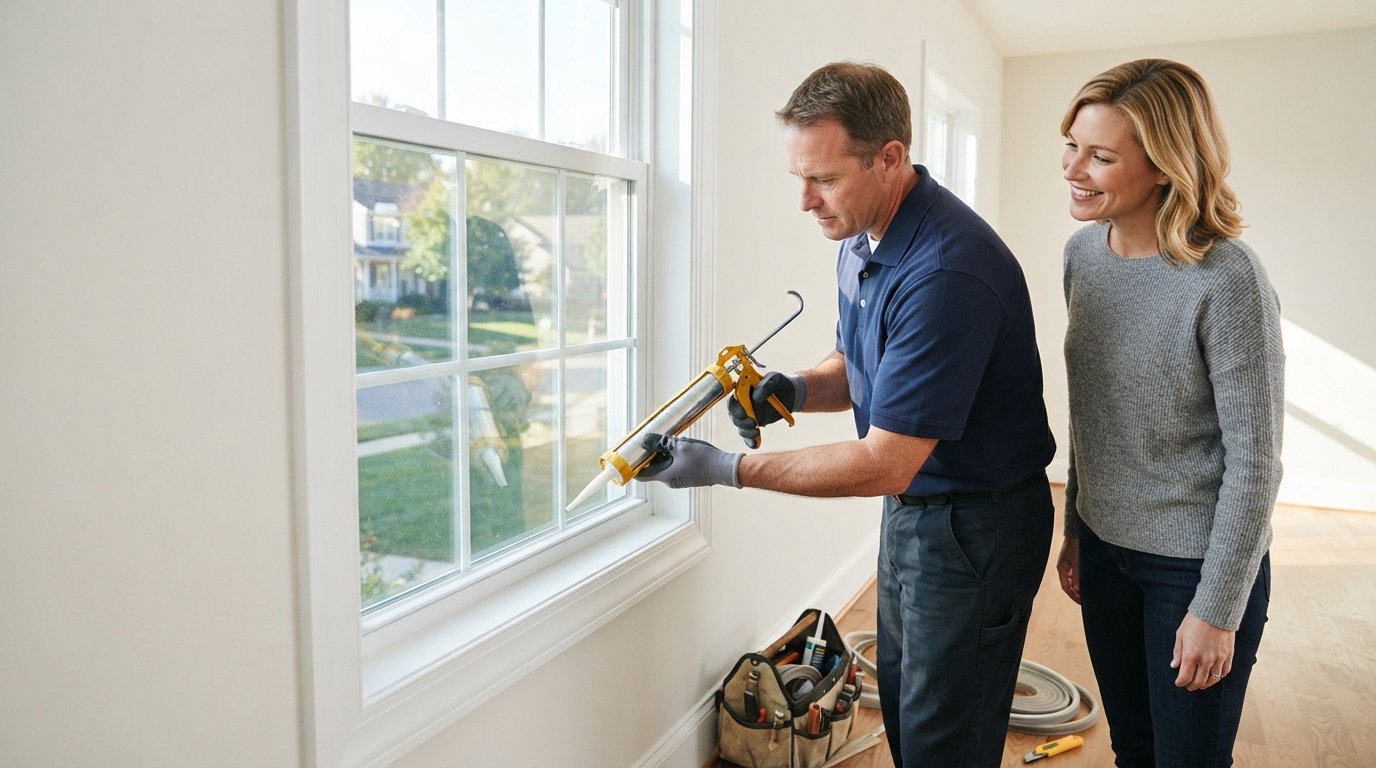
Installation details are the hidden variable in window replacement ROI. Even the best window will underperform if it is installed with sloppy air sealing, insufficient insulation around the frame, or poor flashing that lets water intrude. Ask contractors about their installation process: do they use spray foam or caulk to seal gaps? Do they replace or repair flashing? Do they insulate the rough opening? A slightly higher installation cost for proper sealing often pays for itself in energy savings and prevents costly water damage. For homeowners planning a broader renovation, connecting with experienced local contractors through HomeRemodelingsContractors.com can help you compare installation quality and get free estimates without guesswork.
Full-Frame vs. Insert Replacement: Choosing the Right Approach for Your Budget
When replacing windows, you face a fundamental choice: full-frame replacement or insert replacement (also called pocket replacement). Full-frame replacement removes the entire window unit, including the frame and sash, down to the rough opening. This allows for new flashing, new insulation, and correction of any rot or structural issues. It is the better choice when your existing frames are damaged, when you want to change the window size or style, or when you are doing a deep energy retrofit. It costs more, typically 20 to 40 percent more than insert replacement, because it involves more labor and carpentry. But it delivers better long-term performance and is often required if your home has older windows with compromised frames.
Insert replacement keeps the existing frame and installs a new sash-and-glass unit inside it. This is faster and less expensive, and it avoids disturbing interior trim or exterior siding. It works well when the existing frames are sound and you simply want better glass and tighter sashes. However, insert replacement does not address air leakage around the original frame, and it can reduce the visible glass area slightly because the new insert sits inside the old frame. If your old windows are aluminum sliders from the 1980s with leaky frames, inserts alone may not deliver the energy savings you expect. A reputable contractor will inspect your frames and tell you honestly which approach makes sense rather than defaulting to the cheaper option.
On a tight budget, you can prioritize. If your frames are in good shape, insert replacement on the leakiest windows (usually those facing prevailing winter winds or afternoon sun) can capture much of the energy savings at a fraction of the cost. If you plan to sell within a few years and your frames are marginal, full-frame replacement on the most visible windows (front facade, living room) can deliver the curb appeal and buyer confidence that drive resale value, while leaving less visible windows for later. The worst approach is to spend premium money on high-performance glass and then install it poorly; that is where ROI goes to die.
Maximizing Your Return: Practical Steps Before You Buy
Before you sign a contract, take a few steps to ensure you are making a sound financial decision. First, get at least three written estimates that specify the window brand, model, NFRC ratings, installation method, and warranty terms. Vague quotes are a red flag. Second, ask for a home energy assessment or at least a blower-door test if you suspect major air leakage; sometimes air sealing and insulation upgrades deliver better returns than new windows, and you should address the cheapest fixes first. Third, check whether your utility company offers rebates for energy-efficient windows; many do, and those rebates effectively improve your ROI. Fourth, consider the timing: window prices fluctuate with material costs and demand, and scheduling in the off-season (late fall or winter in many markets) can sometimes yield better pricing.
It also helps to think about your home's overall upgrade plan. If you are planning to replace siding or remodel a room in the next few years, coordinating window replacement with that project can reduce labor costs and improve the final result. If you are planning to sell, talk to a local real estate agent about what buyers in your neighborhood expect; in some markets, new windows are a checkbox item, while in others they are a nice-to-have. Finally, keep your receipts and warranty documents. When you sell, being able to show that the windows were professionally installed with a transferable warranty can be a meaningful negotiating point.
Window replacement is rarely the highest-ROI project in the house (kitchen and bath remodels usually beat it), but it is one of the most reliable. It improves comfort, reduces noise, cuts energy waste, and signals to buyers that the home has been maintained. The key is to avoid overpaying for performance you do not need and to insist on quality installation. If you focus on the fundamentals, proper ratings for your climate, sound installation, and a realistic budget, you will capture most of the available energy savings and resale value without falling for high-pressure sales tactics. Start with a clear assessment of your current windows, compare at least three quotes, and treat the project as an investment in both comfort and property value rather than a quick fix.