
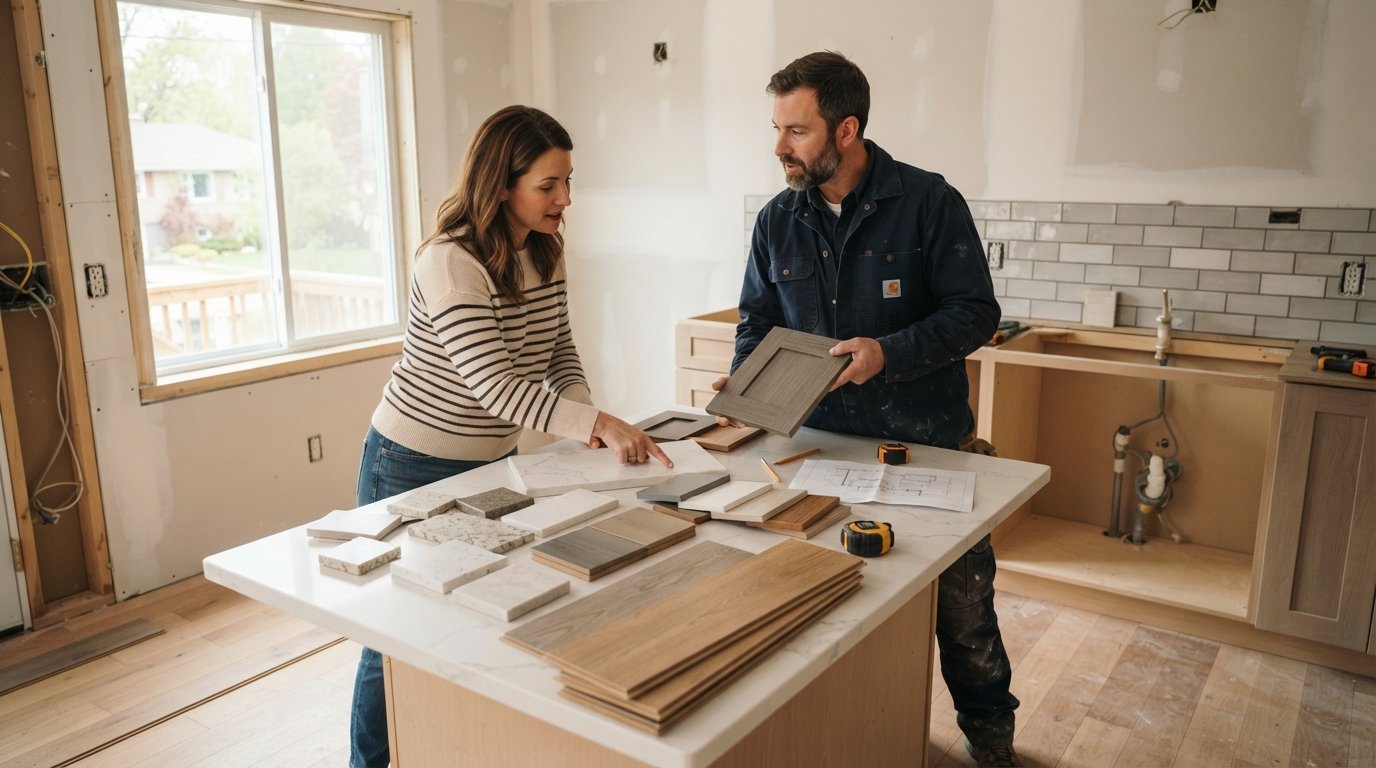
Smart Material Substitutions to Save Money on Home Remodel
Smart material substitutions to save money on home remodel cut costs without cutting quality. Call 8333658755 to plan your budget-friendly project.

By Liam Weston
Learn more about Home Remodeling for guides, costs, and what to expect.
Compare Home Remodeling Pros Near You

Enter your ZIP code to compare top-rated local professionals and request free quotes.
Most homeowners start a remodel with a clear vision and a budget that looks reasonable on paper. Then the first contractor quote arrives, and the numbers feel like a different project entirely. The gap between what you pictured and what you can afford usually comes down to one thing: materials. Cabinets, countertops, flooring, and fixtures account for a huge share of any renovation budget, and choosing them wisely is the single fastest way to bring costs down without making a room look cheap. The trick is not to buy the least expensive option on the shelf. It is to substitute smartly, swapping high-cost materials for lower-cost alternatives that deliver the same visual and functional result. This guide walks through the substitutions that consistently work, the ones that backfire, and how to plan the whole thing so your budget survives contact with reality.
Why Material Substitutions Matter More Than You Think
In a typical kitchen or bathroom renovation, materials and fixtures can account for 40 to 60 percent of the total project cost. Labor is the other big chunk, but labor is largely fixed once you choose a scope. Materials are where you have real control. Swap a natural stone countertop for a quality quartz or laminate, and you can cut that line item by half or more. Change solid hardwood flooring to engineered wood or luxury vinyl plank, and you save thousands on a whole-house project.
There is a second reason substitutions matter: they protect your project from scope creep. When one material comes in under budget, that savings can absorb an unexpected plumbing repair or a permit fee you did not anticipate. Homeowners who plan substitutions in advance tend to finish projects closer to their original numbers than those who pick finishes first and hope the labor quote fits around them.
Finally, substitutions are not just about cost. Many modern alternatives outperform the materials they replace. Luxury vinyl plank is more water-resistant than hardwood. Quartz is less porous than granite. Engineered stone does not need sealing. When you substitute with intention, you often get a more durable home for less money.
High-Impact Substitutions That Rarely Disappoint
The best substitutions share a trait: they change the material, not the look. A visitor walking through your finished kitchen should not be able to tell where you saved money. Here are the swaps that deliver the biggest savings with the least visual compromise.
- Solid surface or quartz instead of natural stone. Granite and marble are beautiful, but quartz and solid surface countertops offer similar appearance, better stain resistance, and lower maintenance at a fraction of the price.
- Luxury vinyl plank instead of hardwood. Modern LVP mimics wood grain convincingly, handles moisture better, and costs roughly half as much installed.
- Ceramic or porcelain tile instead of stone tile. Porcelain now comes in patterns that look like marble, travertine, or slate at a much lower cost per square foot.
- Painted MDF or stock cabinets instead of custom wood. Semi-custom and stock cabinets with a quality paint finish can look nearly identical to custom millwork.
- Engineered quartz or butcher block instead of marble. Both options cost less and hold up better in busy kitchens.
Each of these substitutions can save anywhere from 20 to 60 percent on the specific line item. Stack two or three together in a single room, and the total project savings can easily reach five figures. The key is to make the swap early, before you fall in love with a specific slab or tile that blows the budget.
One more high-impact area is lighting and hardware. Builder-grade fixtures and cabinet pulls are inexpensive, but homeowners often upgrade them out of habit. If your existing hardware is functional, refinishing or painting it can save hundreds. Similarly, choosing a slightly smaller tile format or a simpler edge profile on countertops can reduce fabrication costs without changing the overall design.
Where Cheap Substitutions Go Wrong
Not every swap is a win. Some materials are cheap for a reason, and using them in the wrong place creates problems that cost more to fix than the original upgrade would have cost. The most common mistakes involve moisture, structural load, and visible wear.
For example, replacing a solid wood subfloor with a thin composite panel under a heavy tile floor can lead to cracking and deflection. Using low-grade laminate in a bathroom, where humidity swings are constant, often leads to swelling and delamination within a year. Choosing the cheapest possible paint for exterior trim means repainting in two years instead of seven. These are false economies.
A safe rule: substitute materials that are hidden or low-traffic, but do not downgrade anything that manages water, supports weight, or takes daily abuse. Spend your savings on the finishes people see and touch, and keep proven materials where performance matters most. If you are unsure whether a substitution is safe, ask your contractor directly. A good professional will tell you where the line is.
How to Plan Substitutions Before You Get Quotes
The biggest mistake homeowners make is choosing finishes before they understand the budget. That leads to heartbreak when the numbers come back. A better approach is to build a substitution plan first, then request quotes against that plan. This keeps every contractor bidding on the same scope and makes it easy to compare apples to apples.
Start by listing every material category in your project: flooring, cabinets, countertops, tile, fixtures, lighting, hardware, paint, and trim. For each category, write down your first choice and one or two substitution options at different price points. Then set a target budget for each line. When quotes come in, you can immediately see which categories are over and which substitutions to activate.
This is also the moment to think about sequencing. Some substitutions affect lead times. Stock cabinets ship faster than custom. Porcelain tile is usually in stock, while natural stone may need to be quarried and shipped. Planning substitutions early gives you flexibility on scheduling, which can also reduce labor costs if your contractor can work continuously instead of waiting on materials.
If you want a structured way to think about which upgrades actually pay off, our guide on smart property upgrades that boost home value explains how to prioritize projects that return more than they cost. That logic applies directly to material choices: some substitutions save money now and add value later, while others just save money now.
Room-by-Room Substitution Playbook
Different rooms have different priorities. A kitchen is about durability and visual impact. A bathroom is about moisture resistance. A living room is about comfort and style. Here is how to apply substitutions room by room.
Kitchen
Kitchen remodels are the most expensive per square foot, so substitutions here have the biggest payoff. Cabinets are typically the largest single line item, often 30 to 40 percent of the budget. Choosing stock or semi-custom cabinets over fully custom can save thousands. If you love the look of custom, consider refacing existing cabinet boxes instead of replacing them entirely. Countertops are the next biggest opportunity: quartz or solid surface instead of granite or marble, and a simple edge profile instead of a decorative one. Backsplash tile is a place to go bold cheaply: a porcelain tile that mimics marble costs a fraction of the real thing and is easier to clean.
Appliances are another area where substitutions work. A mid-range appliance package from a reputable brand often performs as well as a luxury package for everyday cooking. Focus your appliance budget on the items you use most, like the range and refrigerator, and save on the dishwasher or microwave.
Bathroom
Bathrooms are smaller, but the material density is high. Tile, fixtures, vanities, and glass all add up. Porcelain tile is the workhorse here: it handles water, comes in hundreds of styles, and costs far less than natural stone. A prefabricated vanity with a quartz or solid surface top costs less than a custom vanity with a stone top and installs faster. For shower glass, a standard clear panel costs less than a custom frameless enclosure and looks just as clean.
Fixtures are a common place to overspend. A brushed nickel faucet from a mid-tier brand performs the same function as a designer brand at a third of the price. The finish may wear slightly faster, but in a guest bath or secondary bathroom, that trade-off is usually worth it.
Living Areas and Bedrooms
In living rooms and bedrooms, flooring is the dominant cost. LVP or engineered hardwood can replace solid hardwood at significant savings, and both handle foot traffic well. If you have existing hardwood in decent shape, refinishing instead of replacing is one of the best substitutions available. For trim and baseboards, MDF painted to match costs less than solid wood and looks identical once installed.
Lighting and hardware are easy wins. Standard recessed lights and simple pendant fixtures cost far less than designer options, and you can upgrade later without tearing anything out. Paint is another category where mid-grade paint performs nearly as well as premium paint for interior walls, though exterior paint is worth the upgrade.
Working With Contractors on Substitutions
Substitutions only work if your contractor is on board. Some contractors prefer to specify materials they know and trust, and that is reasonable. Others may mark up materials, which means a cheaper material saves them less. The best approach is to be transparent: tell your contractor you want to hit a target budget and ask for their input on where substitutions make sense.
Good contractors often have favorite alternatives that cost less and install faster. They may also know which local suppliers have overstock or discontinued lines that match your style at a discount. Building that relationship early pays off. If you are still looking for the right professional, a service that helps homeowners plan affordable home improvement projects and connect with experienced local contractors can save you time. You can compare local remodeling contractors and request free estimates to find someone who works well with budget-conscious plans.
Get every substitution in writing. A change order that documents the material, the price difference, and the impact on the schedule protects both sides. It also prevents the awkward conversation later if a substituted material does not arrive on time or does not match the sample.
Timing Your Substitutions for Maximum Savings
When you make a substitution matters almost as much as what you substitute. The earlier in the process you decide, the more options you have. Once a material is ordered or installed, changing it costs money and time. Plan substitutions during the design phase, before you sign a contract if possible.
Seasonal timing also affects material prices. Lumber and some composites are cheaper in winter when demand is lower. Tile and flooring promotions often run in spring and fall. If your project has flexibility, buying materials during a sale can add another 10 to 20 percent savings on top of the substitution itself.
Finally, consider buying some materials yourself. Contractors often pass materials through at cost plus a markup. If you can source tile, fixtures, or hardware directly from a retailer or online supplier, you may save that markup. Just make sure your contractor is comfortable with owner-supplied materials, and confirm who handles returns and defects.
Balancing Savings With Long-Term Value
Saving money on a remodel is not just about spending less today. It is about spending wisely so you do not pay twice. A cheap material that fails in three years costs more than a mid-grade material that lasts fifteen. The substitutions described here are chosen because they balance upfront savings with durability and appearance.
As you finalize your plan, ask yourself three questions for every substitution: Will this still look good in five years? Will it hold up to daily use? If I sell the house, will a buyer see this as a downgrade? If the answer to all three is favorable, the substitution is probably smart. If any answer is no, consider spending a little more or finding a different swap.
Material substitutions are one of the few levers homeowners can pull that reduce cost without reducing quality. Used well, they turn a project that feels out of reach into one that fits your budget and finishes on time. Start with a plan, stay flexible on finishes, and keep your contractor in the loop. You will end up with a home you love at a price you can live with.