
Seasonal Maintenance Checklist to Prevent Costly Repairs
Use this seasonal maintenance checklist to prevent costly repairs and protect your budget. Call (833)-365-8755 to connect with trusted local pros.

By Leo Cross
Learn more about Home Inspection for guides, costs, and what to expect.
Compare Home Inspection Pros Near You

Enter your ZIP code to compare top-rated local professionals and request free quotes.
A single missed gutter cleaning can lead to a flooded basement. A neglected HVAC filter can shorten the life of your system by years. And a hairline crack in a roof flashing can turn into a four-figure repair after one heavy storm. The truth is, most expensive home repairs do not appear out of nowhere. They start as small, predictable maintenance items that get ignored until they fail. A seasonal maintenance checklist to prevent costly repairs is not about busywork. It is a structured, repeatable routine that protects your largest investment and keeps your budget predictable.
This guide walks you through exactly what to inspect and when, how to separate DIY tasks from jobs that require a licensed pro, how to build an annual maintenance reserve, and which records to keep so warranties and insurance claims do not get denied. Whether you own an older home or a newer build, the same seasonal rhythm applies. The goal is simple: catch small issues before they become emergency bills.
Why a Seasonal Maintenance Checklist to Prevent Costly Repairs Pays Off
Home maintenance is often treated as an afterthought until something breaks. But the financial case for a recurring routine is strong. According to industry data, homeowners who follow a structured maintenance plan spend significantly less on emergency repairs over a five-year period than those who fix things only after they fail. The reason is straightforward: water, heat, and time are patient destroyers. A slow leak under a sink can rot a cabinet base for months before you notice. A clogged condensate line on an air conditioner can overflow and damage drywall in a single cooling season.
A seasonal maintenance checklist to prevent costly repairs reframes maintenance as prevention, not reaction. Instead of calling a contractor in a panic, you inspect on a schedule, address small items early, and keep larger systems operating within their designed lifespan. This approach also protects your home's resale value. Buyers and inspectors notice deferred maintenance, and a well-documented maintenance history can become a negotiating advantage when you sell.
There is also an insurance angle. Many policies require homeowners to take reasonable steps to prevent damage, such as maintaining the roof or winterizing pipes. If you file a claim for water damage and the insurer determines that a lack of maintenance caused it, the claim may be reduced or denied. A simple written record of seasonal inspections gives you evidence that you acted responsibly.
Quarterly Inspection Items: Roof, Gutters, HVAC, and Plumbing
The core of any seasonal maintenance checklist to prevent costly repairs is a quarterly walkthrough of the four systems that cause the most expensive damage: the roof, gutters, HVAC, and plumbing. You do not need to be a tradesperson to spot warning signs. You need a flashlight, a notebook, and a willingness to look closely.
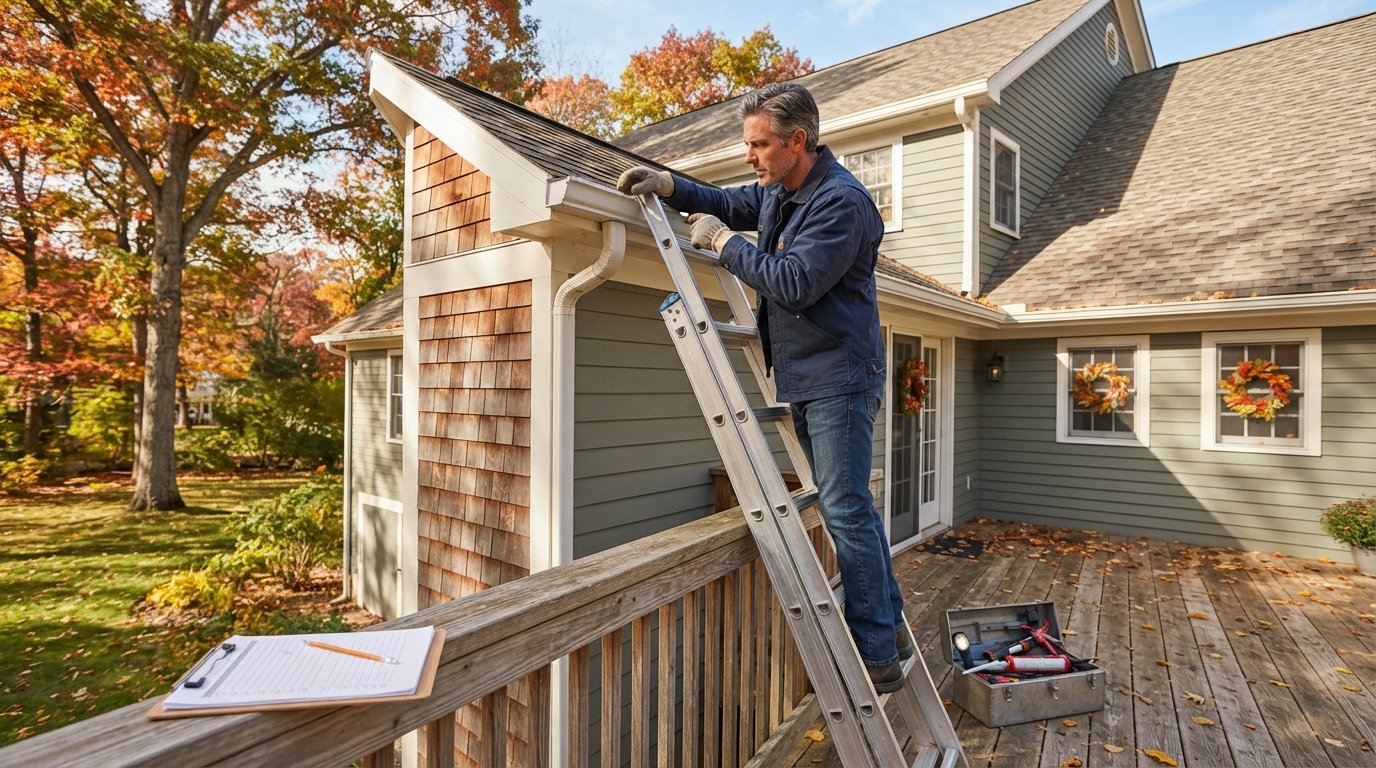
Start with the roof from the ground. Use binoculars to scan for missing, lifted, or cracked shingles, and check the flashing around chimneys and vents. Inside, look at the ceiling for water stains or discoloration, especially after heavy rain. Gutters should be cleared of leaves and granules at least twice a year, more often if you have mature trees nearby. While you are at the gutter line, confirm that downspouts direct water at least four to six feet away from the foundation. A downspout that dumps water at the wall is a leading cause of basement seepage and foundation cracks.
For HVAC, change or clean the air filter every one to three months depending on pets and dust. Before each heating and cooling season, have a technician inspect the system, clean the coils, and check refrigerant levels. Homeowners can handle filter changes and keeping vents unobstructed, but refrigerant and electrical work belong to a licensed professional. On the plumbing side, check under every sink for slow drips, test shutoff valves by turning them gently, and look for rust or corrosion on supply lines. Flush the water heater once a year to remove sediment, and test the pressure relief valve. These small actions extend equipment life and prevent the kind of hidden leaks that rot framing.
A practical quarterly routine looks like this:
- Spring: Inspect the roof after winter, clear gutters, service the air conditioner, and check outdoor faucets for freeze damage.
- Summer: Check the attic for heat and moisture issues, test smoke and carbon monoxide detectors, and inspect the washing machine hoses for bulges.
- Fall: Clear gutters again, winterize irrigation and hose bibs, schedule the furnace tune-up, and seal gaps around windows and doors.
- Winter: Watch for ice dams, keep cabinet doors open during extreme cold to protect pipes, and test sump pump operation before the thaw.
This quarterly rhythm is the backbone of a seasonal maintenance checklist to prevent costly repairs. It keeps you ahead of the seasons instead of reacting to them. For a deeper dive into cold-weather tasks, our winter home maintenance checklist covers freeze protection and ice dam prevention in detail.
Tasks Worth Paying a Pro For Versus DIY
Not every maintenance item should be a DIY project. Some tasks are safe and simple for a motivated homeowner, while others carry real risk of injury, property damage, or voided warranties. Knowing the difference is a critical part of a seasonal maintenance checklist to prevent costly repairs, because a botched DIY job often costs more than hiring the right professional in the first place.
Safe DIY tasks generally include changing air filters, clearing gutters from a stable ladder (with a spotter), testing detectors, replacing washer hoses, caulking small exterior gaps, and flushing the water heater. These are low-risk, high-return activities that any homeowner can learn. Tasks that require a pro include anything involving the electrical panel, gas lines, refrigerant handling, roof work above a single story, sewer line scoping, and structural repairs. A licensed technician has the tools, insurance, and training to do the job safely, and their work is often covered by a warranty that protects you if something goes wrong later.
If you are unsure whether a task is DIY-appropriate, ask three questions: Does it involve gas, high voltage, or refrigerant? Does it require working at height? Could a mistake cause water damage or structural failure? If the answer to any of these is yes, hire a professional. When you need to find a vetted local contractor for HVAC, roofing, or plumbing work, a platform like HomeRemodelingsContractors helps homeowners compare free estimates and connect with experienced local pros, so you can schedule maintenance without overpaying.
How to Budget an Annual Maintenance Reserve
The most effective seasonal maintenance checklist to prevent costly repairs is only as good as the budget behind it. Homeowners who set aside a dedicated maintenance reserve avoid the stress of surprise bills and can schedule work proactively, often at lower off-season prices. A common rule of thumb is to reserve 1 to 4 percent of your home's value each year for maintenance and repairs, with older homes leaning toward the higher end.
A practical way to build the reserve is to break it into monthly contributions and assign it to a separate savings account. For a $350,000 home, a 1.5 percent annual reserve equals about $5,250 per year, or roughly $437 per month. That fund covers routine tune-ups, filter changes, gutter cleaning, and small repairs. For larger predictable expenses, such as a roof replacement or HVAC replacement, plan separately using a sinking fund with a five- to ten-year horizon. The key is to treat maintenance like a utility bill: predictable, recurring, and non-negotiable.
Track your spending against the reserve each quarter. If you notice that small repairs are consistently eating the fund, it may signal a system nearing the end of its life. That is the moment to consult a professional about replacement rather than continuing to patch. A well-funded reserve turns a potential emergency into a planned project, and planned projects almost always cost less than reactive ones.
Records to Keep for Warranty and Insurance Claims
Documentation is the quiet hero of any seasonal maintenance checklist to prevent costly repairs. When a warranty claim or insurance claim arises, the burden often falls on the homeowner to prove that maintenance was performed. Without records, a manufacturer may deny a warranty claim for an HVAC system or a roof, and an insurer may question whether damage resulted from neglect.
Keep a simple maintenance log that captures the date, task, who performed it, and any receipts or invoices. Store photos of before-and-after conditions for major items, especially roof and plumbing work. Retain equipment manuals, warranty cards, and contractor licenses in a single folder, either physical or digital. If you sell the home, this log becomes a valuable marketing document that demonstrates responsible ownership.
A well-organized record set should include:
- Annual HVAC inspection and filter change receipts
- Roof inspection reports and any repair invoices
- Water heater flush and plumbing repair records
- Photos of gutters, downspouts, and foundation drainage before and after cleaning
- Warranty documents and contractor contact information
These records do more than satisfy claims adjusters. They help you spot patterns, such as recurring leaks in the same area, and they make it easier to hand off maintenance to a new owner or property manager. A seasonal maintenance checklist to prevent costly repairs is ultimately a habit, and the paper trail is what keeps that habit accountable.
Turning the Checklist Into a Year-Round Routine
The best checklist is the one you actually use. Print it, pin it to a bulletin board, or set calendar reminders for the first weekend of each season. Pair each task with a specific trigger, such as clearing gutters after the last leaf falls or changing the HVAC filter on the first of every month. Small, anchored habits beat ambitious plans that get abandoned by February.
If a task falls outside your comfort zone, schedule it with a licensed pro early. Off-season appointments are easier to book and often cheaper. And if you are planning a larger upgrade alongside routine maintenance, such as a roof replacement or a bathroom refresh, gather free estimates from several contractors before committing. A seasonal maintenance checklist to prevent costly repairs is not about spending more. It is about spending wisely, at the right time, on the right items, so your home stays safe, efficient, and valuable for years to come.