
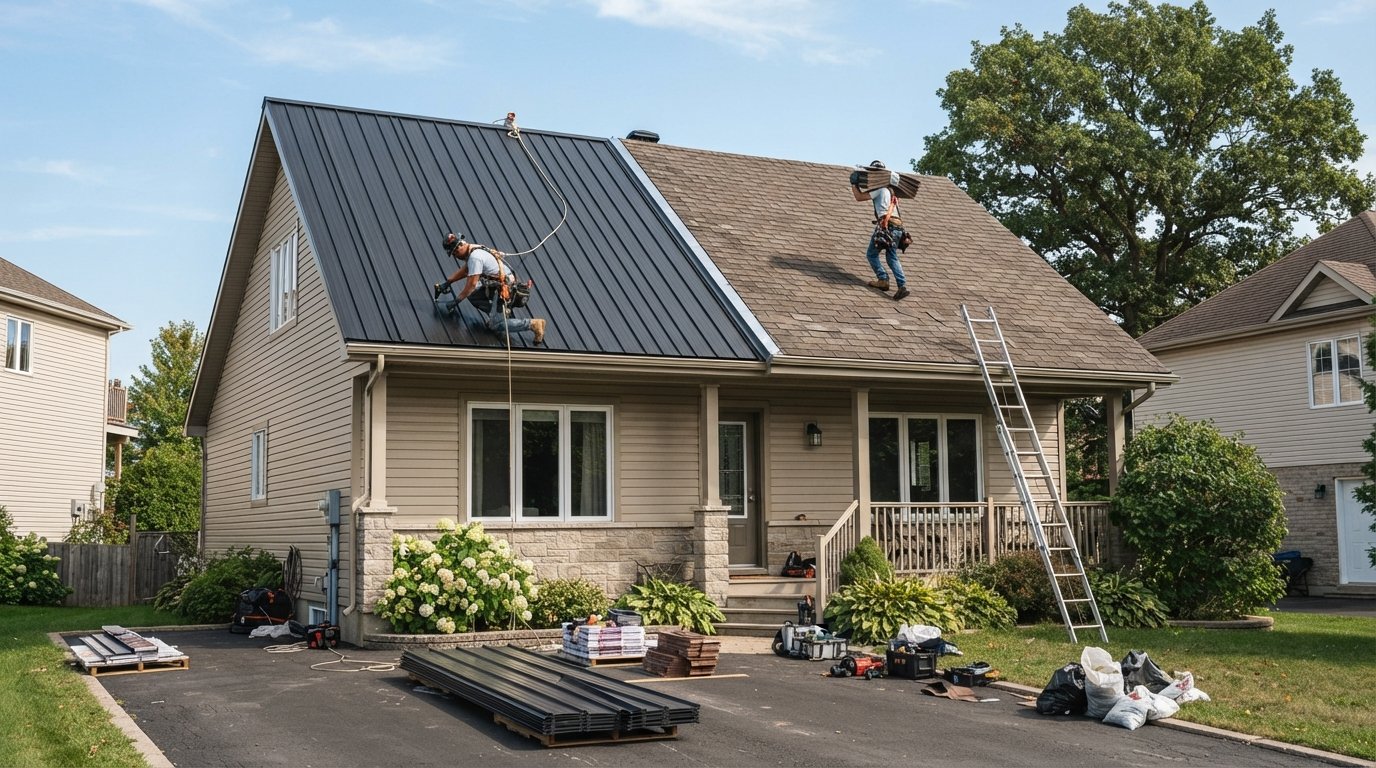
Metal Roof vs Asphalt Shingle Cost Over 30 Years
Compare metal roof vs asphalt shingle cost over 30 years, including replacements, repairs, and energy savings. Call (833)-365-8755 for free quotes.

By Owen Carter
Learn more about Roof Installation or Replacement for guides, costs, and what to expect.
Compare Roof Installation or Replacement Pros Near You

Enter your ZIP code to compare independent local professionals and request free quotes.
When you are facing a roof replacement, the first number you see is rarely the one that matters most. A metal roof might cost two to three times more than asphalt shingles upfront, but that gap can shrink, disappear, or even flip over three decades once you factor in replacements, repairs, insurance, and energy bills. This guide breaks down the metal roof vs asphalt shingle cost over 30 years so you can compare the real long-term numbers instead of just the bid your contractor hands you today.
The Upfront Price Gap: What You Pay on Day One
Roofing costs are usually quoted per square, which equals 100 square feet of roof surface. A typical home has 20 to 30 squares, so small differences in per-square pricing add up fast. Asphalt shingles, specifically architectural shingles, are the budget benchmark for most U.S. homeowners. Metal roofing sits at the premium end, and tile falls somewhere in between depending on the material.
For a mid-range home, here is a realistic look at installed cost per square, including materials, labor, underlayment, and basic flashing. These are national ranges and will vary by region, roof complexity, and local labor rates.
- Architectural asphalt shingles: $350 to $550 per square, or roughly $8,000 to $14,000 for a typical roof
- Standing seam metal: $800 to $1,400 per square, or roughly $18,000 to $35,000
- Metal shingles or panels: $600 to $1,000 per square, or roughly $14,000 to $25,000
- Clay or concrete tile: $600 to $1,200 per square, or roughly $15,000 to $30,000
The upfront gap is real, and it is the reason many homeowners stop their research there. But that comparison only holds if both roofs last the same amount of time and cost the same to maintain. They do not. The metal roof vs asphalt shingle cost over 30 years calculation changes dramatically once lifespan and maintenance enter the picture. If you are still in the planning phase, it helps to understand how other exterior projects, like deck staining cost and timing, also trade small upfront savings for long-term protection.
Lifespan and Replacement Cycles Over 30 Years
This is where the math starts to shift. Architectural asphalt shingles typically last 20 to 25 years in real-world conditions, not the 30 years often printed on the package. That means a homeowner planning to stay put for 30 years will likely replace an asphalt roof at least once, and possibly face a second replacement if the first install was on the lower end of that range.
Metal roofs, by contrast, commonly last 40 to 70 years depending on the material. Standing seam steel and aluminum often carry manufacturer warranties of 30 to 50 years, and many outlast the homeowners who install them. Tile roofs also last 50 years or more, though they are heavier and may require structural reinforcement.
Here is how the replacement cycles play out over a 30-year horizon:
- Year 0: Install asphalt shingles at roughly $10,000, or metal at roughly $25,000.
- Year 20 to 25: Replace the asphalt roof at a cost of $12,000 to $16,000, assuming normal inflation and minor decking repairs. The metal roof needs no replacement.
- Year 30: The asphalt homeowner has spent $22,000 to $26,000 total on roof installations. The metal homeowner has spent $25,000 once.
Suddenly the gap is much smaller, and that is before maintenance, repairs, insurance, and energy savings are added in. When you run the metal roof vs asphalt shingle cost over 30 years with two asphalt installations, the metal roof often comes out ahead or very close, while offering better protection and curb appeal in the final decade.
Maintenance and Repair Costs Over Three Decades
Installation is only part of the ownership cost. Asphalt shingles are more vulnerable to wind, hail, and granule loss, and they require periodic attention. Common asphalt repairs include replacing missing or damaged shingles after storms, sealing or replacing flashing, and addressing leaks that develop as the roof ages. Over 30 years, a typical asphalt roof might see $2,000 to $5,000 in cumulative repair and maintenance costs, with more spent in the later years as the roof degrades.
Metal roofs are not maintenance-free, but they demand less. Fasteners on exposed-fastener panels can back out over time and need tightening or replacement, and debris should be cleared from valleys and gutters. Standing seam metal, which hides fasteners, has fewer failure points. A reasonable 30-year maintenance budget for metal is $1,000 to $3,000, mostly for inspections, minor fastener work, and gutter cleaning.
One more factor: asphalt shingles contribute to landfill waste with every replacement, and disposal fees are included in replacement bids. Metal roofs are often recyclable at the end of their life, and some products contain recycled content. That does not directly reduce your bill, but it can matter if you are weighing long-term value and environmental impact alongside cost.
Insurance Discounts and Energy Savings
Two of the most overlooked line items in the metal roof vs asphalt shingle cost over 30 years comparison are insurance and energy. Metal roofs, particularly those rated for impact and fire resistance, can qualify for homeowner insurance discounts in many states. Savings vary widely by carrier and region, but discounts of 5 to 20 percent on the dwelling portion of a policy are not uncommon. Over 30 years, even a modest discount can add up to thousands of dollars.
Energy performance is the second lever. Metal roofs reflect solar radiation and, when installed with proper ventilation or a reflective coating, can reduce attic heat gain. Homeowners in hot climates often report cooling savings in the range of 10 to 25 percent, though results depend on insulation, attic sealing, and roof color. Asphalt shingles absorb more heat and offer no reflective benefit. If you are also planning related upgrades, understanding how to compare local home improvement providers can help you bundle roofing with insulation or ventilation work for better overall efficiency.
These savings are not guaranteed, and they should not be the only reason you choose metal. But when you are building a 30-year cost model, ignoring insurance and energy leaves real money on the table.
HOA and Historic District Restrictions to Check First
Before you fall in love with a standing seam metal roof, confirm that your homeowners association or local historic district will allow it. Some HOAs restrict roofing materials to asphalt shingles or specific colors, and historic districts may require materials that match the neighborhood's character. Metal shingles that mimic slate or tile are sometimes approved where standing seam is not, but you need written approval before signing a contract.
Asphalt shingles are almost universally accepted, which is one reason they remain the default choice. If you are in a managed community, request the architectural review guidelines and submit your material samples early. A denied application after installation is an expensive mistake, and it can force a full re-roof at your own cost.
Building a 30-Year Cost Model That Fits Your Home
The metal roof vs asphalt shingle cost over 30 years comparison is not one-size-fits-all. Your climate, roof pitch, home value, and how long you plan to stay all change the answer. A homeowner in hail country may see more asphalt repairs, while a homeowner in a hot climate may see bigger metal energy savings. A homeowner planning to sell in five years may not recoup a metal roof premium at resale, while someone staying 20 years almost certainly will.
To build your own model, gather three quotes for each material from independent local providers, ask each bidder to itemize tear-off, decking repair, underlayment, flashing, and ventilation, and then add your expected maintenance, insurance discount, and energy savings. Compare the totals over 30 years, not just the first invoice. When you are ready to gather those quotes, you can connect with independent local providers and compare options with no obligation.
The bottom line: asphalt shingles win on day one, but metal often wins by year 30. The right choice depends on your budget, your timeline, and how much you value lower maintenance and better energy performance. Run the numbers for your own roof, confirm your HOA rules, and let the 30-year total guide the decision instead of the first bid.