
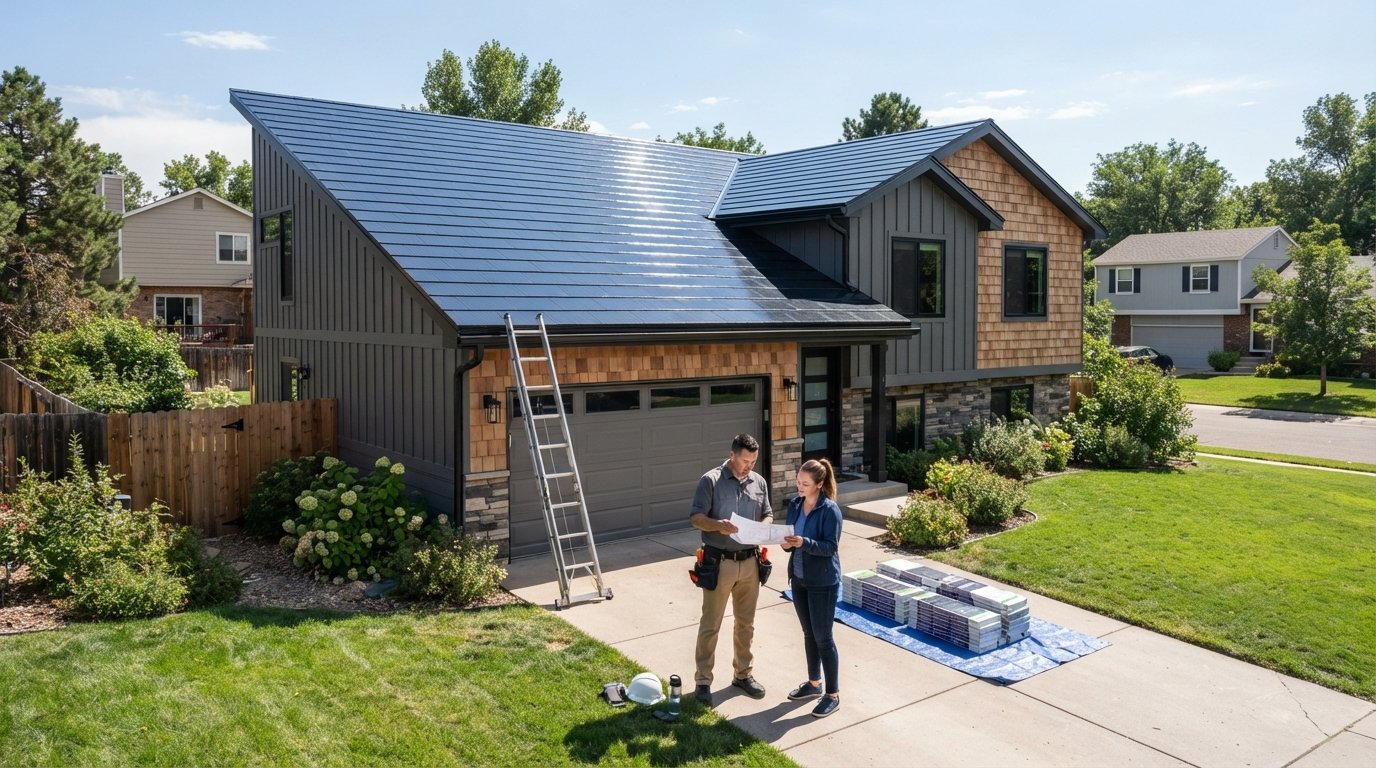
Solar Shingle Roof Replacement Cost in 2026: Full Guide
Discover the true cost to replace roof with solar shingles in 2026, including price factors, incentives, and payback tips to avoid overpaying.

By Liam Weston
Learn more about Roof Installation or Replacement for guides, costs, and what to expect.
Compare Roof Installation or Replacement Pros Near You

Enter your ZIP code to compare top-rated local professionals and request free quotes.
Replacing a roof is one of the most expensive home improvements you will ever face, and adding solar shingles complicates the math even further. In 2026, homeowners are increasingly asking whether the higher upfront price of solar shingles pays off through energy savings and federal tax credits. The honest answer is that the cost to replace roof with solar shingles 2026 ranges from $40,000 to $100,000 or more for a typical 2,000 square foot home, depending on your location, roof complexity, and the brand you choose. That wide range reflects a key reality: this is not a one size fits all purchase, and small differences in your home's structure or your energy goals can shift the final bill by tens of thousands of dollars. This guide breaks down every component of that price, from materials and labor to hidden costs and financing options, so you can plan with confidence and avoid surprise bills.
Before you dismiss the sticker shock, consider what solar shingles actually replace. A conventional asphalt roof costs about $10,000 to $15,000, and a separate rooftop solar panel system adds another $15,000 to $25,000. Solar shingles combine both functions into a single product, which means you are not paying twice for labor and mounting hardware. In many cases, the combined cost of a new roof plus traditional solar panels is comparable to, or even higher than, a solar shingle installation. The real question is whether the aesthetic appeal and integrated design justify the premium for your specific home. As you read through the detailed cost breakdowns below, keep your own roof size, pitch, and sun exposure in mind, because those factors will influence every estimate you see.
What Drives the Cost to Replace Roof with Solar Shingles in 2026?
Several cost components stack together to produce that final quote, and understanding each one helps you compare bids from different contractors. The largest single factor is the shingle material itself. Solar shingles are not ordinary roofing materials; they contain photovoltaic cells that convert sunlight into electricity. Manufacturers like Tesla, GAF Energy, and CertainTeed each use different cell technologies, glass coatings, and mounting systems, which creates significant price variation between brands. A premium product with higher efficiency and a sleeker profile will naturally cost more per square foot than a budget friendly option.
Labor is the second major expense, and it is often higher than what you would pay for a standard roof replacement. Solar shingles require specialized training to install correctly, both for waterproofing and for electrical connections. Not every roofer has this certification, so you may need to hire a contractor who partners with an electrician or a company that offers a combined installation team. This added complexity also increases the time on site, typically adding two to four days to your project timeline compared to a traditional re-roof. When you request quotes, ask each contractor to itemize labor separately so you can see exactly what you are paying for expertise.
Average Cost to Replace Roof with Solar Shingles in 2026
To give you a clear benchmark, the table below summarizes typical price ranges for a standard 2,000 square foot single story home with a moderate pitch roof. These figures include materials, labor, permits, and removal of your old roof, but they do not include electrical panel upgrades or battery storage unless noted. Keep in mind that regional pricing varies, with coastal and high cost of living areas running 15 to 25 percent above these averages.
- Entry level solar shingles (GAF Timberline Solar): $40,000 to $55,000 installed.
- Mid range solar shingles (CertainTeed Apollo II): $50,000 to $70,000 installed.
- Premium solar shingles (Tesla Solar Roof): $70,000 to $100,000 or more installed.
- Roof complexity surcharge: $5,000 to $15,000 for steep pitches, multiple facets, or skylights.
These numbers may feel staggering, but remember that the federal solar investment tax credit (ITC) currently allows you to deduct 30 percent of the total system cost from your federal taxes. That credit applies to the entire solar shingle system, not just the photovoltaic portion, which is a major advantage over traditional panels where only the panels and related equipment qualify. If your system costs $60,000, you can reduce your tax liability by $18,000, bringing your net out of pocket down to $42,000. Some states and utilities offer additional rebates or performance based incentives, so research your local programs before you finalize your budget.
Solar Shingle Cost per Square Foot and per Watt
Contractors often quote solar shingle projects using two different units: cost per square foot and cost per watt. Understanding both helps you compare apples to apples across bids. On a per square foot basis, solar shingles typically run between $21 and $28 for materials and installation combined. That is roughly two to three times the cost of a premium asphalt shingle roof, which lands around $7 to $10 per square foot. The premium buys you electricity generation and a modern, low profile look that can increase your home's resale appeal.
On a per watt basis, solar shingles generally cost $3.50 to $5.00 per watt before incentives. A typical residential system produces between 4 and 8 kilowatts, depending on your roof's sun exposure and your household electricity usage. To calculate your potential system size, divide your annual electricity usage in kilowatt hours by the average annual sun hours in your area. For example, a home using 10,000 kilowatt hours per year in a region with 1,500 sun hours would need roughly a 6.7 kilowatt system. At $4.25 per watt, that system would cost about $28,500 before roofing costs, which illustrates why the total price climbs so quickly.
Why Efficiency Ratings Matter for Your Final Price
Solar shingle efficiency, measured as the percentage of sunlight converted into electricity, directly affects how many shingles you need to meet your energy goals. Most solar shingles have efficiency ratings between 15 and 22 percent, which is slightly lower than traditional solar panels that often exceed 20 percent. Lower efficiency means you need more roof area to generate the same amount of power, which can increase your material cost if you have limited south facing roof space. If your roof has ample sun exposure, you can choose a less efficient, lower cost shingle and simply cover more area. If your roof is small or shaded, you will need a premium, high efficiency product to maximize generation within your available space.
Breakdown of Costs: Materials, Labor, Permits, and More
Every solar shingle quote includes several line items beyond the shingles themselves. Understanding each component prevents you from being surprised by add ons later. The largest material cost is the solar shingles, which typically account for 50 to 60 percent of the total project price. Underlayment, flashing, ridge caps, and other roofing accessories add another 10 to 15 percent. These components are essential for ensuring your roof remains watertight for 25 years or more, so do not let a contractor cut corners on quality to save a few hundred dollars.
Labor represents 20 to 30 percent of the total cost, and it is worth paying for experience. Improper installation can void your shingle warranty and create serious leak risks. Permits and inspection fees vary by municipality but usually fall between $500 and $2,000. Electrical work, such as upgrading your main service panel or installing a new inverter, can add $2,000 to $5,000 if your current system cannot handle the additional solar input. Finally, if you want battery storage to use solar power at night or during outages, expect to add $10,000 to $20,000 for a system like the Tesla Powerwall or similar products.
Removing your old roof is another cost that some homeowners overlook. Tearing off one layer of asphalt shingles and disposing of the debris typically costs $2,000 to $4,000. If your home has multiple layers of old roofing, removal costs increase because the job takes more time and produces more waste. Before signing a contract, confirm whether the quoted price includes tear off and disposal, or if that is billed separately.
Solar Shingles vs. Traditional Solar Panels: A Cost Comparison
Many homeowners wonder whether they should simply install a standard roof and add solar panels on top, rather than paying a premium for solar shingles. In 2026, the cost difference between these two approaches is narrower than you might think. A new asphalt roof plus a traditional solar panel system of equal size typically costs between $35,000 and $55,000, while solar shingles range from $40,000 to $100,000. The traditional route is usually cheaper upfront, but it comes with aesthetic drawbacks that some homeowners find unacceptable.
Solar panels are mounted above your roof surface on metal racks, creating a visible profile that some neighborhoods restrict through homeowners association rules. Panels also require penetrations into your roof for mounting bolts, which can increase the risk of leaks over time if not properly sealed. Solar shingles lie flat against the roof deck, creating a seamless appearance that many buyers prefer. This visual advantage can translate into a higher resale value, especially in markets where solar ready homes are in demand. For homeowners planning to stay in their house for 10 or more years, the energy savings from either system will eventually cover the initial cost, but the payback period for solar shingles may be slightly longer due to the higher upfront investment.
Hidden Costs and Common Surprises in 2026
Even with a detailed quote, unexpected expenses can arise during a solar shingle installation. One of the most common surprises is the need for roof deck repairs. When contractors remove your old shingles, they may discover rotten plywood or damaged rafters that must be replaced before the new system can be installed. Deck repair costs $1,500 to $5,000 depending on the extent of the damage. To protect yourself, ask your contractor to include a visual inspection of the roof deck in the initial bid and request a written contingency clause that caps your liability for unforeseen structural issues.
Another potential hidden cost is an electrical panel upgrade. Older homes often have 100 amp service panels that cannot handle the additional load from a solar system. Upgrading to a 200 amp panel costs $2,000 to $4,000, and in some cases, you may also need to upgrade your utility meter or service entrance. Your contractor should perform a load calculation before installation to determine if an upgrade is necessary. Finally, if you live in an area with strict historic preservation rules or design review boards, you may need to pay for special approval processes or choose a specific shingle style to comply with local guidelines.
How to Finance Your Solar Shingle Roof Replacement
Given the high upfront cost, most homeowners finance their solar shingle project rather than paying cash. The best option is often a solar loan, which is a specialized financing product designed for renewable energy installations. Solar loans typically offer terms of 10 to 20 years with interest rates between 4 and 8 percent, depending on your credit score. Some lenders allow you to roll the federal tax credit into your loan payments, reducing your monthly obligation during the first year. Others offer deferred payment plans where you pay nothing for the first 12 to 18 months, which can help you manage cash flow while you wait for your tax refund.
Home equity loans and home equity lines of credit (HELOCs) are another popular choice, especially for homeowners who have built up significant equity. Interest rates on HELOCs are often lower than unsecured loans, and the interest may be tax deductible if you use the funds for home improvements. Cash out refinancing is a third option, but it resets your entire mortgage and may increase your interest rate, so it only makes sense if you can secure a favorable rate. Before choosing any financing method, compare the total cost of the loan, including fees and interest, against your expected energy savings over the life of the system. A good rule of thumb is that your combined monthly loan payment and electricity bill should be lower than your old electricity bill alone, or at least close to it.
Are Solar Shingles Worth the Cost in 2026?
To decide if solar shingles are a smart investment, you need to calculate your payback period and compare it to the expected life of the product. Most solar shingles come with a 25 year warranty, and the photovoltaic cells are designed to generate electricity for 30 years or more. If your system costs $60,000 and you save $1,500 per year on electricity, your simple payback period is 40 years, which exceeds the warranty period. However, federal and state incentives can cut your net cost to $40,000, bringing the payback down to about 27 years. In states with high electricity rates and strong net metering policies, annual savings can reach $2,500 or more, reducing the payback to 16 years or less.
The financial case improves further when you factor in the value of a new roof. A traditional roof replacement costs $15,000, and you would need that regardless of whether you add solar. Subtracting that baseline roofing cost from your solar shingle investment leaves a solar premium of $25,000 to $45,000, which is more comparable to the cost of a traditional solar panel system. When you view the purchase this way, you are essentially paying a modest premium for the integrated aesthetic and the convenience of having a single contractor handle both roofing and solar. Many homeowners find that premium acceptable, especially when it increases their home's resale value. A 2026 study by Zillow found that homes with solar features sell for 4.1 percent more than comparable homes without solar, which can offset a significant portion of the initial cost when you eventually sell.
Choosing the Right Contractor for Your Solar Shingle Project
Selecting an experienced installer is the most critical decision you will make, because a poorly installed solar shingle roof can lead to leaks, electrical failures, and costly repairs. Start by seeking contractors who are certified by the shingle manufacturer. Tesla, GAF Energy, and CertainTeed all offer certification programs that require rigorous training and ongoing education. Certified installers have access to the latest technical updates and are more likely to follow best practices for waterproofing and electrical connections. You can verify a contractor's certification by checking the manufacturer's website or asking for proof of their credentials.
When interviewing potential contractors, ask about their experience with solar shingles specifically, not just traditional roofing or solar panels. Request references from recent solar shingle installations and contact those homeowners to ask about their experience. Inquire about how the contractor handles unexpected issues such as roof deck rot or electrical problems, and get their policy on change orders in writing. Finally, compare at least three quotes before making a decision. A significantly lower bid may indicate that the contractor is cutting corners on materials or labor, while a significantly higher bid may simply mean they are busy and not eager for the work. For help vetting contractors and getting free estimates from qualified professionals in your area, you can check out HomeRemodelingsContractors to compare local options and read reviews.
Steps to Get an Accurate Quote for Your Home
To receive a precise quote, you need to provide contractors with detailed information about your home and energy needs. Start by gathering your past 12 months of electricity bills to calculate your average monthly usage. Next, measure the square footage of your roof and note its pitch, orientation, and any obstructions such as chimneys, skylights, or dormers. If possible, take clear photos of your roof from all angles and note the age and condition of your current roofing material. This information helps contractors determine the complexity of the installation and estimate the number of solar shingles you will need.
Once you have this information ready, schedule on site consultations with at least three contractors. During these visits, ask each contractor to provide a written estimate that itemizes the cost of materials, labor, permits, and any electrical upgrades. Request a breakdown of the system's expected annual energy production and the estimated payback period. Compare these figures across bids, and do not hesitate to ask clarifying questions about anything that seems unclear. A reputable contractor will be happy to explain their pricing and help you understand the long term value of your investment.
Before signing any contract, verify that the contractor is licensed and insured in your state, and check their rating with the Better Business Bureau. Ask about the warranty on both the shingles and the installation workmanship, which typically lasts 10 to 25 years. Finally, ensure that the contract includes a timeline for completion and a clause that addresses how change orders will be handled. With a thorough quote and a trustworthy contractor, you can move forward with confidence and enjoy the benefits of a beautiful, energy producing roof for decades to come.
If you are also planning other home improvements alongside your roof replacement, you might want to review our cabinet installation cost guide to budget for a kitchen remodel in the same project cycle. Coordinating multiple renovations can save you money on labor and materials, so it is worth planning ahead.
The cost to replace roof with solar shingles in 2026 is undeniably high, but the combination of federal tax credits, energy savings, and increased home value can make it a wise long term investment. By understanding every component of the price, comparing multiple bids, and choosing an experienced installer, you can ensure that your project stays on budget and delivers the performance you expect. Take the time to research your options, and you will be well on your way to a more sustainable and valuable home.