
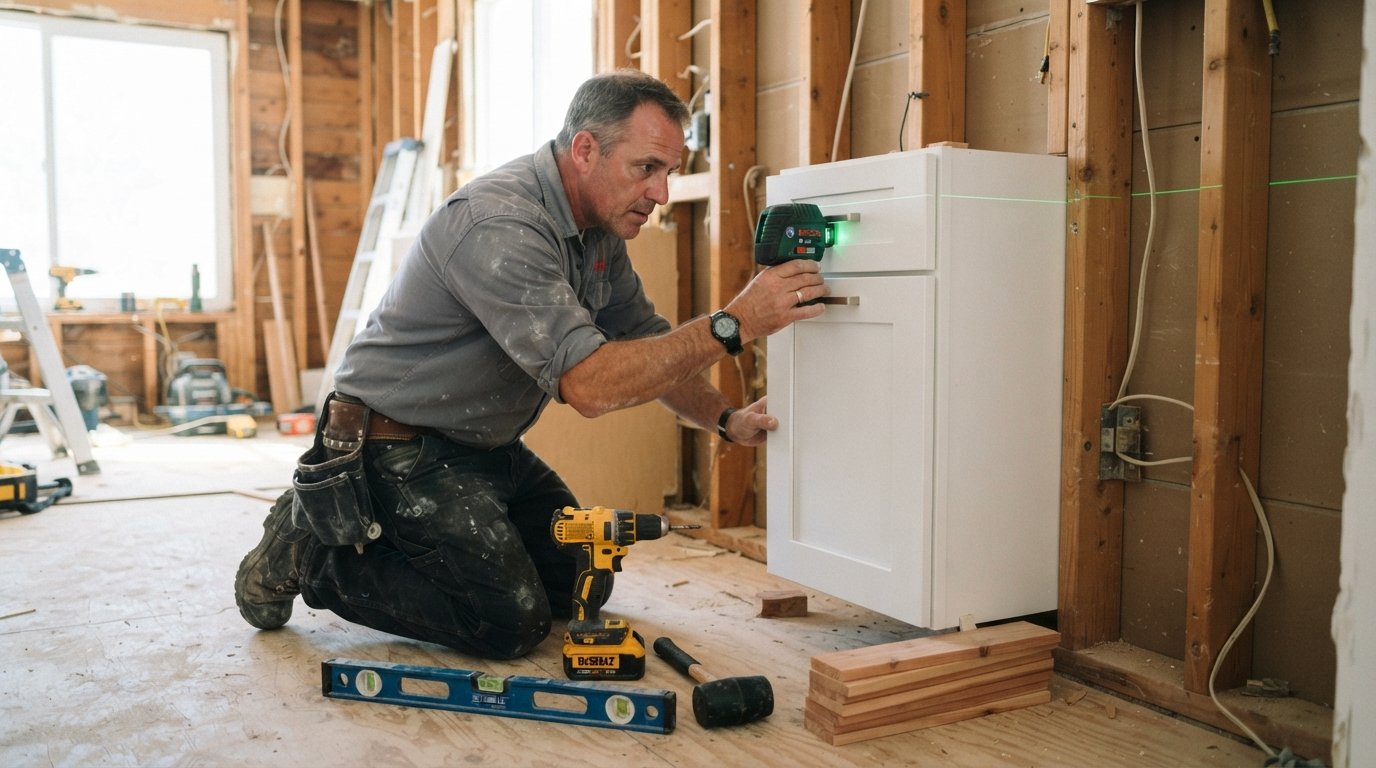
Cabinet Installation Cost & Pro Tips for 2026
Master cabinet installation with cost breakdowns, step-by-step guidance, and pro tips to avoid common mistakes and get a flawless finish.

By Oliver Grant
Learn more about Cabinet Installation for guides, costs, and what to expect.
Compare Cabinet Installation Pros Near You

Enter your ZIP code to compare top-rated local professionals and request free quotes.
Cabinet installation can transform your kitchen or bathroom, but it is also one of the most detail-heavy parts of a remodel. A perfectly level run of upper cabinets, soft-close doors that align just right, and drawer fronts that line up without a gap: these results depend on careful planning and skilled hands. Whether you are replacing a few tired units or redoing an entire kitchen, understanding the process, the costs, and the common pitfalls will save you time, money, and stress. This guide walks through everything you need to know before you hire a pro or pick up a drill.
Why Cabinet Installation Quality Matters
Cabinets are the workhorses of your kitchen. They hold your dishes, your pantry staples, and often your small appliances. They also define the visual rhythm of the room. Poor installation can lead to doors that stick, drawers that rub, and gaps that collect crumbs. Worse, a cabinet that is not securely anchored to wall studs can pull away over time, creating a safety hazard. Quality installation is not just about looks; it is about durability and function.
When cabinets are installed correctly, they feel solid. The seams between units are tight, the hardware works smoothly, and the countertop sits perfectly level. That level of finish comes from precise measurement, shimming, and fastening. It also comes from experience. A professional installer knows how to handle uneven walls, out-of-square corners, and floors that slope by a quarter inch. These small adjustments are what separate a custom look from a DIY disaster.
Planning Your Cabinet Installation Project
Assess Your Space and Needs
Start by measuring your kitchen or bathroom carefully. Note the height of your ceilings, the width of each wall, and the location of windows, doors, and outlets. These dimensions will determine how many cabinets you can fit and what sizes you need. Think about how you use the space. Do you need more deep drawers for pots and pans? A taller pantry for dry goods? A dedicated spot for spice racks or cutting boards? Make a list of your must-haves before you look at styles.
Also consider the condition of your existing walls and floors. If you are remodeling, the cabinet installation happens after demolition and any drywall repair. Uneven or damaged surfaces will add time to the project. If you are only replacing cabinets, you may need to adjust the new units to match the existing layout of plumbing and electrical. This is a common reason why a straight swap is rarely as simple as it sounds.
Selecting the Right Cabinets
Your choice of cabinets affects both the look and the budget. Stock cabinets come in standard sizes and are ready to install. They are the most affordable option and are available at home centers. Semi-custom cabinets offer more flexibility in size, finish, and internal features, with a moderate price increase. Custom cabinets are built to your exact specifications, giving you unlimited design options but at a higher cost and longer lead time.
Material also matters. Plywood boxes are more durable than particleboard, especially in humid climates. Solid wood doors resist warping better than veneer over MDF. Soft-close hinges and drawer slides are worth the extra cost, as they reduce wear and noise. Look for a brand with a good warranty, and ask your contractor about their preferred suppliers.
Hiring a Professional vs. DIY Cabinet Installation
Cabinet installation is a job that looks simple on video but is tricky in practice. You need to handle heavy boxes, make precise cuts, and work within tight tolerances. Mistakes are costly: a misaligned cabinet can ruin a countertop fit and delay the whole project. Many homeowners choose to hire a professional for this reason. A skilled installer can complete a typical kitchen in two to four days, while a DIY approach might take a week or more, especially if you are learning as you go.
If you do decide to go the DIY route, be honest about your skill level. You will need a good level, a stud finder, shims, clamps, and a drill. You also need to know how to securely screw cabinets together and to the wall. Watch several detailed tutorials, and consider practicing on a simple cabinet run, like a single wall of uppers, before tackling a full kitchen. But do not underestimate the physical effort. Lifting and holding cabinets while driving screws is demanding, and a second pair of hands is almost essential.
For most homeowners, the peace of mind that comes with a professional installation is worth the cost. You get a warranty on the workmanship, and you avoid the risk of damaging expensive cabinets. When you request a free estimate through BuySellRemodel, you can compare local pros who specialize in cabinet work.
Cabinet Installation Cost Breakdown
The cost of cabinet installation varies widely based on the size of your project, the type of cabinets, and your location. Labor rates for professional installers typically range from $30 to $80 per hour, or you might be quoted a flat rate per cabinet or per linear foot. For an average kitchen with 20 to 30 linear feet of cabinets, professional installation labor usually runs between $1,500 and $4,500. This does not include the cost of the cabinets themselves, which can range from $3,000 for stock units to $20,000 or more for custom builds.
Here are the key factors that influence the total price:
- Number of cabinets: More units mean more labor, especially if they are upper cabinets that require precise leveling.
- Cabinet type: Stock cabinets are faster to install than custom units that require on-site adjustments.
- Wall and floor condition: Uneven surfaces require more shimming and scribing, which adds time.
- Accessibility: Tight spaces, narrow staircases, or long distances from the truck can slow the crew down.
- Demolition and disposal: If you need the old cabinets removed and hauled away, expect an extra fee.
Always get at least three estimates and ask for a detailed written quote. The quote should include the cost of removing old cabinets, any necessary drywall repair, and the final cleanup. Some installers charge extra for connecting appliances or cutting holes for plumbing, so clarify what is included before you sign.
To avoid surprise bills, ask the contractor how they handle unexpected issues, like a hidden water leak or a wall that is out of plumb. A reputable pro will explain their process and give you a ballpark for potential extras.
Step-by-Step Cabinet Installation Process
Professional installers follow a systematic sequence to ensure a flawless result. Here is what you can expect during a typical cabinet installation:
- Prepare the space: Clear the room, protect floors, and ensure the walls are clean and ready.
- Find the studs: Use a stud finder to mark the exact locations of wall studs. Cabinets must be anchored to studs, not just drywall.
- Mark the layout: Draw a level line on the wall to mark the top of the counter or the bottom of the upper cabinets. This line guides the placement of every cabinet.
- Install upper cabinets first: Uppers are easier to hang before base cabinets block access. Each cabinet is lifted, leveled, and screwed to the wall and to the neighboring cabinet.
- Set base cabinets: Base cabinets are installed next, starting from a corner or a high point. Shims are used to level each unit, and they are fastened together and to the wall.
- Check doors and drawers: Adjust hinges and slides so that all doors and drawers open smoothly and align evenly.
- Install trim and filler pieces: Add fillers to close gaps at walls and appliances, and attach crown molding for a finished look.
After the cabinets are in place, the countertop is measured and installed, and the sink and appliances are connected. The final step is a walkthrough with your installer to inspect every detail and make any minor adjustments.
Common Cabinet Installation Mistakes to Avoid
Even experienced DIYers make errors that are easy to prevent with the right knowledge. One of the most frequent mistakes is failing to level the cabinets. A floor that slopes by a small amount can cause a run of base cabinets to sit unevenly, which leads to gaps under the countertop. Always use a long level and shim the base as needed, even if it means the toe kick is slightly taller in one spot.
Another common error is installing cabinets before the walls are truly plumb. Most walls are not perfectly straight, so you will need to scribe filler pieces to match the wall profile. Skip this step, and you will see unsightly gaps at the sides of cabinets. Also, do not overtighten screws into particleboard, as the material can strip. Use the right screw length so you do not poke through the interior of the cabinet.
Finally, do not forget to plan for appliances. Make sure the refrigerator and range fit into their designated spaces with at least a quarter inch of clearance on all sides. Check that the dishwasher can slide in without hitting the cabinet frame. It is much easier to adjust during installation than after the countertop is set.
Getting a Free Estimate for Your Cabinet Project
Ready to start your kitchen or bathroom remodel? The smartest first step is to get a free estimate from a local professional. BuySellRemodel connects you with experienced contractors who can handle every part of the job, from measuring to the final hinge adjustment. You will receive transparent quotes with no obligation, and you can compare options to find the right fit for your budget.
When you request an estimate, be ready to share a few details: the size of the room, the type of cabinets you want, and any special requirements like a lazy Susan or a pull-out trash can. The contractor may ask for photos or a video to give a more accurate quote. With a clear plan and a trusted pro on your side, your cabinet installation can be a smooth, rewarding upgrade that adds both style and value to your home.
Learn more about Cabinet Installation for guides, costs, and what to expect.
Compare Cabinet Installation Pros Near You
Enter your ZIP code to compare top-rated local professionals and request free quotes.