
Siding Replacement Cost and Resale Value: What Pays Back
Siding replacement cost and resale value go hand in hand. Compare materials, recovery rates, and estimate details. Call (833)-365-8755 for local pro help.

By Leo Cross
Learn more about Siding Installation for guides, costs, and what to expect.
Compare Siding Installation Pros Near You

Enter your ZIP code to compare top-rated local professionals and request free quotes.
New siding can transform a house from tired to turnkey in a single season, but the price tag often gives homeowners pause. The real question is not just what siding costs today, but how much of that investment comes back when you sell. Understanding the relationship between siding replacement cost and resale value helps you choose a material that looks great, performs well, and protects your bottom line.
According to national remodeling data, siding replacement consistently ranks among the top exterior projects for cost recovery. Vinyl siding, for example, often returns more than 80 percent of its cost at resale, while fiber cement lands in a similar range. That does not mean every project pays for itself, but it does mean siding is rarely money wasted. The key is matching the material to your home, your climate, and your local buyer expectations.
Siding Cost Per Square Foot by Material
Cost is the first thing most homeowners want to know, and the answer varies widely by material. Siding is typically priced per square foot of wall area, including materials and installation. National averages for a full replacement on a typical 1,500 to 2,000 square foot home range from roughly $8,000 to $25,000, depending on what you choose. Here is how the three most common options compare.
- Vinyl: $3 to $7 per square foot installed. The most budget-friendly option, available in a wide range of colors and textures.
- Fiber cement: $6 to $12 per square foot installed. Durable, fire-resistant, and holds paint well, with a more premium look.
- Wood (cedar or redwood): $8 to $15 per square foot installed. Natural beauty and insulation value, but requires regular maintenance.
These ranges are broad because labor costs swing significantly by region, and complex home layouts with multiple gables, dormers, or two-story walls add to the total. Removal and disposal of old siding also adds cost. A straightforward ranch with easy access sits at the low end, while a Victorian with intricate trim sits at the high end. Getting a written estimate that breaks down materials, labor, and disposal is the only way to know your real number.
It is also worth noting that siding replacement cost and resale value do not scale in a straight line. A $10,000 vinyl job on a $250,000 house may return 80 percent, while a $30,000 fiber cement job on the same house may return a lower percentage simply because the upgrade outpaces neighborhood norms. Over-improving for your block can shrink the return.
How Siding Replacement Affects Curb Appeal and Buyer Perception
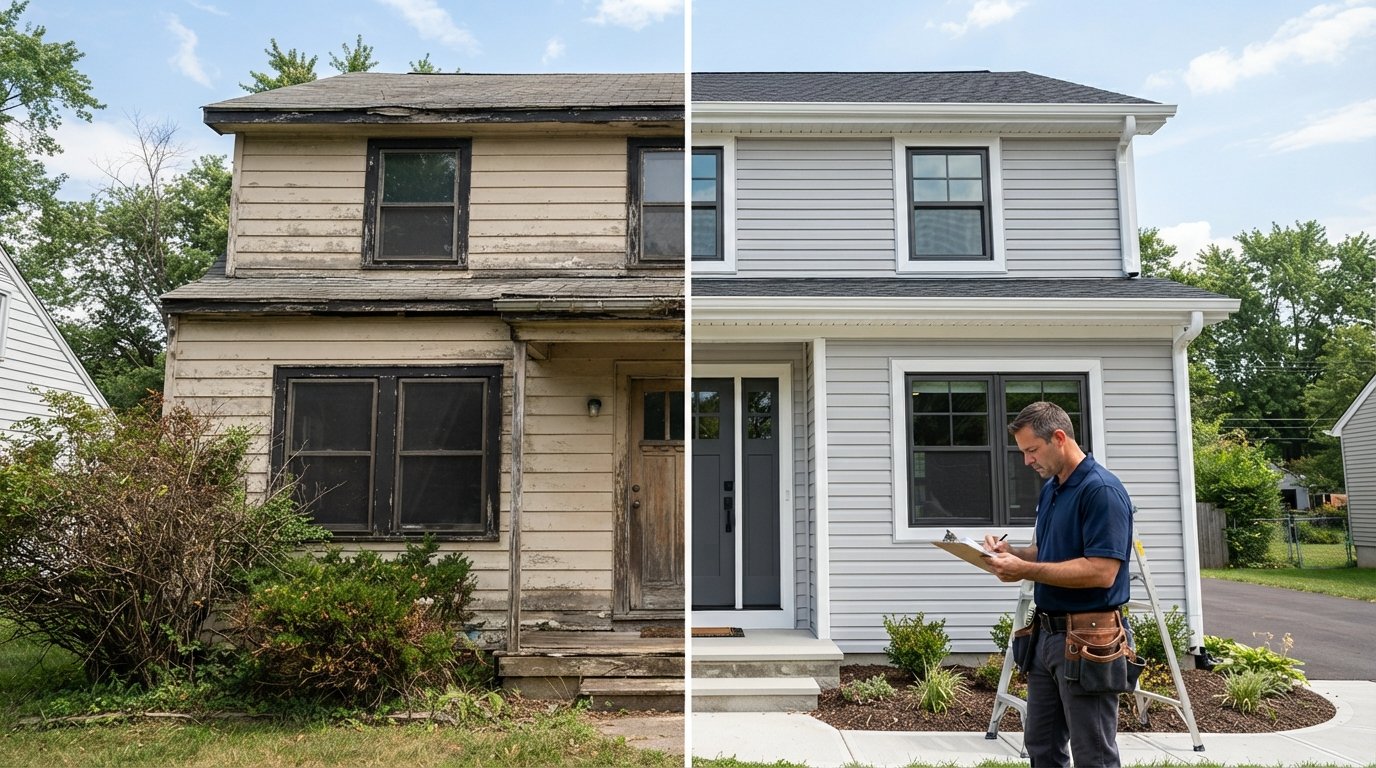
Curb appeal is the first filter buyers apply. A home with faded, cracked, or missing siding signals deferred maintenance, and buyers mentally subtract repair costs before they even walk through the door. New siding changes that calculation. It tells buyers the home has been cared for, and it often makes the property photograph better in online listings, which drives more showings.
Real estate agents consistently rank exterior projects among the highest-impact improvements for selling. A fresh exterior creates what agents call the "walk-up moment," the emotional first impression that shapes everything that follows. Buyers who feel good about the outside are more forgiving of minor issues inside. Buyers who see peeling paint or warped panels start negotiating before they see the kitchen.
Material choice also sends a signal. Vinyl reads as practical and low-maintenance, which appeals to first-time buyers and budget-conscious families. Fiber cement reads as quality and permanence, which appeals to move-up buyers. Wood reads as character, which appeals in historic or rural markets. Matching the material to the neighborhood is just as important as matching it to the house. If every home on the street has fiber cement, vinyl may look out of place, and vice versa.
Energy Efficiency and Maintenance Differences Across Materials
Siding does more than look good. It is part of the building envelope, and the right product can reduce heating and cooling costs. Insulated vinyl siding, for example, adds a layer of foam backing that improves thermal performance and can help dampen outside noise. Fiber cement does not insulate on its own, but it pairs well with house wrap and rigid foam for a tight envelope. Wood has natural insulating value, though it requires more upkeep to maintain that performance over time.
Maintenance is where the materials really diverge. Vinyl needs occasional washing with a garden hose and mild soap, and it never needs painting. Fiber cement holds paint for 15 to 20 years and resists rot, insects, and fire. Wood needs repainting or staining every few years, and it is vulnerable to moisture, pests, and rot if not sealed properly. Buyers know this, and a low-maintenance exterior is a selling point in every market.
Energy efficiency and maintenance also affect resale value indirectly. A home with a documented low-maintenance exterior and recent energy improvements is easier to insure and easier to market. Some insurers offer discounts for impact-resistant or fire-resistant siding, which can be a small but real financial benefit. When you weigh siding replacement cost and resale value, factor in the long-term savings on paint, repairs, and utilities, not just the sticker price.
If you are also planning to upgrade entryways, our guide on exterior door replacement cost and security features explains how doors and siding work together to shape first impressions and energy performance.
What a Siding Estimate Should Include
A good estimate is more than a single number. It should be a document you can compare line by line against other bids. Before you sign anything, make sure the estimate covers the full scope of work. Missing items are the most common reason projects go over budget, and a vague estimate is a red flag.
- Material specifications: Brand, product line, thickness, and color, plus trim and accessory pieces.
- Labor and prep: Removal of old siding, disposal fees, sheathing repair, and house wrap installation.
- Detail work: Flashing, caulking, corner trim, soffit, fascia, and window and door surrounds.
- Warranty terms: Manufacturer warranty on materials and workmanship warranty from the installer.
- Timeline and payment schedule: Start date, expected duration, and milestone-based payments.
Ask each contractor whether the price includes permits and inspection fees, and whether they will replace any rotted sheathing they find. The answer should be in writing. A contractor who hesitates to put details in the estimate is a contractor worth skipping. For homeowners who want help comparing bids and connecting with experienced local pros, HomeRemodelingsContractors.com helps homeowners plan affordable home improvement projects and connect with experienced local contractors, covering remodeling, repairs, upgrades, and free estimates so you can compare options and move forward with confidence.
Maximizing Your Return on Siding Replacement
The best return comes from matching the project to the market. Before you choose a material, look at nearby homes and recent sales. If most homes in your price range have vinyl, a mid-grade vinyl job with good trim details will likely recover more than a premium fiber cement job that makes your house the most expensive on the block. If you are in a neighborhood where fiber cement is standard, vinyl may actually hurt perceived value.
Timing matters too. Siding replacement done a year or two before listing gives you time to enjoy the benefits and lets the newness settle, while siding done right before listing maximizes the visual impact during showings. Either way, keep receipts, warranties, and before-and-after photos. Buyers and appraisers respond well to documented improvements, and a binder of records can support your asking price.
Finally, do not overlook small details that make new siding look expensive: clean trim lines, consistent caulking, and matching accessories. These finishing touches cost little but strongly influence buyer perception. A well-executed budget job beats a sloppy premium job every time.
Siding replacement is one of the few exterior projects that combines strong cost recovery, immediate visual impact, and long-term durability. By understanding per-square-foot costs, choosing a material that fits your neighborhood, and insisting on a detailed estimate, you can make a decision that protects both your home and your resale value. When you are ready to compare local options, start with free estimates and ask the right questions before you commit.