
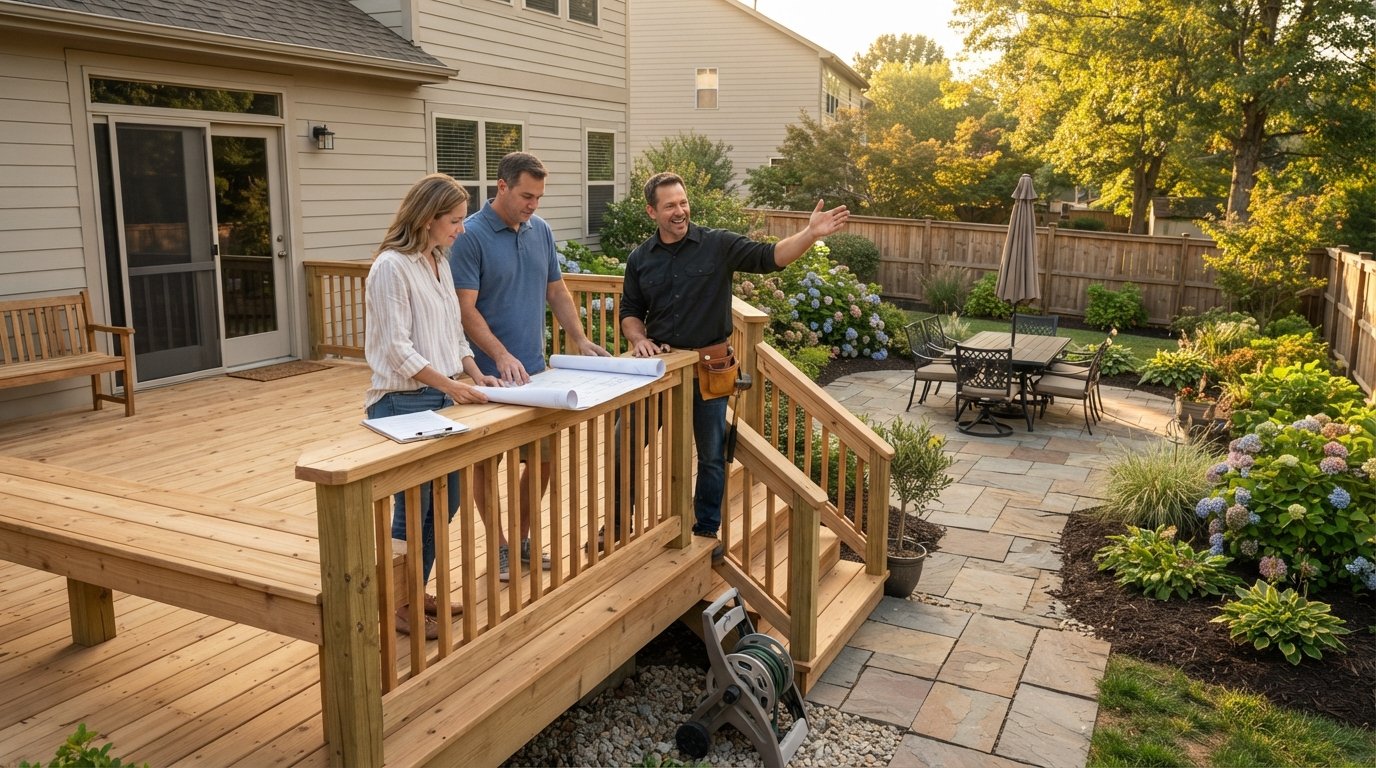
Outdoor Living Space ROI: Decks, Patios, Landscaping
Outdoor living space ROI decks patios and landscaping can reach 70 percent. Call 8333658755 to compare free local estimates today.

By Zoe Harper
Learn more about Outdoor Landscaping and Design for guides, costs, and what to expect.
Compare Outdoor Landscaping and Design Pros Near You

Enter your ZIP code to compare top-rated local professionals and request free quotes.
Your backyard is more than a patch of grass. It is an asset. Homeowners who invest in outdoor living upgrades consistently recover a significant portion of their costs at resale, and they enjoy the space every season in between. But not all outdoor projects deliver the same return. A $50,000 luxury kitchen island outdoors may impress your neighbors, yet it could return less than a simple wood deck when you sell. The difference comes down to buyer demand, regional preferences, maintenance expectations, and how well the project integrates with your home and yard.
This guide breaks down the outdoor living space ROI for decks, patios, and landscaping. You will see current cost recovery figures, learn which upgrades buyers actually pay for, and get a practical framework for choosing projects that fit both your lifestyle and your budget. Whether you are planning a small paver patio or a full backyard transformation, the goal is the same: spend wisely, enjoy the space, and protect your investment.
Why Outdoor Living Space ROI Matters More Than Ever
Since 2020, buyers have placed a premium on usable outdoor space. Remote work made the backyard an extension of the home office and the family room. Zillow and other real estate platforms report that listings mentioning outdoor living features attract more saves and inquiries than comparable homes without them. In many suburban markets, a well-designed deck or patio is no longer a bonus; it is an expected feature.
That demand translates into measurable returns. National cost versus value studies show that mid-range deck additions recover roughly 60 to 70 percent of their cost at resale, while upscale deck projects recover closer to 50 percent. Patios perform similarly, with mid-range patios recovering around 60 percent and higher-end hardscape projects landing in the 40 to 55 percent range. Landscaping is harder to quantify because it is diffuse, but real estate agents consistently estimate that good curb appeal and a functional yard can add 5 to 15 percent to a home's perceived value.
Three forces are driving these numbers upward:
- Lifestyle value: Homeowners use outdoor space more often, so they are willing to pay for it at purchase.
- Low supply: Homes with finished outdoor living areas are still a minority in most neighborhoods, which creates scarcity.
- Perceived maintenance: Buyers weigh how much work a deck, patio, or garden will require, and they discount projects that look high-maintenance.
Those three factors explain why two projects with identical price tags can produce very different returns. A low-maintenance composite deck in a rainy climate may outperform a wood deck that needs annual staining. A simple concrete paver patio with clean lines may outperform an elaborate multi-tier design that feels dated in five years. The takeaway is simple: prioritize projects that buyers can immediately use and easily maintain.
Deck ROI: What You Get Back and Why
Decks remain one of the most reliable outdoor investments because they are versatile, relatively fast to build, and easy for buyers to understand. A 16 by 20 foot wood deck typically costs between $10,000 and $18,000 depending on materials and labor, while composite decks run $18,000 to $35,000. At resale, mid-range wood decks recover about 65 to 70 percent of cost, and composite decks recover a similar percentage even though the upfront price is higher.
The material choice matters less than the condition and design. Buyers respond to:
- Safe, code-compliant railings and stairs
- Adequate size for dining and seating (at least 12 by 16 feet)
- Easy access from the main living area
- Low-maintenance surfaces that resist rot, fading, and insects
- Built-in features that do not overwhelm the space, such as simple benches or planters
If you plan to sell within five years, a mid-range composite deck is often the sweet spot. It costs more than wood upfront but eliminates the repainting and sealing that buyers dread. If you plan to stay long term and love the look of natural wood, a cedar or pressure-treated deck can still deliver strong returns as long as you keep it stained and structurally sound. For a deeper look at pairing low-maintenance outdoor features with broader value gains, see our guide on low maintenance landscaping ideas to increase home value.
Regional Deck Differences
Deck ROI varies by climate. In the Pacific Northwest and Northeast, composite and PVC decking tends to outperform wood because moisture and freeze-thaw cycles punish natural lumber. In the South and Southwest, wood decks can last longer with proper sealing, and buyers may prefer the lower upfront cost. In markets with extreme heat, shade structures and covered portions of a deck add measurable value because they extend usable hours.
Patio ROI: Hardscape That Holds Value
Patios appeal to buyers who want outdoor living without the maintenance of a raised wood structure. A mid-range patio of concrete pavers or stamped concrete, roughly 16 by 20 feet, costs $5,000 to $12,000 and recovers about 60 percent of its cost at resale. Upscale patios with natural stone, fire features, and built-in seating can cost $25,000 to $60,000 and recover 40 to 55 percent.
The strongest patio returns come from projects that feel like an extension of the home. Buyers value:
- A level, well-drained surface with clean edges
- Direct access from a kitchen, dining room, or living room
- Simple built-in elements such as a low seat wall or a fire pit
- Lighting that makes the space usable after dark
- Consistent materials that match the home's exterior
Elaborate outdoor kitchens and grottos can be wonderful lifestyle investments, but they rarely return their full cost. If your goal is resale value, invest in the patio shell first: size, drainage, access, and lighting. Add the grill island or pizza oven later if your budget allows and you plan to stay in the home long enough to enjoy it.
Patio vs. Deck: Which Returns More?
In most markets, decks and patios deliver similar percentage returns, but the better choice depends on your home's grade and layout. Homes with a raised main level usually need a deck to create usable outdoor space. Homes with a walkout basement or slab-on-grade construction often suit a patio better. Buyers care less about which structure you choose and more about whether the outdoor space is easy to reach and ready to use.
Landscaping ROI: The Value of Curb Appeal and Function
Landscaping is the most misunderstood category in outdoor ROI. It is difficult to isolate because it works alongside the house, the driveway, and the outdoor structures. Still, real estate professionals consistently estimate that a well-landscaped yard adds 5 to 15 percent to a home's value, and that figure can climb in upscale neighborhoods where curb appeal sets the tone for the entire street.
The highest-return landscaping projects share three traits: they look intentional, they are low-maintenance, and they improve how the yard functions. A $2,000 investment in fresh mulch, edged beds, and seasonal color can transform a front yard. A $10,000 investment in a native plant garden with drip irrigation can reduce water bills and appeal to buyers in drought-prone regions. A $20,000 investment in mature trees and structural plantings can add shade, privacy, and a sense of permanence that buyers notice immediately.
Landscaping projects that tend to pay off include:
- Foundation plantings that soften the home's edges
- A clear, welcoming path to the front door
- Privacy hedges or trees along property lines
- Native or drought-tolerant plants with efficient irrigation
- Defined beds with consistent mulch and clean edging
Projects that often fail to return their cost include highly specialized gardens, rare plant collections, and water features that require constant upkeep. Buyers may admire them, but they rarely pay a premium for the privilege of maintaining them.
A Practical Framework for Choosing Outdoor Projects
Every outdoor project involves trade-offs among cost, enjoyment, and resale value. Use this framework to decide where to invest first.
- Fix drainage and grading before anything else. No deck, patio, or garden will hold value if water pools against the foundation or floods the yard.
- Prioritize access and flow. The best outdoor spaces connect naturally to the kitchen, dining area, or living room. A beautiful patio that requires walking around the house will underperform.
- Match materials to your climate and maintenance tolerance. Composite decking, concrete pavers, and native plants cost more upfront but reduce long-term work.
- Build the shell first, then add features. Size, drainage, lighting, and structure deliver more value than decorative extras.
- Keep design consistent with the home. Materials, colors, and proportions should feel like they belong to the same property.
After you set priorities, get at least three local estimates and compare not just price but scope, warranty, and timeline. A lower bid that excludes drainage, permits, or site prep is not a bargain. A higher bid that includes proper base preparation, code-compliant railings, and a written warranty is often the better investment.
For homeowners who want help finding vetted professionals, HomeRemodelingsContractors connects you with experienced local contractors for remodeling, repairs, and upgrades. Comparing multiple free estimates is one of the simplest ways to protect your budget and avoid surprises.
Budgeting and Phasing Your Project
Most homeowners cannot fund every outdoor upgrade at once, and that is fine. Phasing can actually improve ROI because you learn how you use the space before committing to expensive features. A common sequence is: drainage and grading first, then the patio or deck shell, then lighting and irrigation, then plantings, and finally optional features like fire pits or outdoor kitchens. Each phase adds usable value, and each phase gives you time to save and compare contractors.
When you request estimates, ask each contractor to break the project into phases with separate pricing. That structure makes it easier to pause, adjust, and compare bids without starting over. It also helps you see which parts of the project are driving cost and where you might substitute materials without sacrificing quality.
Common Mistakes That Hurt Outdoor ROI
The biggest mistake is overbuilding for the neighborhood. If your home is valued at $350,000 and surrounding homes have simple patios, a $75,000 outdoor kitchen will not return its cost. Buyers in that price range are looking for value and low maintenance, not a resort. The second mistake is neglecting maintenance. A deck that needs staining, a patio with shifted pavers, or a yard full of overgrown shrubs will drag down offers. The third mistake is ignoring permits. Unpermitted structures can complicate a sale, trigger code violations, and reduce buyer confidence. Always confirm permit requirements with your local building department before work begins.
A fourth mistake is choosing materials that clash with the home or the region. A tropical hardwood deck in a desert climate, or a dark stone patio in a hot sunny yard, can look out of place and feel uncomfortable. Work with your contractor to select materials that match the home's architecture and perform well in your climate.
Final Thoughts on Outdoor Living Space ROI
The best outdoor projects balance enjoyment today with value tomorrow. Decks and patios consistently recover 50 to 70 percent of their cost, and landscaping contributes 5 to 15 percent in perceived home value when it is intentional and low-maintenance. Start with drainage, access, and structure. Choose materials that suit your climate and your willingness to maintain them. Phase the work so you can compare estimates and adjust as you go. Do those things, and your outdoor living space will reward you every season you use it, and again when you sell.