
Living Through a Home Renovation With Family: A Survival Guide
Living through a home renovation with family gets easier with a temporary kitchen, clear contractor rules, and one dust-free room the crew never touches.

By Oliver Grant
Learn more about Home Remodeling for guides, costs, and what to expect.
Compare Home Remodeling Pros Near You

Enter your ZIP code to compare top-rated local professionals and request free quotes.
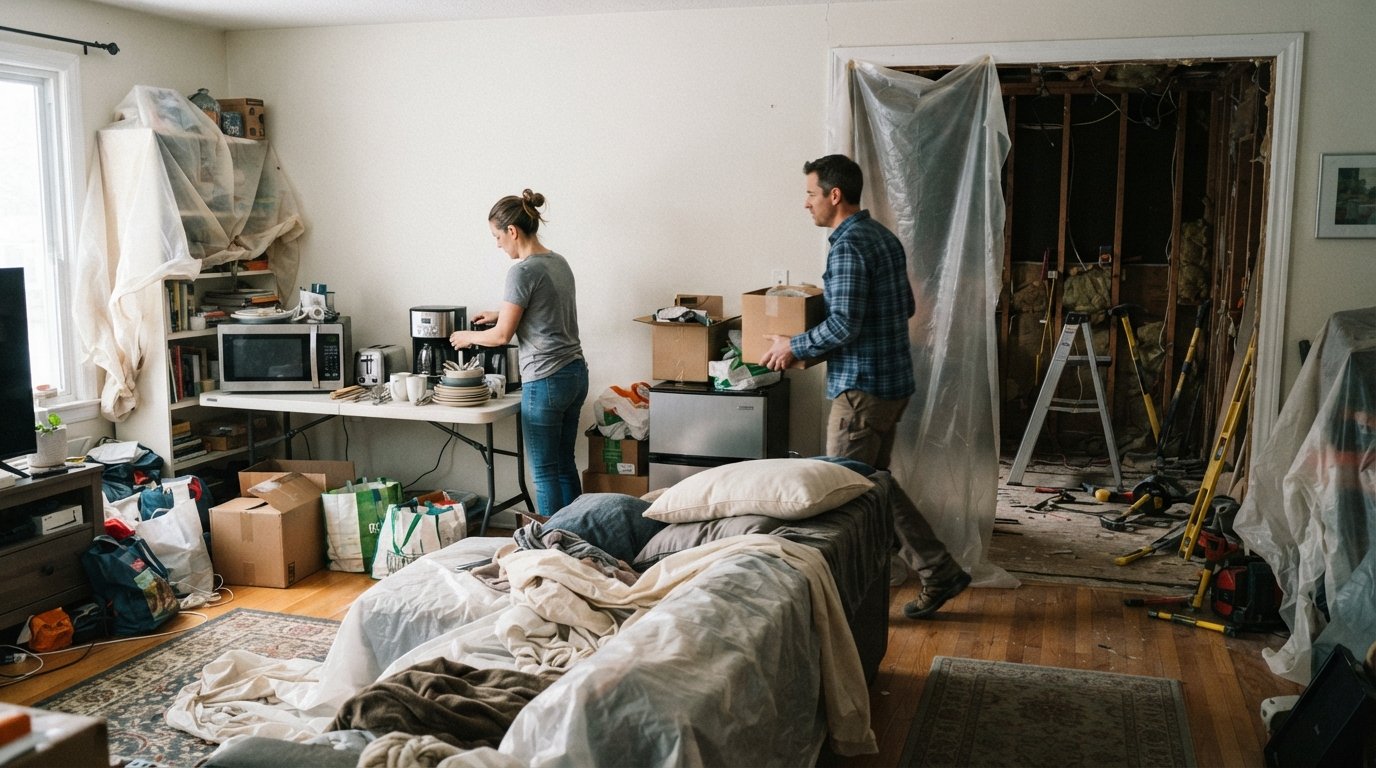
Half of your kitchen is sitting in the living room. The only working bathroom is upstairs, behind a plastic sheet. Someone is running a tile saw at 7:15 on a Saturday morning, and your eight-year-old is asking, for the third time, why the microwave is now in the hallway. Living through a home renovation with family is not just a construction project. It is a test of patience, communication, and meal planning, all running at the same time.
Here is the good news: families do get through this, and many come out closer for it. The households that struggle most are rarely the ones with the biggest budgets or the fastest crews. They are the ones who never planned for how daily life would function while the work was happening. This guide walks you through the practical playbook, from setting up a temporary kitchen to protecting your kids' sleep schedules, so the renovation stays a project instead of becoming a crisis.
Plan the Family Logistics Before You Plan the Tile
Most homeowners spend weeks choosing countertops and about ten minutes thinking about where the family will eat dinner for two months. Flip that ratio, at least for one evening. Before demolition day, sit down with your partner and older children and map out how a normal Tuesday will actually work once the crew arrives. Who showers first? Where does homework happen? What happens when the water gets shut off for six hours?
It helps to assign each family member a small zone of responsibility. One person owns the temporary kitchen setup, another owns pet containment, and a third owns the evening cleanup so the crew starts fresh each morning. When everyone has a job, the disruption feels shared instead of imposed. Kids in particular handle renovation stress better when they have a task, even a small one like keeping their toys out of the work zone.
You should also agree on quiet hours and work hours in writing. Most crews start early, and that is fine, but the family needs a predictable window when power tools stop and normal life resumes. Write the schedule on a whiteboard in a central spot, the same way you would for a family vacation. It gives everyone, including contractors, a shared reference point.
Build a Temporary Kitchen and Living Setup That Actually Works
If your renovation touches the kitchen, this is the single highest-impact thing you can do. A temporary kitchen is not just a microwave on a folding table. It is a deliberate setup that lets you cook, clean, and store food without walking through a construction zone twenty times a day.
Start by claiming one room or corner that the renovation will not touch, ideally near a sink that still works. Then stock it like a small studio apartment. The families who report the smoothest renovations tend to have these pieces in place:
- A microwave, electric kettle, and one countertop appliance (slow cooker, air fryer, or induction burner)
- A mini fridge or a clearly labeled shelf in a secondary fridge
- A plastic dish tub for washing up, plus paper plates and disposable cutlery for the hardest weeks
- A lockable bin for pantry staples so dust and debris stay out of your food
- A small trash can and recycling bin so clutter does not migrate into the rest of the house
Beyond the kitchen, protect one room in the house as a dust-free sanctuary. This is usually a bedroom or a living room that the crew never enters. Seal the door with a towel or plastic sheeting, run a small air purifier, and treat it as the place where the family can decompress without seeing a single ladder. When living through a home renovation with family, having one untouched room does more for morale than almost any other single step.
Manage Noise, Dust, and Sleep Schedules
Renovation noise is not just annoying. It disrupts naps, work-from-home calls, and the sleep that keeps everyone emotionally steady. If you have a baby, a night-shift worker, or a child with sensory sensitivities, plan the schedule around them rather than hoping they adapt.
Talk to your contractor about the loudest tasks, such as demolition, tile cutting, and flooring removal, and ask whether any of them can happen during a window when your household is out of the house. Many crews are happy to front-load noisy work if you ask early. You can also create a simple noise buffer by adding rugs, hanging blankets on shared walls, and using white noise machines in bedrooms.
Dust control deserves the same seriousness. Plastic sheeting over doorways, zip walls around the work zone, and shoe covers or a dedicated pair of indoor shoes will cut down the amount of debris that travels through your home. Change your HVAC filter more often during the project, sometimes every two to three weeks, because drywall dust clogs filters fast and stresses your system. If the renovation is exterior-focused, such as siding, windows, or roofing, the dust profile is different, and our guide on exterior home renovation to boost curb appeal covers how to stage those projects with less disruption to daily life.
Set Rules of Engagement With Your Contractor
A renovation goes sideways when communication is vague. You do not need to micromanage, but you do need a few clear agreements before the first hammer swings. Ask your contractor for a daily or weekly check-in time, even if it is just five minutes at the end of the day. That rhythm prevents small misunderstandings from becoming expensive change orders.
If you are still in the hiring phase, this is where a matching service saves real time. HomeRemodelingsContractors helps homeowners plan affordable improvement projects and connect with experienced local contractors, covering remodeling, repairs, upgrades, and free estimates so you can compare options and move forward with confidence. The right pro will welcome a family that asks good questions about timelines, dust control, and payment schedules.
Put these items in writing, even in a simple email recap after each conversation:
- Daily start and end times, including whether weekends are in play
- Which bathroom the crew may use, and which one is off limits
- Where tools and materials will be stored, and how the work zone is sealed
- The process for change orders, including who approves them and how costs are documented
- A weekly walkthrough where you can raise concerns before they compound
Families that document these details report fewer surprises and better relationships with their crews. It also gives you a paper trail if a dispute ever arises, which protects your budget and your peace of mind.
Keep Kids and Pets Safe and Sane
Construction sites are fascinating to children and dangerous in ways adults stop noticing. Exposed nails, open electrical boxes, and unstable stacks of drywall are obvious hazards, but the bigger risk is often curiosity. Set hard boundaries: the work zone is off limits without an adult, and no toys, pets, or bikes cross the plastic sheeting.
For younger children, explain the renovation in simple terms and give them a countdown calendar. Knowing that the bathroom will be finished in three weeks is far less scary than watching strangers tear it apart with no end in sight. Teens can be recruited for small tasks like painting a closet or choosing hardware, which builds ownership and reduces the feeling that the project is happening to them.
Pets need their own plan. Doors will be left open, strangers will come and go, and the usual routine will be disrupted. Consider daycare or a pet sitter on the noisiest days, and keep food, water, and a bed in the quiet room. A anxious dog barking at a tile saw is a recipe for both stress and escape attempts.
Protect Your Budget and Your Sanity
Renovation fatigue is real, and it peaks right around the point when the project looks worse before it looks better. The drywall is up but not painted, the floors are covered in paper, and the finish line feels imaginary. This is the phase where couples snap at each other and homeowners make impulsive decisions just to end the discomfort.
Two habits help. First, keep a running list of decisions you have already made, so you are not relitigating paint colors at 9 p.m. Second, hold a weekly ten-minute family meeting to name what is hard and celebrate what is done. It sounds small, but acknowledging the stress out loud keeps it from leaking into unrelated arguments.
On the money side, expect a contingency of 10 to 20 percent and treat it as untouchable until the final walkthrough. If you are planning multiple projects, sequence them so the family gets recovery time between phases. A kitchen remodel followed immediately by a bathroom remodel is how households burn out. Spacing projects also gives your budget room to breathe and lets you apply lessons from the first phase to the second.
Know When to Step Away
Sometimes the healthiest move is a short break. If your family is fighting daily, if sleep has collapsed, or if the project is dragging with no clear end date, consider a weekend at a relative's house or a short rental. It is not a luxury. It is maintenance for the people living through the renovation.
You can also ask your contractor for a pause on non-critical work, or sequence tasks so one functional zone is restored before the next is demolished. A working bathroom and a functional kitchen, even temporary ones, change the emotional math of the entire project.
Living through a home renovation with family is temporary, even when it does not feel that way. The dust clears, the plastic comes down, and one evening you will cook dinner in the new kitchen while the kids argue about something completely unrelated to construction. Plan the logistics, protect one quiet room, communicate constantly, and give everyone, including yourself, room to be imperfect. The renovation will end. The family is what remains, and that is worth protecting at every stage.