
Interior Door Replacement Cost and Style Choices for 2026
Compare interior door replacement cost and style choices, from slab to custom, plus hiring tips. Call (833)-365-8755 for free local estimates.

By Liam Weston
Learn more about Door Installation for guides, costs, and what to expect.
Compare Door Installation Pros Near You

Enter your ZIP code to compare top-rated local professionals and request free quotes.
Replacing interior doors is one of those projects that can quietly transform a home. New doors sharpen hallways, muffle noise, and make even a dated floor plan feel intentional. But the gap between a quick weekend swap and a full custom installation is wide, and so is the price range. Understanding interior door replacement cost and style choices before you shop keeps you from overspending on the wrong slab or underestimating the labor that comes with a perfect fit. This guide breaks down what you will actually pay in 2026, which styles hold their value, and how to hire the right finish carpenter without getting burned.
Interior Door Replacement Cost by Type: Slab, Prehung, and Custom
The single biggest factor in your project budget is the type of door you buy. Homeowners often compare prices on the door alone and forget that installation method drives labor cost just as much as material. A hollow-core slab that costs $80 at a big-box store can turn into a $400 project once hinges, knobs, casing, and carpentry are factored in. Knowing the three main categories helps you compare estimates apples to apples.
A slab door is just the door panel, with no frame, no hinges, and no pre-cut hardware holes. It is the cheapest option upfront, but it requires the existing jamb to be square, solid, and compatible with the new door's thickness. Slab replacements are common in older homes where the trim is custom or worth preserving. A prehung door arrives already hinged to a new frame, with the latch and strike plate prepped. It is the standard for most replacements because it solves for crooked openings and worn jambs. A custom door is built to spec, often with premium wood, glass, or oversized dimensions, and it carries the highest material and lead-time cost.
Here is a realistic 2026 cost snapshot for a single interior door, including the door and basic installation labor in a typical U.S. market:
- Slab door replacement: $150 to $400 per door (hollow-core or basic molded panel, labor to fit and hang).
- Prehung door replacement: $350 to $800 per door (includes new jamb, casing, and standard hardware).
- Custom or solid-wood door: $800 to $2,500 or more per door (premium materials, glass inserts, specialty finishes).
These ranges assume a straightforward swap in an existing opening. If the rough opening is out of square, the wall needs repair, or you are adding a door where none existed, expect add-ons. A finish carpenter may charge $75 to $125 per hour, and a full day of trim work can easily run $600 to $1,000 in labor alone. For a whole-house refresh of eight to ten doors, most homeowners land between $3,500 and $8,000 for prehung replacements with mid-grade hardware.
What Drives the Price Up or Down
Material choice matters, but it is not the whole story. Door thickness, core construction, and finish all move the number. Hollow-core doors are lightweight and inexpensive, but they feel flimsy and do little for sound control. Solid-core and solid-wood doors cost more but add heft, quiet, and a premium feel that buyers notice. Specialty glass, transoms, and arched openings push you into custom territory. Hardware is another swing factor: a $15 builder-grade knob and a $150 designer lever set occupy the same hole but send very different signals.
Regional labor rates also matter. A prehung door install that costs $250 in a rural area may run $500 in a high-cost metro. Always ask whether the estimate includes casing, paint, and haul-away, because those line items add up fast across a whole house. If you want a broader benchmark for how door projects fit into a larger renovation budget, our guide to exterior door replacement cost and security features covers the entry-door side of the equation.
Style Choices That Hold Their Value
Door style is where budget meets design, and it is easy to overspend on a trend that will look dated in five years. The safest approach is to match the architecture of the house rather than the latest catalog. A 1920s bungalow wears a two-panel craftsman door well; a mid-century ranch looks best with a clean flush or single-panel design. Mismatched styles are one of the fastest ways to make a renovated hallway feel unfinished.
Panel configuration is the first decision. Two-panel doors offer a traditional look and hide scuffs well. Three-panel doors read slightly more modern. Five-panel doors suit colonial and farmhouse interiors. Flush doors (no panels) are the choice for contemporary and minimalist spaces. Glass options, from frosted sidelights to full lites, add light but reduce privacy and increase cost. For resale appeal, neutral wins: white or off-white painted doors in a simple panel profile appeal to the widest pool of buyers.
Hardware is the cheapest way to change a door's personality. Consider these high-impact, budget-friendly swaps:
- Lever handles in matte black or brushed nickel: modern, easy to operate, and widely appealing.
- Oil-rubbed bronze knobs: a warm traditional look that suits craftsman and farmhouse homes.
- Soft-close hinges and magnetic catches: small upgrades that make doors feel high-end.
- Consistent finish throughout: matching hardware across every interior door reads as intentional design.
Consistency is the real value driver. A buyer walking through a home notices when every door matches in style, height, and hardware finish. If budget forces a phased approach, replace the doors visible from the main living areas first, then work through bedrooms and closets over time. Keep a written spec sheet so future phases match exactly.
Paint, Stain, or Factory Finish
Factory-primed doors are the most economical route and take paint well. Solid-wood doors can be stained to show grain, which suits traditional and craftsman interiors but limits future color changes. Factory-finished doors cost more upfront but save on labor and deliver a durable, uniform coat. If you are painting yourself, budget for two coats of quality trim paint and proper sanding between coats; a rushed paint job on a new door is the most common reason homeowners regret the upgrade.
Replace or Repaint? A Practical Decision Framework
Not every tired door needs to be replaced. Repainting or refinishing existing doors can deliver much of the visual improvement for a fraction of the cost, especially if the doors are solid wood and structurally sound. The decision comes down to condition, fit, and style. Use this framework to decide:
- Check structure: If the door is solid, square, and swings without dragging, repainting is usually the smarter spend.
- Check the jamb: Rot, cracks, or out-of-square frames mean a prehung replacement will save you money on labor later.
- Check the style: If the panel profile clashes with the rest of the house, paint will not fix the mismatch.
- Check the goal: For a quick sale prep, paint and new hardware often deliver the best return; for a long-term renovation, new doors are worth it.
Repainting a door typically costs $100 to $250 per door if you hire a painter, or $30 to $60 in materials if you do it yourself. That is a fraction of replacement cost, so it is worth an honest assessment before you demo. However, if the doors are hollow-core, flimsy, or covered in layers of failing paint, replacement is the better long-term investment. New doors also improve sound privacy between rooms, which matters in busy households.
Hiring a Finish Carpenter and Comparing Estimates
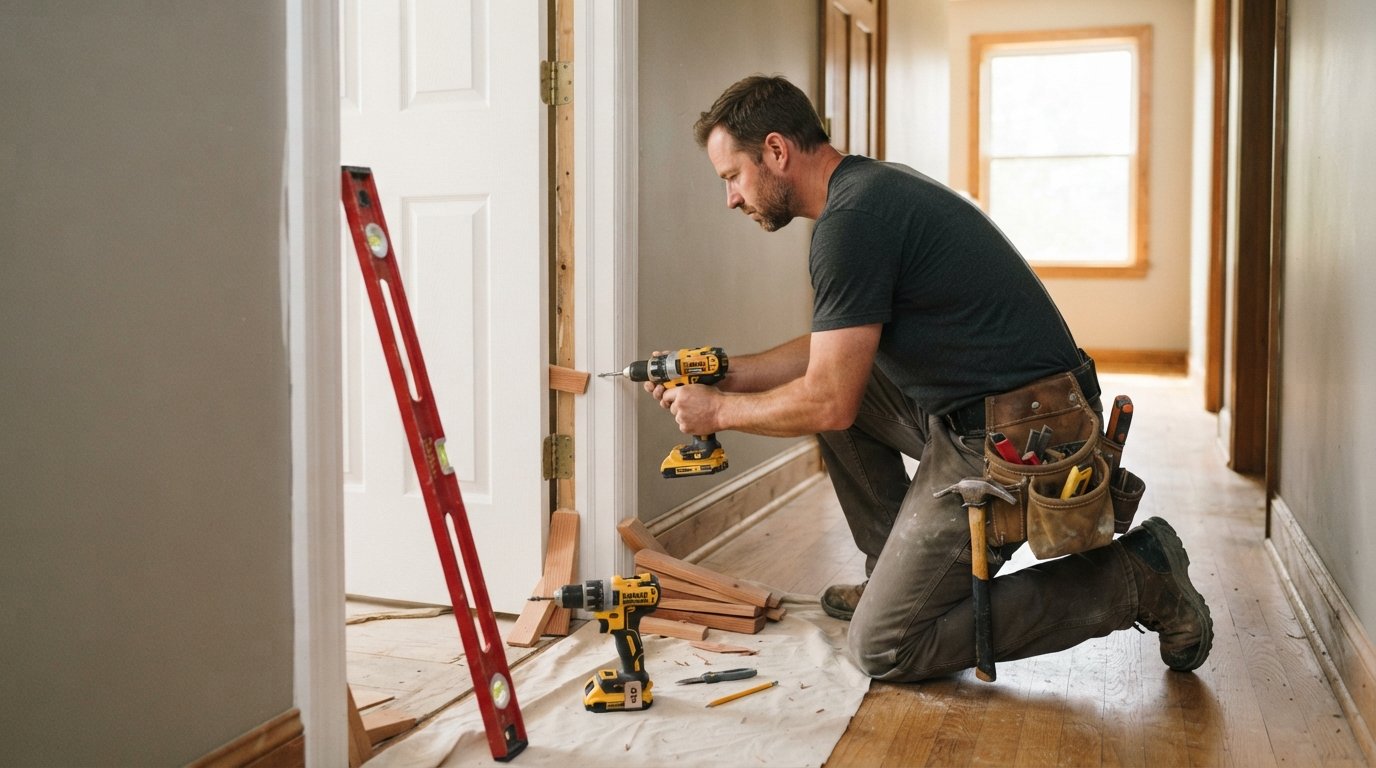
Door installation looks simple until a door sticks, the latch misaligns, or the casing gaps. A skilled finish carpenter makes the work look invisible, and that craftsmanship is what you are paying for. Start by asking for referrals from neighbors, lumber yards, or a local contractor matching service. When you have two or three candidates, compare them on scope, not just price.
Good estimates should itemize the following so you can compare fairly:
- Door type and brand: specified model, core, and finish.
- Hardware allowance: whether knobs, hinges, and stops are included.
- Casing and trim: new trim, matching existing profiles, and paint.
- Labor scope: removal, haul-away, jamb repair, and cleanup.
- Timeline and payment schedule: deposit, progress payments, and completion date.
Ask each carpenter how they handle out-of-square openings and whether they will patch drywall if the new casing is a different size. A professional will walk the house, measure every opening, and flag surprises before they become change orders. Get everything in writing, including the hardware finish and door height, because a verbal agreement on "six-panel white doors" can mean very different products. If you want help finding vetted local pros and comparing free estimates, HomeRemodelingsContractors.com connects homeowners with experienced contractors for remodeling, repairs, and upgrades, so you can plan an affordable project and move forward with confidence.
Finally, schedule the work thoughtfully. Installing doors is dusty and disruptive, and paint needs time to cure. A phased schedule (main floor first, bedrooms second) keeps the household functional and lets you catch any issues before the next batch. With clear estimates and a consistent style plan, interior door replacement delivers one of the most noticeable upgrades per dollar in a whole-house refresh.
Learn more about Door Installation for guides, costs, and what to expect.
Compare Door Installation Pros Near You
Enter your ZIP code to compare top-rated local professionals and request free quotes.