
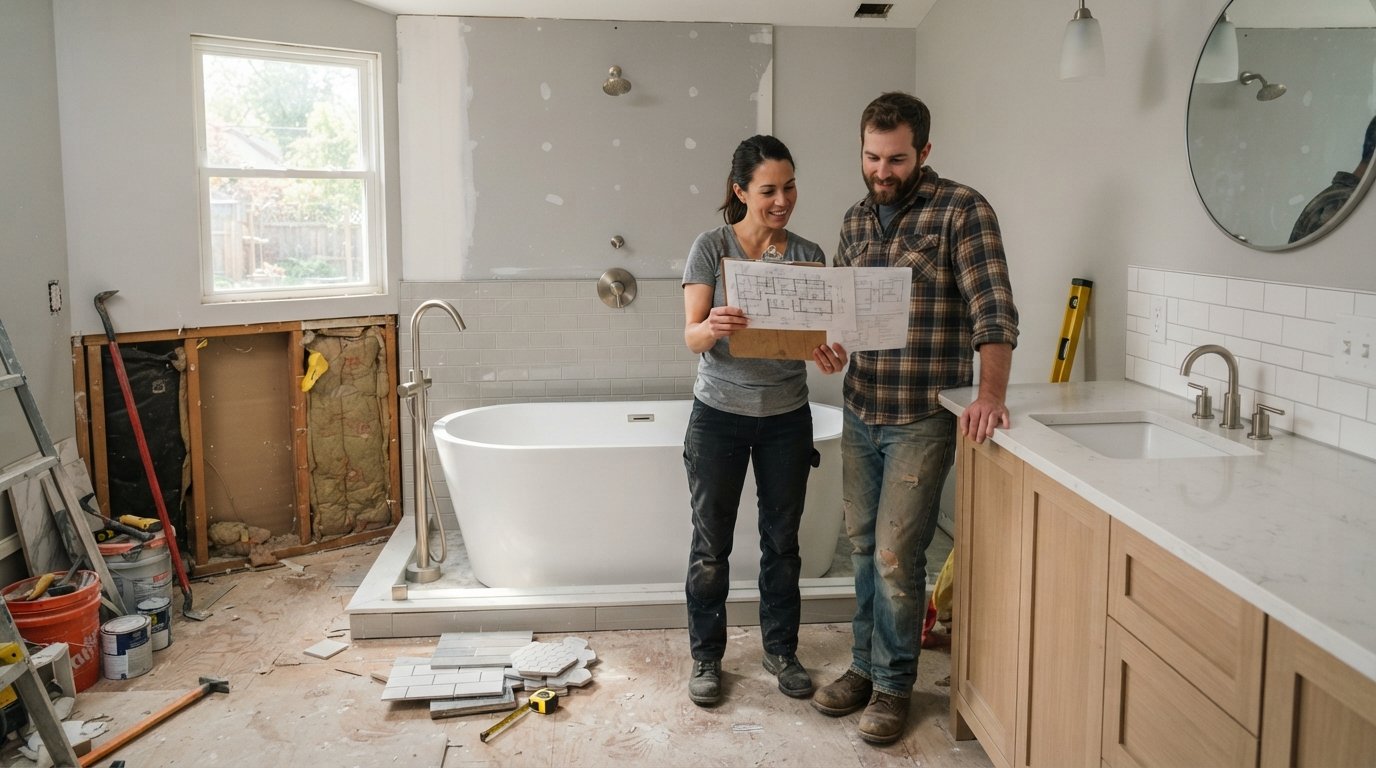
How to Lower Bathroom Remodel Cost Without Cheap Finishes
Lower your bathroom remodel cost without cheap finishes by keeping the layout, choosing mid-range materials, and spending where it matters most.

By Zoe Harper
Learn more about Bathroom Remodel for guides, costs, and what to expect.
Compare Bathroom Remodel Pros Near You

Enter your ZIP code to compare top-rated local professionals and request free quotes.
A bathroom remodel can feel like a financial trap. You want a space that looks custom and holds up for years, but the estimates you receive seem to climb with every fixture you point at. The good news is that a high-end look does not require a high-end invoice. The trick is knowing where to cut expenses without cutting quality, and where spending a little more actually saves you money later.
This guide walks through practical, contractor-approved strategies for reducing your bathroom renovation budget while keeping the finishes durable, attractive, and worthy of your home. Whether you are replacing a dated tub or reconfiguring the entire layout, these methods help you protect both your wallet and your home value.
Start With a Realistic Budget and a Fixed Scope
Most bathroom remodels go over budget because the scope expands mid-project. A homeowner decides to move a wall, add a niche, or upgrade the vanity after demolition begins. Each change triggers new labor, new materials, and new delays. Before you buy a single tile, define exactly what stays and what goes. Write it down. Share it with every contractor you interview.
A fixed scope does two things. It forces you to prioritize the elements that matter most, and it gives contractors a clear picture so their bids are accurate. When you ask for estimates on a moving target, you get inflated numbers or vague allowances that lead to surprise bills. If you want to learn more about smart cost-saving tips for bathroom remodels, our guide on bathroom remodeling on a budget breaks down additional strategies that complement the approach here.
Set a contingency fund of at least 15 percent. Older homes often hide water damage, outdated wiring, or improper plumbing behind the walls. That cushion keeps a small surprise from becoming a financial crisis. It also prevents you from choosing cheap finishes at the last minute just to stay afloat.
Keep the Plumbing Layout Where It Is
Moving a toilet, sink, or shower across the room is one of the fastest ways to double your labor costs. Relocating drains and supply lines requires opening floors and walls, rerouting pipes, and passing new inspections. The materials are not the expensive part. The skilled labor and the restoration work are.
If your current layout functions well, keep it. You can still transform the look with new tile, a different vanity, updated lighting, and modern fixtures. A cosmetic refresh that respects the existing plumbing can deliver a dramatic change for a fraction of the price. Save the layout changes for a full gut renovation when the budget truly supports it.
If the layout is genuinely dysfunctional, such as a door that swings into the vanity or a shower too small to use comfortably, then a targeted change may be worth the investment. But limit it to one move, not three. Each additional relocation compounds the cost and the timeline.
Choose Mid-Range Materials That Look High-End
Cheap finishes fail in obvious ways. They peel, crack, discolor, or feel flimsy. But there is a wide middle ground between builder-grade and luxury. Porcelain tile that mimics natural stone, for example, costs far less than marble but delivers a similar visual impact. Luxury vinyl plank flooring designed for wet areas can resemble ceramic at a lower installed price.
Here are a few material swaps that preserve quality while reducing cost:
- Porcelain or ceramic tile instead of natural stone: Durable, water-resistant, and available in realistic stone looks.
- Quartz or solid surface countertops instead of granite or marble: Non-porous, easy to maintain, and often less expensive.
- Prefabricated vanity units instead of custom cabinetry: Faster to install and available in stylish finishes.
- Frameless glass shower doors instead of custom enclosures: Clean look without the custom fabrication price.
- Brushed nickel or matte black fixtures instead of polished chrome or brass: Trend-forward finishes at accessible price points.
These choices do not read as cheap. They read as intentional. The key is consistency. Mixing a high-end stone-look tile with a flimsy plastic vanity undermines the whole room. Spend where the eye lingers, such as the shower wall or the main vanity, and save on less prominent surfaces.
Reduce Labor Costs Without Sacrificing Craftsmanship
Labor typically accounts for 40 to 60 percent of a bathroom remodel budget. You cannot eliminate it, but you can reduce it by simplifying the work. Complex patterns, intricate tile layouts, and custom built-ins all require more hours and more skill. A straightforward grid pattern with large-format tiles installs faster and still looks polished.
Another way to lower labor cost is to handle demolition yourself. Tearing out old fixtures, removing tile, and hauling debris to the dump are tasks most homeowners can do with basic tools and safety gear. This removes a full day or two from the contractor's schedule, and those savings often get passed along. Just confirm with your contractor before you swing a hammer, and never remove load-bearing walls or disturb plumbing without guidance.
You can also save by sourcing your own fixtures and materials, but only if you coordinate carefully. Contractors often get trade discounts, and they know which products install cleanly. If you buy your own tile, make sure you order enough for cuts and future repairs. Running out mid-project causes delays that cost more than the discount you chased.
When you are ready to compare local pros, working with a platform that connects homeowners to experienced contractors can simplify the process. HomeRemodelingsContractors.com helps homeowners plan affordable home improvement projects and connect with experienced local contractors, covering remodeling, repairs, upgrades, and free estimates so you can compare options and move forward with confidence.
Prioritize What Buyers and Appraisers Actually Notice
Not every upgrade adds value. Some are purely personal, and that is fine, but if you want to protect your investment, focus on the elements that matter to future buyers and appraisers. A clean, functional bathroom with quality fixtures and neutral finishes appeals to a wider audience than a highly customized space with bold colors and unusual layouts.
High-impact areas include the vanity, the shower or tub surround, the flooring, and the lighting. These are the surfaces people touch and see every day. Low-impact areas include decorative shelving, elaborate mirrors, and specialty storage. You can upgrade those later without tearing the room apart.
Consider this order of priority when allocating your budget:
- Waterproofing and structural repairs: Never cut corners here. Water damage is the most expensive problem to fix later.
- Fixtures and plumbing: Quality faucets, shower valves, and toilets prevent leaks and last longer.
- Surfaces: Tile, countertops, and flooring define the look and take the most wear.
- Lighting and ventilation: Proper lighting makes the room feel larger and safer. A good exhaust fan prevents mold.
- Decorative touches: Paint, hardware, and accessories are easy to update and should come last.
Following this order ensures that your money goes toward durability and function first. A bathroom with modest tile but excellent waterproofing will outlast a bathroom with luxurious tile and hidden moisture problems.
Use Paint, Lighting, and Hardware to Elevate the Look
Sometimes the difference between a dated bathroom and a modern one is not the tile or the tub. It is the lighting and the hardware. Swapping old brass knobs for matte black pulls, replacing a dated vanity light with a sleek LED bar, and painting the walls a fresh, neutral color can transform the space for a few hundred dollars.
Lighting deserves special attention. A single overhead fixture casts shadows and makes the room feel flat. Layered lighting, such as a vanity light plus recessed ceiling lights or a pendant, adds depth and warmth. You do not need a professional electrician if you are replacing existing fixtures with similar wattage. Just turn off the breaker and follow the instructions.
Paint is another low-cost, high-return tool. Moisture-resistant paint in a soft white, light gray, or warm beige creates a clean backdrop that makes your chosen finishes look more expensive. Avoid trendy colors that may date quickly. If you want a pop of color, use it in small doses, such as a painted vanity or a single accent wall.
Avoid These Common Costly Mistakes
Even well-intentioned homeowners fall into traps that inflate the budget without improving the result. One common mistake is buying cheap fixtures that fail within a year. A bargain faucet that leaks or a low-quality shower valve that breaks inside the wall costs far more to replace than the original price difference. When it comes to plumbing fixtures, buy the best you can afford from a reputable brand.
Another mistake is skipping permits to save money. Unpermitted work can complicate a future sale, and inspectors may require you to tear out finished walls to verify the work. The permit fee is small compared to the cost of redoing a bathroom to satisfy code. Always check with your local building department before starting major work.
Finally, do not hire the first contractor who gives you a low bid without checking references. A surprisingly low estimate often means the contractor plans to cut corners, use subpar materials, or charge extra for every change order. Get at least three estimates, ask for proof of insurance, and speak with past clients. The cheapest bid is rarely the best value.
Lowering your bathroom remodel cost without cheap finishes is entirely achievable when you focus on smart planning, strategic material choices, and disciplined execution. Keep the layout, prioritize quality where it counts, and handle what you can yourself. With the right approach and the right local professionals, you can build a bathroom that looks custom and lasts for years without draining your savings.