
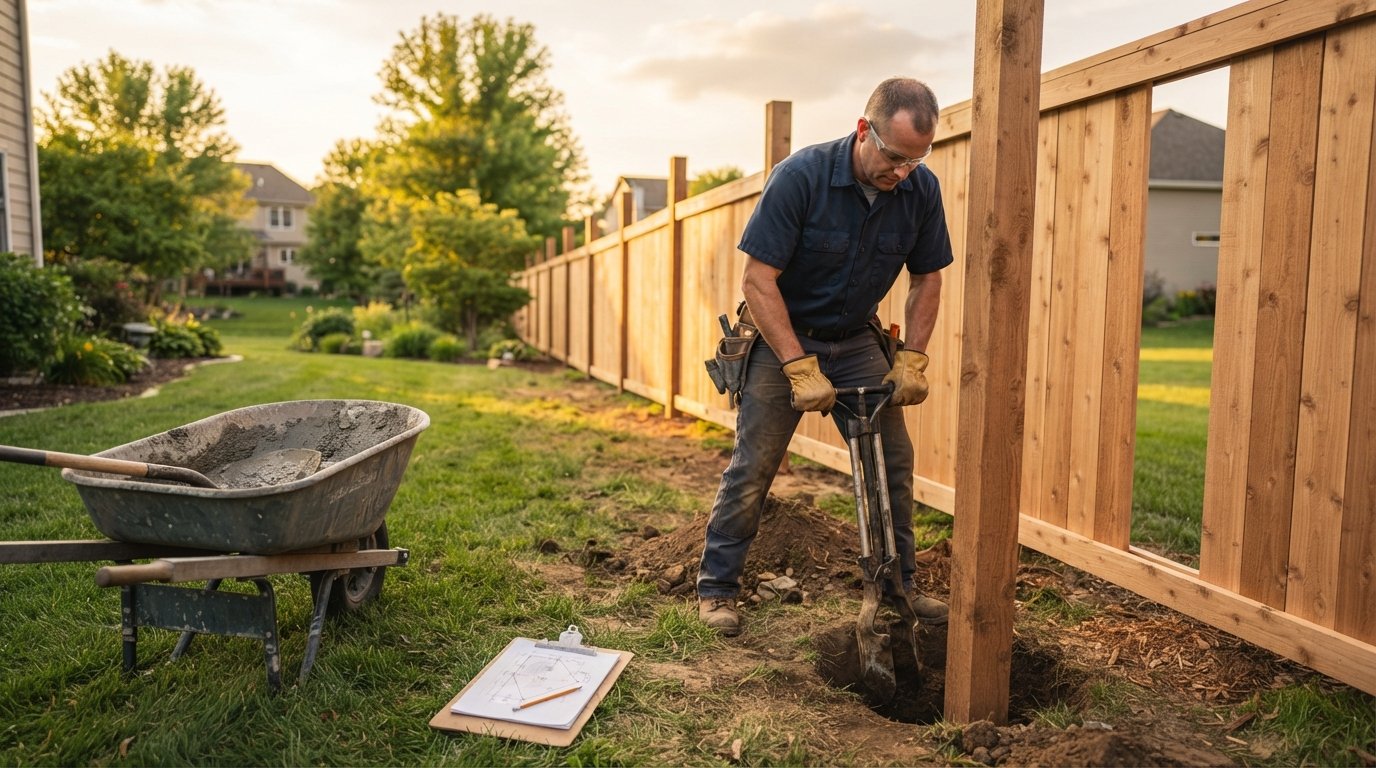
Fence Installation Cost and Permit Rules: A Homeowner's Guide
Plan your fence project with confidence. Get clear fence installation cost and permit rules, plus free local estimates. Call (833)-365-8755 today.

By Amelia Reed
Learn more about Fence and Gate Installation for guides, costs, and what to expect.
Compare Fence and Gate Installation Pros Near You

Enter your ZIP code to compare top-rated local professionals and request free quotes.
Few home upgrades deliver the instant privacy, security, and curb appeal of a new fence, but the sticker shock can hit hard if you are not prepared. A typical fence project can run anywhere from a few hundred dollars for a small chain link enclosure to well over ten thousand dollars for a sprawling, high-end wood or composite barrier. The final number depends on more than just the material you pick: it hinges on linear footage, terrain, labor rates in your area, and, critically, the permit and property line rules that govern where and how you can build. Homeowners who understand the true cost structure and the regulatory landscape before signing a contract avoid the two most common fence disasters: surprise fees from the city and angry neighbors demanding a surveyor tear down a brand-new fence.
This guide breaks down fence installation cost and permit rules in plain language, so you can budget with confidence and hire the right professional for the job. We will walk through material pricing per linear foot, explain when you need a permit versus when you can skip the paperwork, cover the property line and survey issues that trip up even experienced DIYers, and show you how to compare contractor bids without getting fooled by a lowball quote. Along the way, we will point out where a service like BuySellRemodel can connect you with vetted local contractors who handle the permitting legwork for you.
Fence Cost per Linear Foot by Material
The single most useful number in any fence budget is the cost per linear foot, which lets you estimate your total project cost simply by measuring the perimeter you want to enclose. Nationally, installed fence costs (materials plus professional labor) break down into fairly predictable ranges, though local labor rates and site conditions can push these numbers up or down by 20 percent or more. Wood remains the most popular choice for privacy, vinyl dominates the low-maintenance segment, chain link wins on pure affordability, and aluminum or ornamental metal sits at the premium end for security and curb appeal.
Here is a realistic snapshot of installed costs per linear foot for the most common residential fence types:
- Wood (pressure-treated pine, dog-eared privacy): $20 to $45 per linear foot, depending on height, board thickness, and whether you choose a simple butt-joint design or a more finished look with trim and caps.
- Vinyl (privacy or picket): $25 to $55 per linear foot; premium grades with reinforced rails and UV stabilizers land at the top of that range.
- Chain link (galvanized or vinyl-coated): $12 to $25 per linear foot for standard heights; gates, corners, and sloped terrain add cost.
- Aluminum or ornamental steel: $30 to $70 per linear foot; powder-coated finishes, decorative pickets, and taller runs push the price higher.
To translate those per-foot figures into a project total, multiply by the length of your fence line. A standard quarter-acre suburban lot often needs 150 to 250 linear feet of fencing to enclose a backyard, which means a wood privacy fence could run $4,000 to $9,000 installed, while a vinyl fence of the same length could reach $6,000 to $12,000. Add gates, corner posts, and removal of an old fence, and the number climbs further. For homeowners also tackling interior projects, our guide on cabinet installation cost and pro tips follows a similar per-unit pricing logic that helps you compare bids apples to apples.
Material choice also affects long-term cost, not just the upfront price. Wood requires staining or sealing every few years and can rot in wet climates, while vinyl and aluminum typically need only occasional cleaning. Chain link is cheap but offers little privacy and can look industrial. When you request estimates, ask contractors to quote the same height, post spacing, and gate count across materials so you can compare true lifetime value, not just the initial invoice.
When a Fence Permit or HOA Approval Is Required
Permit rules for fences vary dramatically from one municipality to the next, and even neighboring towns can have opposite requirements. As a general rule, you should assume a permit is required and then verify with your local building department before any digging begins. Most jurisdictions require a fence permit when the structure exceeds a certain height (often 6 feet in rear yards and 4 feet in front yards), when it sits on or near a property line, or when it encloses a pool. Some cities also require permits for any fence over 30 inches tall, which catches many homeowners off guard.
Homeowners associations (HOAs) add another layer of approval that is completely separate from the city permit. Even if your town does not require a permit, your HOA almost certainly has architectural review rules covering fence height, material, color, and placement. Building an HOA-unapproved fence can result in fines and a forced removal at your own expense, so always request the architectural review guidelines and submit plans before ordering materials. The same applies to historic districts and homes in flood zones, where additional design or elevation requirements may apply.
To determine exactly what applies to your property, take these steps before you sign a contractor agreement:
- Call your local building department and ask whether a fence permit is required for your planned height and location, and request the permit application and fee schedule.
- Request your HOA's architectural review packet and confirm the submission timeline, which can take two to six weeks.
- Ask whether a plot plan or survey is required with the permit application; many cities want to see the fence drawn relative to property lines.
- Confirm inspection requirements, since some permits require a post-hole inspection before concrete is poured.
Permit fees themselves are usually modest, often $50 to $300 depending on the scope and jurisdiction, but the cost of skipping a permit is far higher. Unpermitted work can complicate a future home sale, trigger fines, and force you to remove or rebuild the fence. A reputable contractor will typically handle the permit application for you and include the fee in the estimate, so ask upfront whether permitting is included or billed separately.
Property Line and Survey Considerations Before Digging
Property line disputes are the most expensive fence mistake a homeowner can make, and they are surprisingly common. Before any post hole is dug, you need to know exactly where your property ends and your neighbor's begins. Fence contractors are not surveyors and cannot legally determine property boundaries; they build where you tell them to build. If you guess wrong and encroach even a few inches onto a neighbor's land, you may be ordered to remove the fence, and in some states the neighbor could claim ownership of the encroached strip through adverse possession laws.
The safest approach is to hire a licensed land surveyor to mark your property corners and produce a plat showing the fence line. A residential survey typically costs $300 to $700, which is cheap insurance compared to tearing down and rebuilding a fence. If you have a recent survey from when you bought the home, check whether the corner markers are still visible and whether the plat clearly shows the boundaries. Even with a survey, it is wise to talk to your neighbors before construction starts, especially if the fence will sit near a shared line, and to confirm who owns the existing fence if one is being replaced.
Several practical issues also affect where and how you can build:
- Easements: Utility easements may prohibit fences or require a gate for access, and building over a sewer or drainage easement can force removal later.
- Setback rules: Many cities require fences to sit a certain distance back from the front property line or corner, which affects usable yard space.
- Drainage: A solid fence can block stormwater flow and create flooding problems for you or your neighbor, so check local drainage rules.
- Pool codes: If you are fencing a pool, most jurisdictions mandate specific heights, self-closing gates, and non-climbable designs that override general fence rules.
Once boundaries and rules are clear, document everything: keep the survey, the approved permit, and photos of the marked line. This paperwork protects you if a dispute arises years later and is often requested during a home sale.
How to Compare Fencing Contractor Estimates
Fence installation cost and permit rules are only half the equation; the other half is hiring a contractor who prices the work fairly and handles the details correctly. Fencing attracts a mix of established companies and fly-by-night operators, so comparing bids carefully is essential. A legitimate estimate should be written, itemized, and specific about materials, labor, permits, and cleanup. If a bid is dramatically lower than the others, assume something is missing, such as post depth, concrete, permit fees, or old fence removal.
When you collect estimates, ask each contractor to break down the quote into these components:
- Linear footage and fence height, with post spacing and post depth specified (posts should typically be set at least 2 feet deep, deeper in cold climates).
- Material brand, grade, and warranty terms for panels, posts, rails, and gates.
- Permit application handling and fee responsibility, plus HOA paperwork assistance if needed.
- Site prep, including removal and disposal of the old fence, stump grinding, and grading.
- Project timeline, payment schedule, and a written warranty on labor and materials.
Beyond the numbers, verify each contractor's license, insurance, and local references, and read reviews for complaints about permits or property line issues. A professional will welcome these questions and may even walk the property line with you before quoting. If you want help finding contractors who are pre-vetted for licensing and insurance, a service like HomeRemodelingsContractors can connect you with local pros who provide free estimates and handle the permitting process, so you can compare options with confidence and avoid surprise bills.
Finally, get at least three written estimates and do not automatically choose the lowest bid. The middle bid from a well-reviewed, properly insured contractor who includes permits and a clear warranty is often the best value. Once you sign, confirm in writing who pulls the permit, who calls for inspections, and what happens if the city requires changes. Clear expectations upfront prevent the most common fence installation disputes and keep your project on budget.
With a realistic per-foot budget, a clear understanding of permit and HOA rules, a surveyed property line, and a carefully compared set of contractor bids, your fence project can proceed smoothly from first estimate to final inspection. Take the time to verify the rules before you dig, and the fence you install will add privacy and value for years without legal headaches or unexpected costs.