
Cost of Refacing Kitchen Cabinets: 2026 Price Guide
See what the cost of refacing kitchen cabinets looks like in 2026 and how it compares to replacing or painting. Call (833)-365-8755 for free local estimates.

By Elena Ellis
Learn more about Cabinet Refinishing and Repair for guides, costs, and what to expect.
Compare Cabinet Refinishing and Repair Pros Near You

Enter your ZIP code to compare top-rated local professionals and request free quotes.
Your kitchen cabinets take up a huge share of your remodeling budget, often as much as 40 percent, so it makes sense to look for ways to cut that number without sacrificing the look you want. Refacing is one of the most popular options for homeowners who want a fresh kitchen without the cost and disruption of a full cabinet replacement. But what does the cost of refacing kitchen cabinets actually look like in 2026, and when does it make more financial sense than tearing everything out? This guide breaks down real-world pricing, the factors that move the number up or down, and how to decide whether refacing fits your project.
What Refacing Actually Involves (and Why It Costs Less)
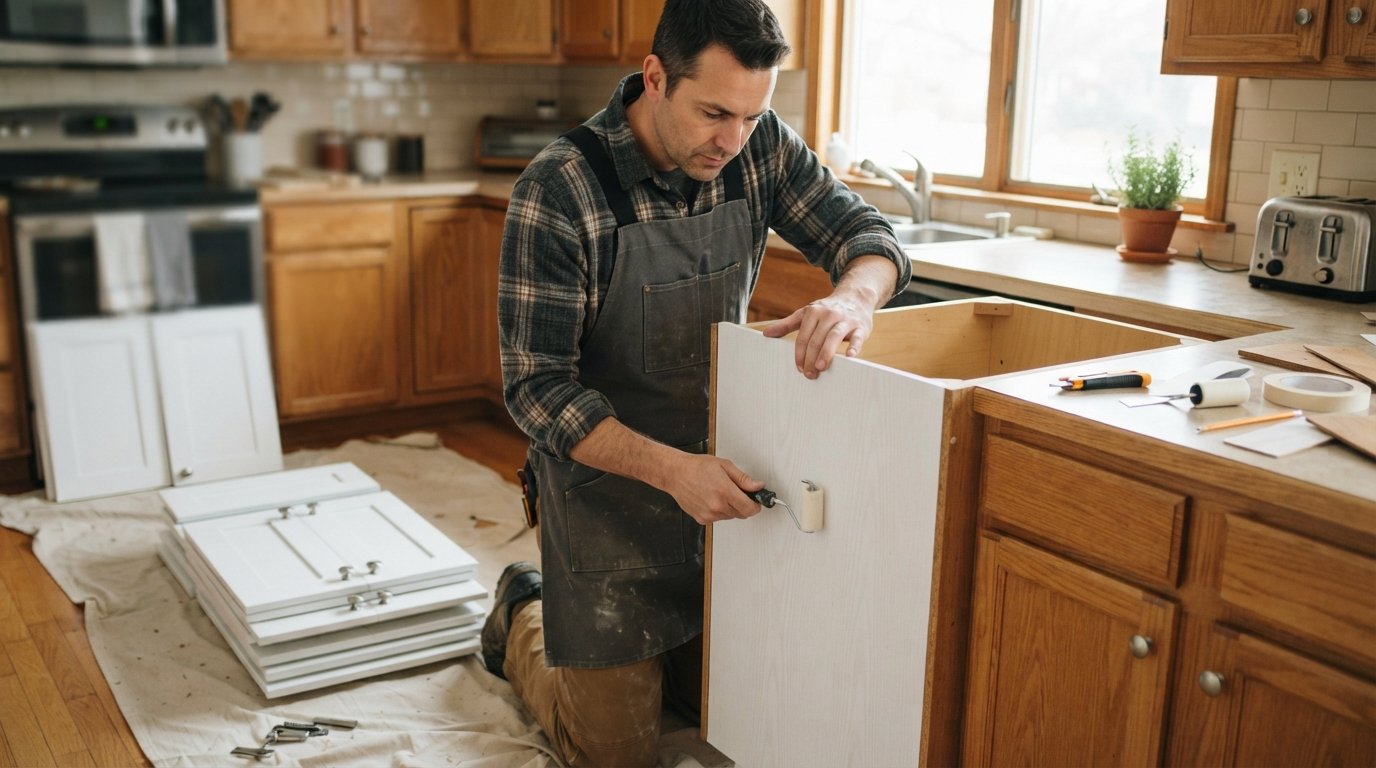
Refacing keeps your existing cabinet boxes and replaces only the visible surfaces: the doors, the drawer fronts, and the veneer or laminate that covers the face frames. Hardware like hinges, pulls, and knobs is usually swapped out too. Because the boxes stay in place, you avoid the cost of new cabinetry, the labor of demolition, and much of the mess that comes with a full replacement. That structural shortcut is the main reason refacing typically lands at 30 to 50 percent of what a full cabinet replacement would run.
The process usually follows a predictable sequence, and understanding it helps you evaluate quotes. A typical refacing project looks like this:
- Assessment and measurement: A contractor checks that the existing boxes are solid, level, and free of water damage or warping. If the boxes are failing, refacing is not a good candidate.
- Surface preparation: Doors and drawer fronts are removed, and the face frames are cleaned and prepped for the new veneer or laminate.
- Veneer application: A thin layer of real wood, rigid thermofoil, or laminate is applied to the face frames and exposed sides.
- New doors and drawers: Custom or semi-custom doors and drawer fronts are installed, often in a style and finish you choose.
- Hardware and finishing touches: New hinges, pulls, and knobs go on, and the job is cleaned up and inspected.
Because the work is surface-level, most kitchens can be refaced in a few days rather than the weeks a full replacement often takes. That shorter timeline reduces labor costs and keeps your kitchen usable, which matters if you are living in the home during the project.
Average Cost of Refacing Kitchen Cabinets in 2026
Nationally, the cost of refacing kitchen cabinets in 2026 generally falls between $4,000 and $10,000 for a typical kitchen, with many homeowners landing near the $6,000 to $7,000 range. Small kitchens with basic materials can come in under $4,000, while large kitchens with premium wood veneers and custom doors can push past $12,000. These numbers include materials and professional labor but usually exclude countertops, backsplash, and plumbing or electrical changes.
It helps to see how the pricing breaks down by kitchen size and material tier. The table below reflects common 2026 ranges for professional refacing:
- Small kitchen (under 20 linear feet): $3,500 to $6,000
- Average kitchen (20 to 35 linear feet): $5,000 to $9,000
- Large kitchen (35 to 50 linear feet): $8,000 to $13,000
- Budget materials (laminate or thermofoil): $3,500 to $6,500
- Mid-range materials (wood veneer, semi-custom doors): $6,000 to $10,000
- Premium materials (real wood, custom doors, specialty finishes): $10,000 to $15,000 or more
These figures are a starting point, not a quote. Local labor rates, the condition of your existing boxes, and the door style you choose can move the final number significantly. If you are also weighing a full cabinet replacement, our guide on kitchen cabinet costs, materials, and remodeling choices walks through how the two approaches compare side by side.
The Factors That Move Your Refacing Quote Up or Down
Two homeowners with similar-sized kitchens can receive quotes that differ by thousands of dollars, and the reasons are usually easy to trace. Understanding these variables helps you compare bids fairly and spot a quote that is too good to be true.
Material choice is the single biggest lever. Laminate and rigid thermofoil are the most affordable options and hold up well in busy kitchens, but they offer fewer style choices. Real wood veneer costs more but can be stained and finished to match almost any look. Premium finishes, glazing, and custom door profiles add cost quickly. Door style and construction matter too: a simple slab door costs far less than a raised-panel or inset door with custom detailing. Kitchen size drives the total because more linear feet means more veneer, more doors, and more labor hours.
The condition of your existing cabinets is another major factor. Solid, level boxes with no water damage are ideal. If a contractor has to repair sagging shelves, replace damaged frames, or deal with mold or rot, expect added labor charges. Local labor rates vary widely by region, and metro areas with a high cost of living will sit at the top of the ranges above. Finally, extras like soft-close hinges, new drawer slides, crown molding, and under-cabinet lighting are often quoted separately, so ask whether they are included before you compare totals.
Refacing vs. Replacing vs. Painting: How the Costs Compare
Refacing is not the only budget-friendly option, and the right choice depends on the condition of your cabinets and how long you plan to stay in the home. Full replacement of kitchen cabinets typically runs $12,000 to $30,000 or more for an average kitchen, depending on the cabinet grade and whether layout changes are involved. That is two to four times the cost of refacing, and it usually comes with weeks of disruption. Painting existing cabinets is the cheapest route at roughly $2,000 to $5,000, but it does not fix worn doors or upgrade hardware unless you pay extra, and the finish may not last as long as new veneer and doors.
Here is a quick comparison of the three approaches for an average-sized kitchen:
- Refacing: $5,000 to $9,000, 3 to 5 days of work, keeps existing boxes, upgrades doors and veneer.
- Painting: $2,000 to $5,000, 2 to 4 days, keeps everything, relies on surface prep and paint quality.
- Full replacement: $12,000 to $30,000 or more, 2 to 6 weeks, new boxes and doors, allows layout changes.
Refacing sits in the middle: it costs more than painting but far less than replacement, and it delivers a more dramatic visual change than paint alone. If your boxes are solid and your layout works, refacing often gives you the best return for the money. If your cabinets are falling apart or you want to move the sink or range, replacement is the more realistic path.
How to Budget for a Refacing Project
Smart budgeting starts before you call anyone. Begin by measuring the linear feet of cabinetry in your kitchen and noting how many doors and drawers you have. That information lets contractors give you more accurate preliminary estimates and helps you compare bids apples to apples. Next, decide on a material tier and door style so you are pricing the same scope with every contractor.
Build in a contingency of 10 to 20 percent for surprises. Older homes often hide issues behind cabinet doors, such as loose hinges, out-of-square frames, or old plumbing that needs attention once the area is opened up. Even a straightforward refacing job can uncover small repairs that were not visible during the initial walkthrough. A contingency fund keeps those surprises from blowing up your budget.
It also pays to separate the refacing quote from the rest of your kitchen wish list. Countertops, backsplash tile, sinks, faucets, and lighting are usually priced separately, and mixing them into one number makes it hard to see what you are actually paying for the cabinets. Ask each contractor for a line-item quote that lists labor, materials, hardware, and any repairs. For homeowners planning a broader update, working with experienced local professionals through a platform like HomeRemodelingsContractors can simplify the process of gathering comparable estimates and choosing the right pro for the job.
When Refacing Is Worth It (and When It Is Not)
Refacing is usually worth it when the cabinet boxes are structurally sound, the layout works for your daily life, and you want a significant visual upgrade without a full renovation. It is especially appealing if you are preparing to sell and want to modernize the kitchen without over-investing, or if you are staying put and simply want a fresh look at a manageable price. Because refacing is faster and less messy than replacement, it is also a good fit for homeowners who cannot be without a functional kitchen for weeks.
Refacing is not worth it when the boxes are damaged, sagging, or infested, because new veneer and doors will not fix structural problems. It is also a poor fit if you want to change the kitchen layout, add cabinets, or move appliances, since those changes require new boxes and often new plumbing and electrical work. And if you are chasing a very specific high-end look with inset doors and custom joinery, the cost of refacing can climb close enough to replacement that you may prefer to start fresh.
Before committing, ask yourself three questions: Are the boxes solid? Does the layout work? How long do I plan to stay? If the answers point to sound boxes and a workable layout, refacing is likely the smarter spend. If not, put the money toward replacement and get the layout you actually want.
How to Get Accurate Quotes and Avoid Overpaying
The best way to control the cost of refacing kitchen cabinets is to gather multiple quotes and compare them carefully. Aim for at least three written estimates from licensed, insured contractors in your area. Make sure each quote specifies the material brand and type, the door style, the hardware included, the number of doors and drawers, and whether any repairs are covered. A quote that is dramatically lower than the others often means cheaper materials, excluded labor, or hidden fees that appear later.
Ask about the warranty on both materials and labor, and confirm who handles touch-ups if a door arrives damaged or a veneer seam lifts. Check references and look at photos of completed refacing jobs, ideally in kitchens similar to yours. Finally, get the payment schedule in writing. A reasonable deposit is common, but you should never pay the full amount upfront. Staged payments tied to milestones protect you and keep the project moving.
Refacing can be one of the best value upgrades in home remodeling, but only when it is priced and scoped correctly. Take the time to understand the ranges above, compare bids on equal terms, and choose a contractor who explains the process clearly. Do that, and you can refresh your kitchen for a fraction of the cost of a full replacement, with less mess and a faster timeline.
Learn more about Cabinet Refinishing and Repair for guides, costs, and what to expect.
Compare Cabinet Refinishing and Repair Pros Near You
Enter your ZIP code to compare top-rated local professionals and request free quotes.