
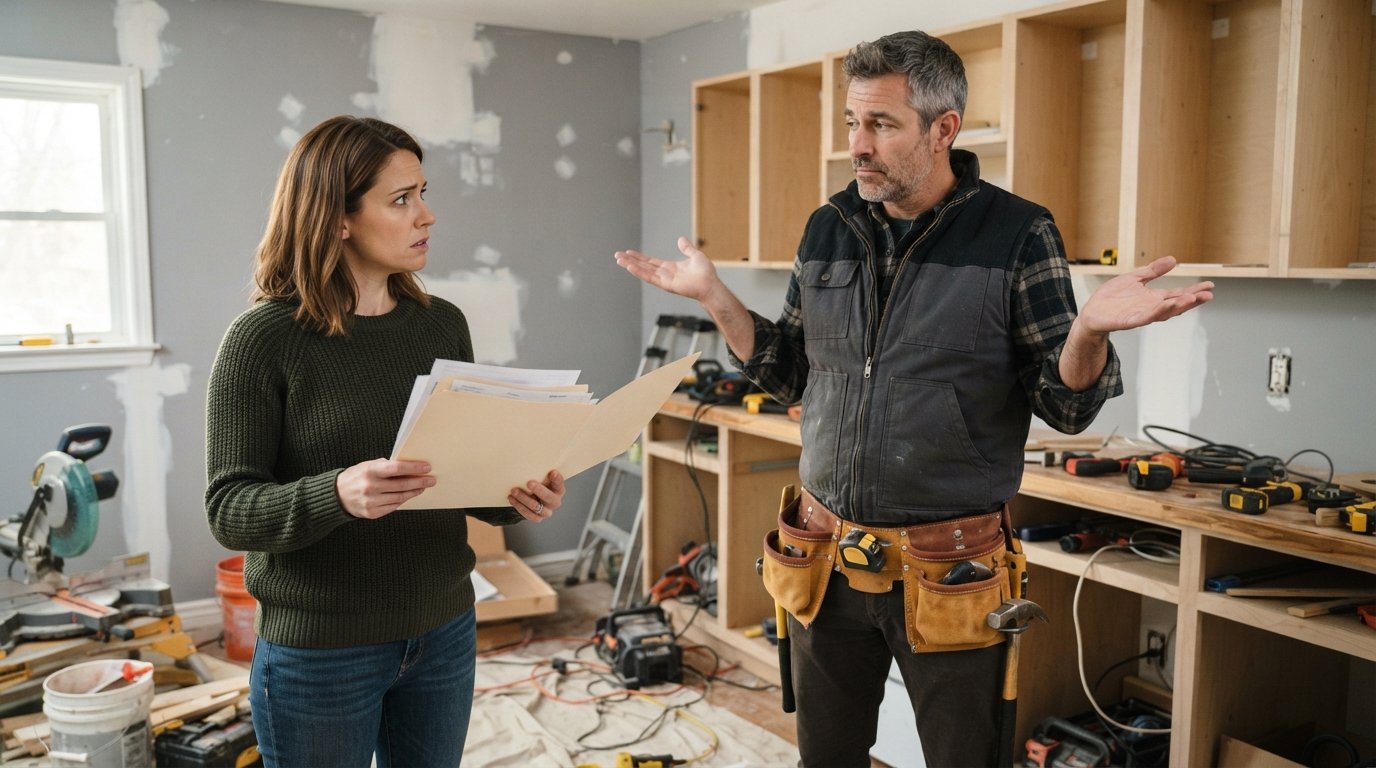
Contractor Has No Proof of Insurance? What to Do Now
If your contractor cannot show proof of insurance, you can still protect your home. Call (833)-365-8755 for guidance on verifying coverage and finding a vetted local pro.

By Liam Weston
Learn more about Exterior Painting for guides, costs, and what to expect.
Compare Exterior Painting Pros Near You

Enter your ZIP code to compare top-rated local professionals and request free quotes.
You hired a contractor, the work is underway, and then it happens: you ask for a certificate of insurance and get a blank stare, a vague promise to email it later, or a story about how their policy is "being renewed." Your stomach drops. If a worker gets hurt on your property or a subcontractor damages your home, who pays? The answer, without proof of insurance, could be you. Knowing what to do if your contractor has no proof of insurance is not about being paranoid; it is about protecting your home, your savings, and your legal standing. This guide walks you through the exact steps to take, from verifying coverage to deciding when to walk away.
Why Proof of Insurance Matters More Than You Think
General liability insurance and workers compensation coverage are not just pieces of paper. They are the financial safety net that stands between your assets and a catastrophic claim. General liability covers third-party bodily injury and property damage, so if a worker accidentally breaks a gas line or a ladder falls through your window, the policy responds. Workers compensation covers employees who are injured on the job, regardless of fault. If your contractor has neither, the risk shifts to you as the property owner. In many states, homeowners can be held liable for injuries sustained by uninsured workers on their property, and your homeowners insurance may deny the claim if you knowingly hired an uninsured contractor. That means a single fall from a ladder could turn into a lawsuit against your home equity.
Beyond liability, uninsured contractors often cut other corners. They may not carry the proper licenses, may skip permits, or may disappear when problems arise. The lack of insurance is a red flag that should prompt a full re-evaluation of the relationship. Even if the contractor is skilled and well-intentioned, the absence of coverage leaves you exposed. The good news is that you have options, and most can be executed quickly without escalating tension.
What a Certificate of Insurance Should Show (And How to Confirm It)
A certificate of insurance, often called a COI, is a one-page document that summarizes a contractor's coverage. It is not the policy itself, but it provides key details you can verify. When you request a COI, look for the following elements: the insured's legal business name (which should match the name on your contract), the policy effective and expiration dates, the types of coverage (general liability, workers compensation, commercial auto if applicable), the policy limits, and the insurance company's name and contact information. Crucially, the certificate should list you or your property as a "certificate holder" or additional insured in some cases, though additional insured status is more common in commercial projects. For residential work, you mainly want to confirm the policy is active and the limits are adequate.
Do not stop at the certificate. Certificates are easy to forge or alter, and they can be outdated. The only way to truly confirm coverage is to call the insurance company directly using the phone number on the certificate (not a number the contractor gives you). Ask the insurer to verify the policy number, the named insured, the effective dates, and the coverage limits. This step takes five minutes and can save you thousands. If the contractor claims the policy is "pending" or "in the mail," that is not proof. A legitimate contractor with active coverage can produce a certificate the same day, often within minutes by email.
If the contractor is a sole proprietor with no employees, they may not be required by law to carry workers compensation, but they should still carry general liability. In that case, ask for a general liability certificate and confirm it is active. If they have subcontractors, those subs should also carry their own insurance, and you should request certificates for each. An uninsured subcontractor is just as dangerous as an uninsured general contractor.
Immediate Steps to Take When Proof Is Missing
When your contractor cannot or will not provide proof of insurance, you need to move through a clear sequence of actions. Do not ignore the issue or accept verbal assurances. The following numbered steps will help you protect yourself while maintaining a professional tone.
- Pause work and request a written certificate. Send a polite but firm email or text asking for a current certificate of insurance for general liability and workers compensation (if applicable). Specify that you need it before any further work proceeds. Putting the request in writing creates a record and signals that you are serious.
- Verify the certificate with the insurer. Once you receive a COI, call the insurance company using the contact information on the document. Confirm the policy is active and the coverage limits are sufficient for your project. Do not rely on the contractor's word.
- Check licensing and permits. Contact your state or local licensing board to confirm the contractor's license is active and in good standing. Ask your local building department whether permits are required for your project and whether the contractor has pulled them. Uninsured contractors often skip permits, which can create code violations and future headaches.
- Document everything. Keep copies of all emails, texts, and certificates. If the contractor refuses to provide proof, note the date and time of the refusal. This documentation may be useful if a dispute arises later.
- Assess the risk and decide. If the contractor cannot provide proof within a reasonable timeframe (24 to 48 hours), you must decide whether to walk away or find a compromise. In most cases, walking away is the safer choice.
These steps are not about being difficult; they are about being a responsible homeowner. A professional contractor will respect your diligence and may even appreciate that you take the work seriously. If they become defensive or evasive, that is a warning sign.
How to Ask for Proof Without Damaging the Relationship
Many homeowners hesitate to ask for insurance because they fear offending the contractor or creating tension. The key is to frame the request as a standard part of your due diligence, not a personal attack. You can say something like, "My insurance agent advised me to collect certificates of insurance from all contractors working on the property. Could you send yours over so I can keep it on file?" This shifts the responsibility to a third party (your agent or your mortgage company) and makes the request feel routine. Alternatively, you can mention that your homeowners insurance requires proof of insurance for any contractor performing work over a certain dollar amount. This is often true, and it provides a neutral reason.
If the contractor pushes back, stay calm and repeat the request. You can explain that you are not questioning their professionalism but simply following standard practice. A reputable contractor will have a certificate ready and may even include it with their initial bid. If they claim they "never needed insurance before," that is not a reason to skip it now. You can respond, "I understand, but I am not comfortable moving forward without it. Let me know when you can provide it, and we can resume." This keeps the door open while protecting your interests.
In our guide on how to communicate with your contractor during a renovation, we cover more strategies for maintaining a positive working relationship while addressing sensitive topics. Clear, written communication is your best tool.
When to Walk Away and How to Find a Vetted Local Pro
If your contractor cannot provide proof of insurance after a reasonable request, you should seriously consider terminating the relationship. The risk is simply too high. Walking away may feel awkward, especially if work has already begun, but the financial exposure of an uninsured injury or property damage is far worse. Before you end the contract, review the terms for cancellation and any payments made. You may be entitled to a refund for unfinished work, but you may also owe for completed portions. Document the condition of the work and take photos. If the contractor refuses to provide insurance and you decide to part ways, send a written notice of termination citing the lack of proof of insurance as the reason.
Once you have walked away, your next step is to find a vetted contractor who can provide proof of insurance immediately. Start by asking friends, family, and neighbors for referrals, but always verify the insurance yourself. You can also use a platform like HomeRemodelingsContractors to connect with experienced local contractors who have been pre-screened for licensing and insurance. Such platforms can save you time and reduce the risk of hiring an uninsured worker. When you interview new contractors, make proof of insurance a condition of the bid. Ask for a certificate before any work begins, and verify it with the insurer. A professional will expect this and will have no problem complying.
Remember that hiring an uninsured contractor is not just a risk to your property; it can also affect your ability to sell your home. If you have unpermitted work or unresolved liability issues, they may surface during a home inspection or title search. Protect your investment by insisting on proof of insurance from the start.
What If the Contractor Claims They Are "Self-Insured" or "Bonded"?
Some contractors may claim they are "self-insured" or "bonded" instead of carrying traditional insurance. Self-insurance is rare for small residential contractors; it usually means the company has set aside funds to cover claims, but it does not provide the same legal protections as a commercial policy. If a contractor claims self-insurance, ask for proof of financial responsibility and verify it with your state's licensing board. Bonding is different from insurance: a bond is a guarantee that the contractor will complete the work according to contract terms, but it does not cover injuries or property damage. Do not accept a bond as a substitute for liability insurance. If the contractor is bonded, ask for the bond number and the bonding company's contact information, but still insist on a certificate of insurance for general liability and workers compensation.
Another common excuse is that the contractor is "covered under the homeowner's policy." This is almost never true. Your homeowners policy may provide some coverage for incidental work, but it is not designed to cover a contractor's employees or subcontractors. In fact, many homeowners policies exclude coverage for injuries to workers who are not insured by the contractor. Do not rely on your own policy to fill the gap.
Protecting Yourself Going Forward: A Contractor Vetting Checklist
To avoid finding yourself in this situation again, create a simple vetting checklist for every contractor you hire. The following list covers the essentials, and you can adapt it to your project's size and complexity.
- Verify the license: Check with your state or local licensing board to confirm the contractor's license is active and in good standing. Ask for the license number and verify it independently.
- Request a certificate of insurance: Ask for a current COI for general liability and workers compensation (if applicable). Verify it with the insurer using the contact information on the certificate.
- Confirm permits: Ask whether the contractor will pull the necessary permits. Verify with your local building department that permits are required and that the contractor is eligible to pull them.
- Get everything in writing: Use a detailed contract that includes the scope of work, payment schedule, timeline, and insurance requirements. Avoid paying large deposits upfront; use a milestone-based payment schedule.
- Check references: Ask for references from similar projects completed in the last year. Call those references and ask about the contractor's reliability, quality, and professionalism.
This checklist is not exhaustive, but it covers the most critical points. For larger projects, you may also want to ask for a background check or a credit report, but insurance and licensing are the non-negotiables. If a contractor cannot meet these basic requirements, they are not worth the risk.
The Bottom Line: Act Quickly and Decisively
Discovering that your contractor has no proof of insurance is stressful, but it is not a situation you have to accept. By taking immediate steps to pause work, request a certificate, verify it with the insurer, and document everything, you put yourself in a position of control. If the contractor cannot provide proof, walking away is the responsible choice. The short-term inconvenience of finding a new contractor is far better than the long-term financial and legal consequences of an uninsured accident. Remember that reputable contractors carry insurance because they are professionals, and they will not hesitate to provide proof. Use the resources available, including vetted contractor networks, to find a pro who meets your standards. Your home is likely your largest investment; protect it with the same diligence you would apply to any major financial decision.