
Choosing a Roofing Contractor After Storm Damage
Choosing a roofing contractor after storm damage starts with documenting everything and vetting local licensed pros. Protect your claim and avoid scams.

By Liam Weston
Learn more about Roof Repair or Maintenance for guides, costs, and what to expect.
Compare Roof Repair or Maintenance Pros Near You

Enter your ZIP code to compare top-rated local professionals and request free quotes.
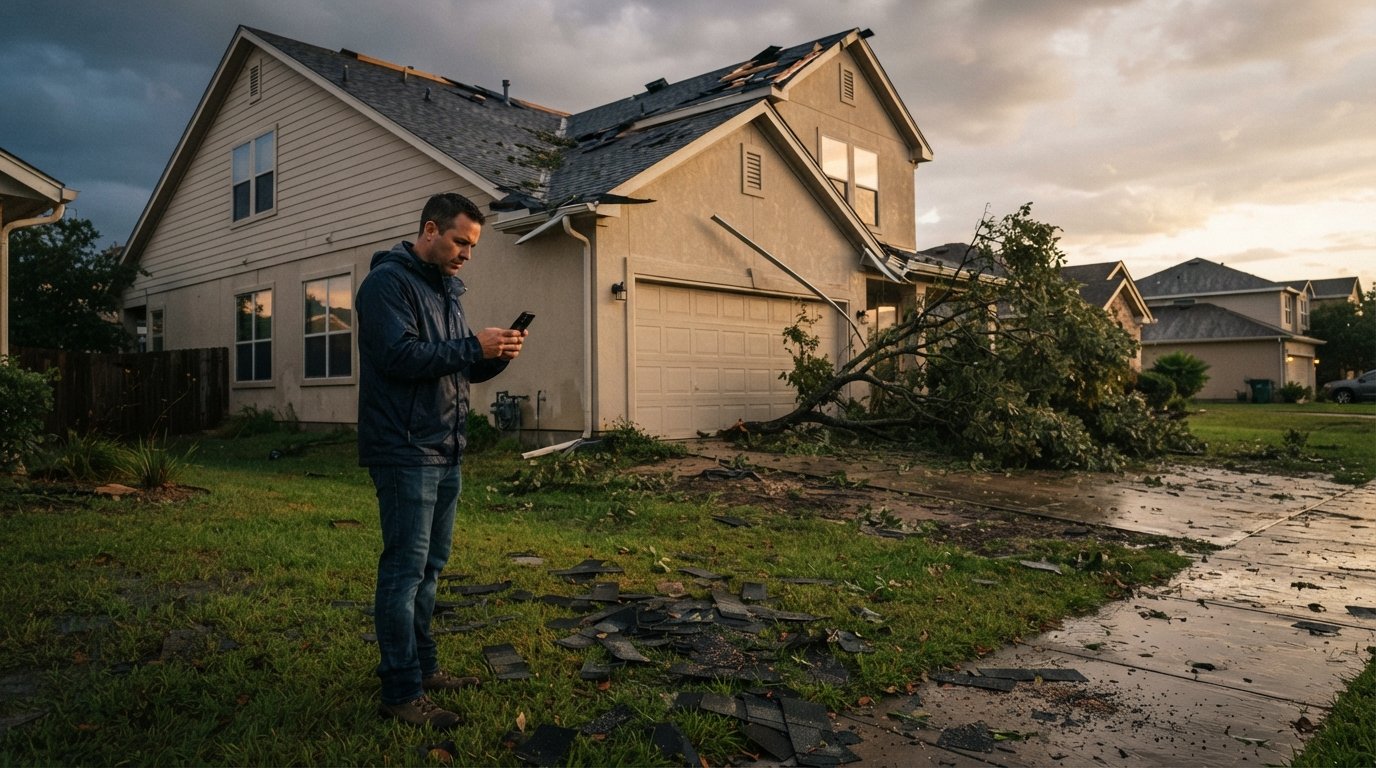
The sky clears, the wind dies down, and you walk outside to find shingles scattered across your lawn, a branch piercing the garage, or a suspicious stain spreading across your ceiling. In that moment, panic is natural, but the decisions you make in the next 48 hours will determine whether your insurance claim goes smoothly or turns into a months-long nightmare. Choosing a roofing contractor after storm damage is not the same as hiring someone for a planned replacement. The urgency is higher, the scams are more aggressive, and the paperwork is more complex. This guide walks you through a calm, step-by-step approach so you can protect your home, your wallet, and your peace of mind.
Document Everything Before You Call Anyone
Before you dial a single phone number, become your own claims adjuster for an hour. Insurance companies respond best to organized, timestamped evidence, and contractors respect homeowners who know what they are looking at. Grab your phone and walk the property slowly. Photograph every damaged area from multiple angles, including close-ups of missing shingles, cracked flashing, dented gutters, and any interior water stains. If it is safe, take short videos panning across the roof line and the yard. Do not climb onto the roof yourself; ground-level and drone shots are sufficient for the first round of documentation.
Next, locate your homeowner policy and read the section on storm damage and wind/hail deductibles. Many policies have a separate percentage deductible for wind events, which can be thousands of dollars more than your standard deductible. Knowing this number before a contractor quotes you prevents the awkward moment when you realize the job is not as covered as you assumed. Also check whether your policy requires you to use a preferred vendor or allows any licensed contractor. Some insurers will only pay full replacement cost if you use their network, while others reimburse you regardless. Write these details down and keep them with your photo folder.
Finally, make temporary repairs only if they are truly necessary to prevent further damage, such as tarping a missing section or boarding a broken window. Keep every receipt for materials and labor, because most policies reimburse reasonable mitigation costs. Do not sign anything that authorizes permanent work before your adjuster has seen the damage. If a contractor pressures you to start immediately, that is your first red flag.
How to Vet Roofers When Everyone Is Knocking
After a major storm, your neighborhood will fill with out-of-state trucks, door-to-door salespeople, and flyers promising fast, cheap repairs. Some of these crews are legitimate, but many are storm chasers who collect deposits and vanish before the first rain. The single most important filter is local presence. A contractor with a physical address, a local license, and a history of work in your community has more to lose by doing a bad job. Ask for their state or county license number and verify it with the relevant board. If they cannot produce it within minutes, move on.
Once you have a shortlist of three to five licensed local roofers, request written estimates that break down materials, labor, disposal, and permits. A lump-sum quote with no line items is a warning sign. A professional will also inspect your attic and interior ceilings, not just the roof surface, because storm damage often hides in ventilation and decking. During these inspections, pay attention to how they communicate. Do they explain what they found in plain language, or do they use fear to push you into a same-day decision? The best contractors educate you, not scare you.
This is also the moment to check reviews across multiple platforms, not just the one the contractor links to on their website. Look for patterns in complaints, especially around insurance paperwork, timelines, and cleanup. A roofer who is great at installation but terrible at documentation will cost you money when the insurer pushes back. If you want a broader framework for evaluating any home improvement professional, our guide on how to choose home improvement contractors covers the same vetting logic in more depth.
Here is a quick checklist you can run through before you invite anyone onto your roof:
- Verify the license number with your state or local board.
- Confirm they carry general liability and workers compensation insurance.
- Ask for a local address and a phone number that is not a call center.
- Request three recent references from jobs in your zip code.
- Check that they will provide a written, itemized estimate before any work begins.
If a contractor hesitates on any of these points, treat it as a dealbreaker. There is no shortage of qualified roofers, and you do not need to gamble on the one who cannot prove they are legitimate.
Understanding the Insurance Claim Dance
Your insurance adjuster and your roofer need to work together, but they do not always agree. The adjuster works for the insurer and wants to pay the smallest valid claim. The roofer works for you and wants to be paid for the full scope of damage. Your job is to make sure both sides have the same information. Before the adjuster visits, give your chosen contractor a copy of your photos and ask them to prepare a written scope of work that cites specific damage. When the adjuster arrives, have your contractor present if possible. This prevents the adjuster from missing damage that is obvious to a trained eye, such as cracked pipe boots or damaged ridge vents.
After the adjuster submits their report, compare it line by line with your contractor's estimate. Discrepancies are normal, but they should be resolved before you sign a contract. If the insurer approves less than the contractor says is needed, ask the contractor to provide supplemental documentation, such as manufacturer installation requirements or local building codes. Many insurers will approve a supplement when they see that the original scope was incomplete. Do not let a contractor tell you to just pay the difference out of pocket without a fight. That is your money, and the policy exists for exactly this situation.
One more critical point: never sign a contract that assigns your insurance benefits to the contractor without reading it carefully. Assignment of benefits (AOB) clauses can give the contractor legal control over your claim, which sometimes leads to inflated bills and liens on your home. A reputable roofer will bill you directly and let you pay them with the insurance check. If they insist on an AOB, find someone else.
Red Flags That Should End the Conversation
Storm damage brings out the best and worst in the contracting world. The worst actors rely on urgency, confusion, and your desire to get back to normal. Knowing their tactics in advance makes them easy to spot. If you see any of the following, stop the conversation immediately and do not hand over a deposit.
- Cash-only demands or large upfront payments. A legitimate roofer may ask for a deposit for materials, but it is typically 10 to 30 percent, not half the job. Cash-only requests are a scam signal.
- No physical address or a P.O. box only. Storm chasers often operate from temporary locations and disappear after the season.
- Pressure to sign today for a "storm discount." Real discounts do not expire in an hour, and real contractors do not need high-pressure sales tactics.
- Offers to waive your deductible. In most states, waiving a deductible is illegal insurance fraud. A contractor who suggests it is putting you at legal risk.
- No written contract or a contract with blank spaces. Every detail, including materials, timeline, and payment schedule, should be in writing before work starts.
If you encounter two or more of these red flags from the same company, walk away. There is no storm damage so severe that you need to work with a dishonest contractor.
Comparing Bids Without Getting Played
You will likely receive three to five bids, and they will not all look the same. Some will be low, some will be high, and some will be deliberately vague. The lowest bid is rarely the best deal because it often excludes critical items like underlayment, ice and water shield, or proper ventilation. When you compare estimates, normalize them by asking each contractor to quote the same scope: tear-off, decking inspection, underlayment, flashing, shingles, ridge vent, and cleanup. If one bid is missing a line item, ask why. Sometimes the answer is legitimate, such as a roof that does not need new decking, but often it means they plan to cut corners.
Also compare warranties. A manufacturer warranty covers the shingles, but a workmanship warranty covers the installation. You want both, and you want them in writing. Ask how long the workmanship warranty lasts and whether it is transferable if you sell your home. A five-year workmanship warranty is decent; a twenty-five-year one is excellent. If a contractor offers a lifetime warranty but cannot explain what it covers, it is marketing fluff.
Finally, compare timelines. After a major storm, every roofer is busy, but a professional will give you a realistic start date and keep you updated if it slips. A contractor who promises to start tomorrow and finish in two days is either lying or planning to rush the job. A typical asphalt shingle roof takes one to three days for a standard home, depending on size and complexity. Anything significantly faster should raise questions about quality.
What to Put in the Contract
Once you have chosen your roofer, the contract is your safety net. It should be detailed enough that a stranger could read it and understand exactly what is being done. At minimum, it should include the contractor's full legal name, license number, and address; a detailed scope of work with materials and quantities; the total price and payment schedule; the start and completion dates; the workmanship and manufacturer warranties; and a clause about cleanup and debris removal. If the contractor will handle the insurance supplement, that should be spelled out too, including who communicates with the adjuster.
Pay attention to the payment schedule. A common and fair structure is a deposit for materials, a progress payment after tear-off and decking, and a final payment after inspection and cleanup. Never pay the full amount upfront, and never pay in cash without a receipt. Use a check or credit card so you have a paper trail. If the contractor asks for the final payment before you have had a chance to inspect the work, refuse. You have the right to inspect the roof, the gutters, the yard, and the attic before you release the final funds.
For homeowners who want a single place to compare local professionals and request free estimates, a platform like HomeRemodelingsContractors can simplify the search by connecting you with vetted contractors in your area. The goal is not to rush the decision but to make it with better information. A few extra days of vetting can save you thousands of dollars and months of frustration.
After the Work Is Done
The final walkthrough is not a formality. Walk the property with the contractor and look for nails, shingle scraps, and damaged landscaping. Check the gutters for granules and debris. Go into the attic and look for daylight or water stains. If you see anything that concerns you, note it in writing and ask the contractor to address it before you make the final payment. A professional will fix minor issues without argument because they want the referral and the positive review.
Once you are satisfied, ask for a lien waiver or a final receipt showing that all subcontractors and suppliers have been paid. This protects you from mechanics liens if the contractor failed to pay a supplier. Keep all your documents, including the contract, change orders, receipts, and warranty information, in a single folder. If you ever sell the home, those documents prove the roof was professionally installed, which can be a selling point.
Finally, leave an honest review. Other homeowners in your area will face the same storm damage and the same difficult choices. Your experience, good or bad, helps them avoid the wrong contractor and find the right one. The best roofing contractors earn their reputation one job at a time, and your feedback is part of that process.
Storm damage is stressful, but it does not have to be financially ruinous. By documenting the damage, vetting local licensed roofers, understanding your insurance policy, and refusing to bow to pressure, you can turn a chaotic situation into a manageable project. Take your time, ask hard questions, and trust your instincts. The right contractor will welcome the scrutiny.