
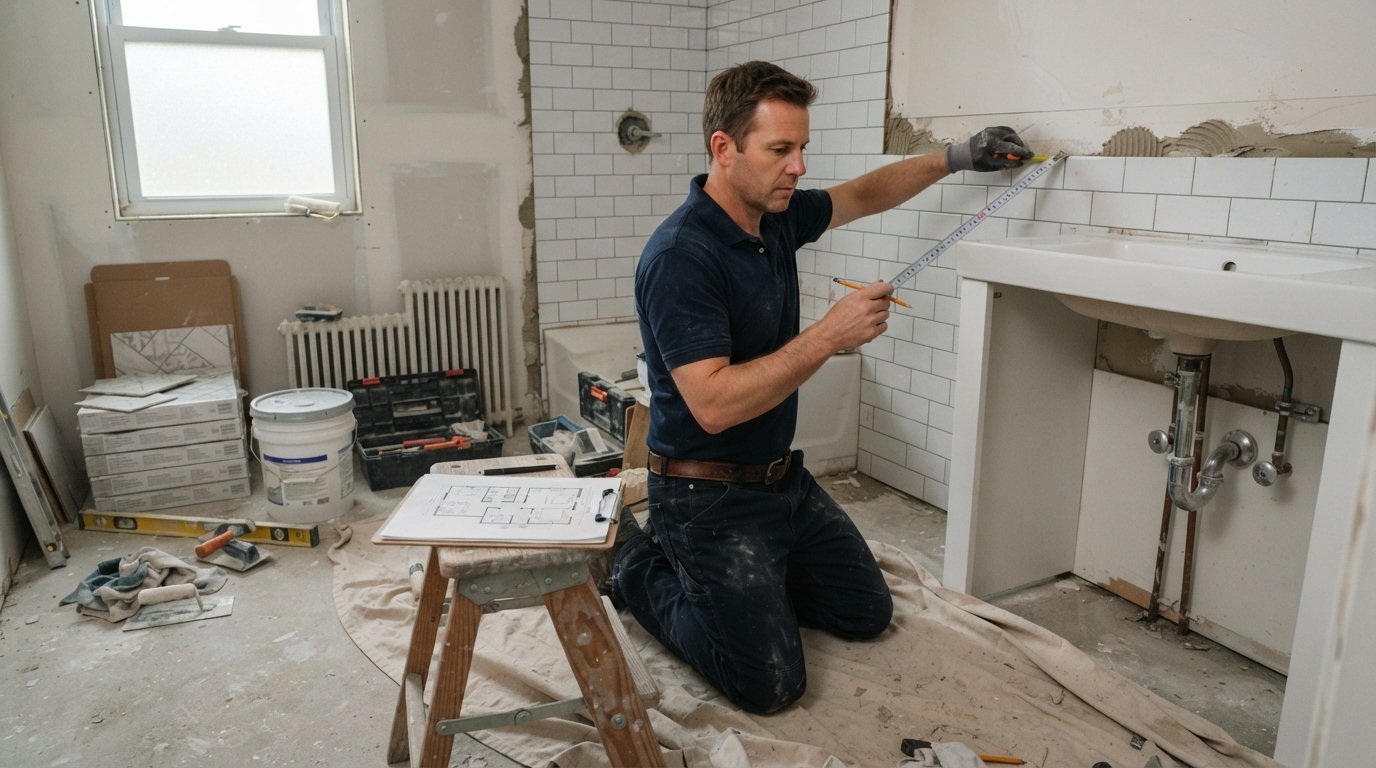
Bathroom Remodel Cost Per Square Foot in 2026: Real Numbers
Bathroom remodel cost per square foot in 2026 ranges from $150 to $600. Get a free estimate and avoid surprise bills by calling (833)-365-8755.

By Valerie Nguyen
Learn more about Bathroom Remodel for guides, costs, and what to expect.
Compare Bathroom Remodel Pros Near You

Enter your ZIP code to compare top-rated local professionals and request free quotes.
A bathroom remodel is one of the most reliable ways to add value and comfort to a home, but the price tag can feel like a moving target. In 2026, homeowners are seeing per-square-foot costs that range from a modest refresh to a luxury spa build, and knowing where your project falls on that spectrum is the first step toward a realistic budget. Whether you are updating a cramped hall bath or gutting a primary suite, the cost per square foot gives you a consistent yardstick to compare bids, spot outliers, and plan your spending with confidence. This guide breaks down current pricing, explains what drives the numbers up or down, and shows you how to use a free estimate to turn a rough range into a workable plan.
What Bathroom Remodel Cost Per Square Foot in 2026 Actually Looks Like
When contractors quote a bathroom remodel, they often start with a per-square-foot figure that captures labor, materials, and overhead for a standard scope of work. In 2026, that baseline generally lands between $150 and $400 per square foot for a mid-range remodel, while high-end projects with custom finishes can exceed $600 per square foot. The range is wide because a bathroom packs more systems, fixtures, and finishes into a small footprint than almost any other room in the house. Square footage matters, but not in a simple linear way: a tiny bathroom often costs more per square foot because the fixed costs of plumbing, electrical, and waterproofing get spread over a smaller area.
To make the numbers usable, it helps to group projects by bathroom size and scope. The table below reflects typical 2026 ranges for a full remodel (often called a gut remodel) where fixtures, flooring, and vanity are replaced and the layout stays largely the same. These figures assume mid-grade materials and professional labor.
- Small bathroom (under 40 sq ft): $12,000 to $20,000 total, or roughly $300 to $500 per square foot, because fixed costs dominate.
- Mid-size bathroom (40 to 80 sq ft): $15,000 to $28,000 total, or about $200 to $350 per square foot for a standard layout.
- Large bathroom or primary suite (over 80 sq ft): $25,000 to $50,000 or more, or roughly $180 to $400 per square foot depending on finishes and layout changes.
These ranges are a starting point, not a promise. Two bathrooms of identical size can land at opposite ends of the range based on tile selection, fixture brand, and whether the plumbing has to move. The per-square-foot metric is most useful when you compare bids for the same scope, because it normalizes the size of the room and lets you see who is pricing labor and materials aggressively and who is padding the estimate.
Why Layout Changes and Tile Work Drive Cost Per Square Foot
If you want to understand why one bid comes in at $220 per square foot and another at $380, look at the layout and the tile. Moving a toilet, sink, or shower across the room means relocating supply lines and drain pipes, which often requires opening walls and floors, adding permits, and bringing in a plumber for rough-in work. Even a small shift can add several thousand dollars because the labor to cut, route, and test new lines is time-consuming and carries risk. Keeping plumbing where it is and simply replacing fixtures is the single biggest lever for keeping cost per square foot down.
Tile is the other major driver. A basic ceramic floor and a standard tub surround might cost a few dollars per square foot in materials, while large-format porcelain, natural stone, or intricate mosaic patterns can run five to ten times that amount. Labor scales with complexity: small tiles, herringbone patterns, niches, and curbless showers all demand more cutting and setting time. Waterproofing systems and backer board are non-negotiable in wet areas, and their cost is baked into the per-square-foot number whether you see it on the quote or not.
Fixtures follow the same logic. A builder-grade vanity, toilet, and faucet set can be sourced for well under $1,000, while a freestanding tub, a wall-hung toilet, and a designer faucet can push fixtures past $8,000 on their own. When you review a bid, ask the contractor to break out labor, tile, fixtures, and allowances so you can see which line items are pushing your per-square-foot cost higher. If the allowance for tile is $4 per square foot, you know the finished room will look nothing like the photos in the brochure unless you plan to upgrade.
Where to Save Without Cheap-Looking Finishes
The goal is not to spend the least money possible; it is to spend where it shows and save where it does not. A bathroom that looks expensive usually gets there through consistent design choices, good lighting, and clean installation, not through the most costly materials on the shelf. You can protect the per-square-foot budget without settling for finishes that peel, stain, or date the room within a year. The trick is to redirect money from hidden or low-impact areas into the surfaces and fixtures people actually touch and see.
Start with the layout: keeping the toilet, sink, and shower in their current positions avoids the plumbing and drywall work that inflates cost per square foot fastest. Choose a standard-size tub or shower base instead of a custom pan, and use a prefabricated vanity rather than a site-built cabinet. These choices are invisible to guests but can save thousands. Then spend deliberately on the elements that define the room: a well-made faucet, a durable quartz or solid-surface countertop, and tile that runs floor to ceiling in the shower. A modest tile in a large format can look premium and costs less to install than small mosaics because there are fewer grout lines and less cutting.
Lighting and ventilation are worth the investment because they affect how every finish looks and how long the room stays mold-free. A properly sized exhaust fan and layered lighting (vanity, overhead, and maybe a shower light) add function and perceived quality at a relatively low cost. If you are planning for the long term, it also helps to look at which upgrades hold value; our guide on bathroom remodel trends that add value covers which choices tend to pay back at resale and which are purely personal. The principle is simple: save on what is hidden or easily changed later, and spend on what you see and touch every day.
How to Use a Free Estimate to Validate Your Budget Per Square Foot
A per-square-foot range is only useful if you can test it against your actual project. That is where a free estimate comes in. A good contractor will walk the bathroom, measure the space, ask about your must-haves, and give you a written quote that breaks down labor, materials, and allowances. You can then divide the total by the square footage to see where your bid lands against the 2026 ranges above. If the number is far below the range, ask what is excluded; if it is far above, ask which line items are driving the difference. Either way, you learn more from one detailed estimate than from hours of online research.
To get the most from the process, prepare before the contractor arrives. Gather inspiration photos, decide which fixtures must stay, and set a realistic budget ceiling. Then follow a simple sequence:
- Request estimates from at least three contractors who have completed similar bathrooms in your area.
- Ask each one to itemize labor, tile, fixtures, and allowances, and to note any exclusions.
- Compare the per-square-foot cost for the same scope, not for different scopes.
- Check licenses, insurance, and references, and ask how change orders are priced.
- Choose the bid that offers the best value, not simply the lowest number.
Comparing bids this way turns a vague per-square-foot estimate into a real budget you can defend. It also protects you from surprise bills later, because the allowances and exclusions are on paper before work begins. If you want help finding vetted professionals in your area, HomeRemodelingsContractors.com connects homeowners with experienced local contractors and free estimates, so you can compare options and move forward with confidence. The same approach works for any room: get the scope in writing, normalize the numbers, and let the bids tell you whether your budget per square foot is realistic.
Building a Realistic 2026 Bathroom Budget
Once you have a per-square-foot range and a detailed estimate, the final step is to build a budget that includes the costs people forget. Permits, dumpster rental, and temporary relocation during the project can add hundreds or thousands of dollars. A contingency fund of 10 to 20 percent is not optional in bathrooms, because water damage or outdated wiring often surfaces once the walls are open. If your home was built before the 1980s, plan for the possibility of updating supply lines or adding proper ventilation, both of which affect the final cost per square foot.
It also helps to think in phases. If the full remodel is out of reach this year, a phased approach can deliver most of the visual impact while spreading the cost. Replacing the vanity, mirror, lighting, and faucet can transform a bathroom for a fraction of a gut remodel, and the plumbing stays put. Then, when the budget allows, you can tackle tile and the shower. The per-square-foot cost of a cosmetic refresh is much lower, often $50 to $100 per square foot, because you are not paying for demolition, rough-in, or waterproofing.
The most important takeaway for 2026 is that bathroom remodel cost per square foot is a tool for comparison, not a fixed price. Use the ranges to sanity-check bids, use free estimates to validate your specific scope, and use the savings strategies above to put money where it shows. With a clear budget, a written scope, and a contractor you trust, you can get a bathroom that feels expensive without paying for things you cannot see.