
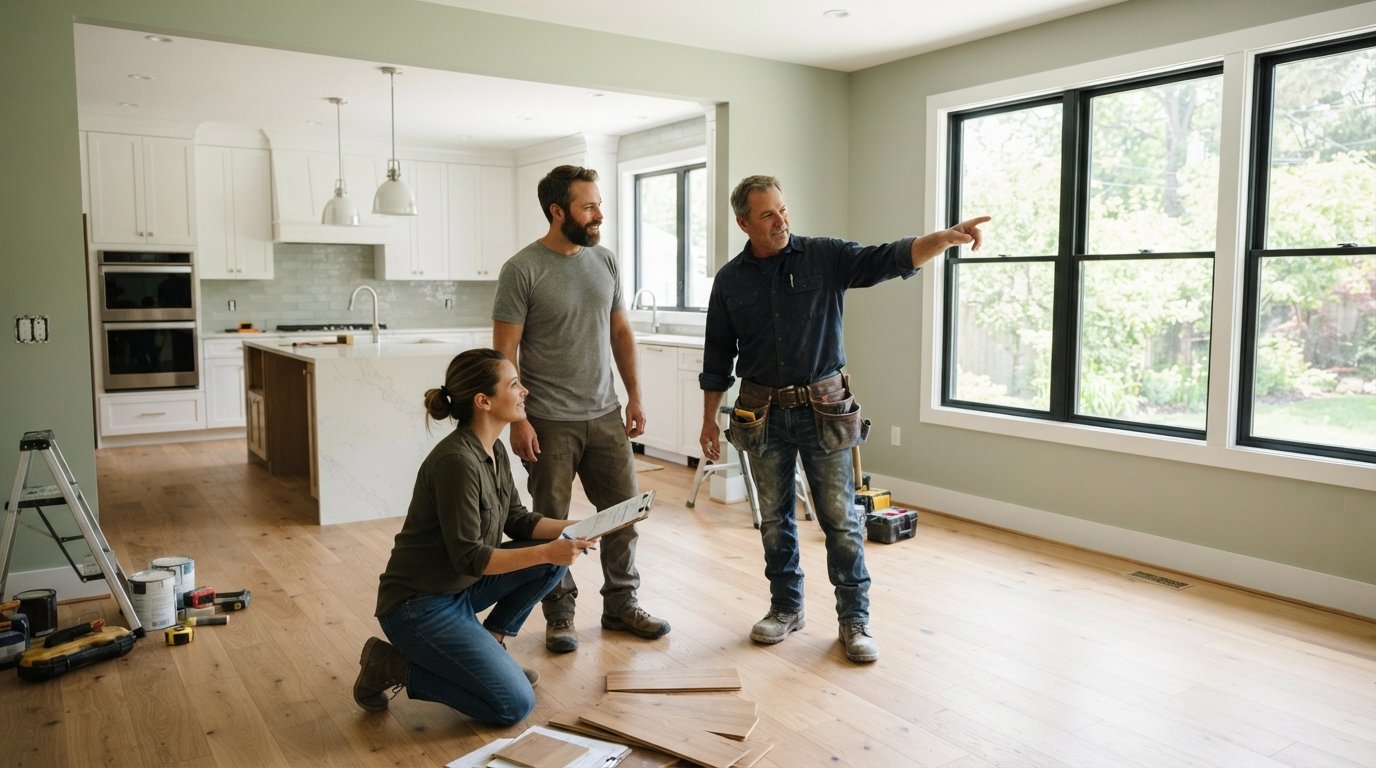
2026 Interior Design Trends That Add Home Value
These 2026 interior design trends add home value by improving function, efficiency, and buyer appeal without overspending on fleeting styles.

By Zoe Harper
Learn more about Kitchen Remodel for guides, costs, and what to expect.
Compare Kitchen Remodel Pros Near You

Enter your ZIP code to compare top-rated local professionals and request free quotes.
Homeowners planning a renovation in 2026 face a different market than the one that defined the past decade. Buyers are more selective, appraisers are more careful, and the gap between a trendy update and a value-adding upgrade has never been wider. The good news is that the strongest 2026 interior design trends that add home value share a common thread: they prioritize durable materials, functional layouts, and energy efficiency over fleeting novelty. That means you can create a home you genuinely enjoy living in while still protecting the money you put into it.
This guide breaks down the specific design directions expected to dominate 2026, explains why each one translates into measurable resale value, and shows how to approach the work without overspending. Whether you are remodeling to sell in the next two years or planning to stay for a decade, the principles are the same. Focus on changes that buyers can see, appraisers can measure, and future owners will still want.
Why Some Trends Build Equity and Others Just Cost Money
Not every beautiful design choice returns money at resale. A bold accent wall in a trending color might photograph well, but it can narrow your buyer pool. A renovated laundry room, by contrast, rarely makes a magazine cover yet consistently shows up in buyer wish lists. The difference comes down to three factors: permanence, perceived maintenance cost, and broad appeal.
Permanence matters because buyers mentally discount anything they expect to redo. If a finish looks like it will need replacing in three years, they subtract that cost from their offer. Perceived maintenance cost works the same way: high-maintenance materials signal future work, while low-maintenance surfaces signal peace of mind. Broad appeal determines how many buyers will pay a premium instead of walking away.
Before committing to any project, run it through a simple filter. The upgrades that consistently add value tend to check most of these boxes:
- They improve how the home functions daily, not just how it looks in photos.
- They use materials with long lifespans and easy care requirements.
- They appeal to a wide range of tastes and household types.
- They reduce ongoing costs such as energy, water, or maintenance.
- They address a known pain point buyers already complain about.
When a design trend satisfies four or five of those criteria, it moves from decoration into investment territory. The 2026 trends below were selected because they meet that standard. They are not the loudest ideas on social media. They are the ones that hold up under an appraiser's clipboard and a buyer's inspection.
Warm Minimalism and Quiet Luxury Materials
The stark, all-white minimalism that dominated the 2010s has given way to something warmer and more tactile. In 2026, the look is still clean and uncluttered, but it leans on natural texture: limewash walls, white oak flooring, honed stone, and matte finishes instead of high-gloss surfaces. Designers often call this quiet luxury, and it resonates because it reads as timeless rather than trendy.
From a value perspective, this shift is significant. Neutral palettes have always been safer for resale, but the previous generation of gray-on-gray interiors now feels dated to many buyers. Warm neutrals (creams, taupes, soft greens, and earthy browns) photograph well, complement nearly any furniture style, and avoid the sterile feeling that turns some buyers off. They also age gracefully, which means your renovation will still look current when you eventually list.
Material choice matters as much as color. Engineered hardwood and luxury vinyl plank in warm tones offer the look of real wood with better moisture resistance and lower maintenance, two qualities buyers increasingly ask about. In kitchens and baths, honed or matte stone and quartz resist showing smudges and water spots, which reduces the daily upkeep that makes some finishes feel like a chore. If you are weighing where to spend and where to save, our guide to interior home renovation budgeting and hiring walks through how to allocate funds across finishes, labor, and contingencies without cutting the wrong corners.
The practical takeaway is simple: choose warm neutrals for the surfaces that are expensive to change (flooring, tile, countertops, cabinetry) and reserve bolder choices for paint, hardware, and textiles. That strategy gives you a home that feels personal today and broadly appealing at resale.
Functional Layouts and Multi-Purpose Rooms
One of the most durable 2026 interior design trends that add home value is not a finish at all. It is a layout decision. Remote and hybrid work has permanently changed what buyers expect from a floor plan, and homes that adapt to multiple uses command premiums over those stuck in a single-purpose design.
The most requested configuration in 2026 is a flexible room that can serve as a home office, guest space, or hobby area without a costly conversion. Pocket doors, built-in desks, and Murphy beds make this possible in a spare bedroom that would otherwise sit empty most of the year. Open-concept living remains popular, but buyers now want acoustic separation too, which has driven demand for glass partitions and well-placed sliding doors that let light through while containing sound.
Structural changes carry the highest cost and the highest return when they solve a real problem. Removing a wall to connect a cramped kitchen to a dining area, adding a first-floor powder room, or reconfiguring a primary suite to include a walk-in closet are the kinds of moves that appraisers recognize and buyers pay for. Cosmetic updates, by contrast, are easier to reverse but add less measurable value on their own.
If your budget is limited, prioritize layout fixes that improve circulation and storage before you upgrade finishes. A well-organized home with older countertops typically outsells a poorly organized home with new ones. Storage is the quiet workhorse of value: pantry space, entryway cubbies, linen closets, and garage organization all show up on buyer wish lists and cost far less than a full kitchen remodel.
Kitchen and Bath Updates With the Best Payback
Kitchens and bathrooms remain the two rooms where design choices move the needle most, but the winning formula in 2026 is restraint. Full gut renovations rarely return their full cost at resale. Targeted updates that modernize function and refresh surfaces deliver a much stronger return per dollar.
In the kitchen, the highest-value moves are the ones buyers interact with every day. Replacing dated cabinet fronts with a warm neutral finish, upgrading to soft-close hardware, and adding a functional island or peninsula all improve how the room works. Countertops in durable quartz or a well-sealed natural stone hold up better than trendy alternatives and appeal to nearly every buyer. Lighting deserves special attention: layered lighting (task, ambient, and accent) transforms how a kitchen feels and is inexpensive relative to its impact.
In bathrooms, the priorities shift toward moisture control and low maintenance. A curbless or low-threshold shower with quality tile, a double vanity where space allows, and a quiet, efficient exhaust fan are all features buyers notice. Heated floors, once a luxury, are now a common request in colder markets and can be added during a tile replacement at modest incremental cost.
One caution for 2026: avoid highly personalized choices that shrink your buyer pool. Bold tile patterns, unusual fixture colors, and niche appliances can be wonderful to live with but difficult to sell. If you love a dramatic look, apply it in a powder room or laundry area where the commitment is smaller and the resale risk is lower.
Energy Efficiency and Smart Systems That Appraisers Notice
Energy performance has moved from a nice-to-have to a core value driver. Rising utility costs have made buyers far more attentive to insulation, windows, and HVAC age, and appraisers increasingly factor efficiency into comparable sales. Upgrades in this category also qualify for various incentives, which improves their effective cost.
The highest-impact efficiency projects tend to be unglamorous: air sealing, attic insulation, duct repair, and high-efficiency HVAC replacement. These reduce monthly bills in a way buyers can verify from utility records. Window replacement ranks lower on pure payback but still matters in older homes, particularly where drafts or condensation are visible during showings.
Smart home technology adds value when it is integrated and useful rather than a collection of mismatched gadgets. A single cohesive system for lighting, climate, security, and locks reads as a feature. A drawer full of abandoned hubs and apps reads as a headache. Focus on a smart thermostat, video doorbell, keyless entry, and connected lighting, and make sure everything works reliably before listing.
Water efficiency belongs in this conversation too. Low-flow fixtures, tankless or high-efficiency water heating, and drought-tolerant landscaping all reduce operating costs and signal a well-maintained home. Buyers in many markets now ask specifically about these systems, and having documentation ready (installation dates, warranty information, and utility savings) turns a hidden upgrade into a visible selling point.
Outdoor Living as an Extension of Interior Space
One of the clearest 2026 interior design trends that add home value is the blurring of indoor and outdoor space. Covered patios, decks with integrated seating, and outdoor kitchens effectively add usable square footage without the cost of a full addition, and buyers in most U.S. markets respond strongly to them.
The key is to make the outdoor space feel like a genuine room rather than an afterthought. Consistent flooring materials that flow from inside to out, durable furniture, shade structures, and thoughtful lighting all contribute. A simple covered pergola with a ceiling fan and string lights often delivers more perceived value than an elaborate water feature that costs more to maintain.
Climate matters when prioritizing. In warmer regions, shade and ventilation are essential; in colder ones, a fire feature and wind protection extend the usable season. Whatever you choose, keep maintenance low. Buyers view high-maintenance landscapes as ongoing expenses, and a beautiful yard that requires constant work can actually reduce perceived value for busy households.
How to Fund These Upgrades Without Overextending
Even value-adding projects can become money losers if they are financed poorly or scoped carelessly. The homeowners who come out ahead in 2026 follow a consistent process: they define the goal, set a realistic budget with contingency, gather multiple estimates, and verify each contractor's licensing and insurance before signing anything.
Start by deciding whether the project is primarily for your enjoyment or for resale. If resale is the goal, cap spending at a level the local market can support and prioritize the items buyers ask about most. If enjoyment is the goal, you have more freedom, but keeping the big-ticket surfaces neutral still protects your investment.
Financing deserves the same scrutiny as design. Compare home equity options, contractor financing, and personal savings, and factor in how long you plan to stay. A renovation that takes ten years to pay back through value alone may still be worthwhile for quality of life, but you should make that trade-off consciously rather than by accident.
Above all, do not skip the vetting step. A great design installed by an unqualified crew can create problems that cost more to fix than the original project. Platforms such as HomeRemodelingsContractors help homeowners plan affordable improvements and connect with experienced local contractors, covering remodeling, repairs, upgrades, and free estimates so you can compare options and move forward with confidence. Getting three written estimates, checking references, and confirming insurance are the habits that separate smooth projects from expensive ones.
What to Skip in 2026
Knowing what to avoid is as valuable as knowing what to install. Several popular ideas carry real resale risk this year. Highly specific color schemes, oversized statement tile, and open shelving in kitchens all look striking in photos but create maintenance work or narrow appeal. Similarly, converting a garage or bedroom into a single-purpose space (a home gym, for example) can reduce buyer interest if the change is difficult to reverse.
Trend-driven appliances and fixtures with proprietary parts are another risk. When they fail, replacements can be expensive or discontinued, and buyers who research before making offers will notice. Standard sizes and widely available finishes keep replacement costs low and make future updates easier for whoever owns the home next.
Finally, be cautious with any upgrade that increases maintenance burden without a clear benefit. Elaborate landscaping, delicate natural stone in high-traffic areas, and complex lighting systems all demand ongoing attention. In a market where buyers are already stretched, low-maintenance wins.
The through-line for 2026 is straightforward. The interior design trends that add home value are the ones that make a home easier to live in, cheaper to operate, and broadly appealing to the next owner. Warm, durable finishes, flexible layouts, efficient systems, and well-designed outdoor space all fit that description, and none of them require a full-scale renovation to achieve. Choose a few high-impact projects, execute them carefully with qualified professionals, and you will end up with a home that rewards you both today and at resale.