
When to Hire a Pro for Exterior Home Repairs
Learn when to hire a professional for exterior home repairs, from safety risks to structural red flags, and protect your investment with expert help.

By Liam Weston
Learn more about Construction Services for guides, costs, and what to expect.
Compare Construction Services Pros Near You

Enter your ZIP code to compare top-rated local professionals and request free quotes.
Your home's exterior takes a beating from weather, time, and everyday wear. A cracked driveway, peeling paint, or a loose gutter might seem like minor issues, but they can quickly escalate into costly structural problems if left unattended. Many homeowners wonder whether they can handle these repairs themselves or if they should call in a professional. The answer depends on several factors, including the scope of work, your skill level, and the potential risks involved. Knowing when to hire a professional for exterior home repairs can save you money, protect your safety, and preserve your home's value. This guide will walk you through the key signs that it's time to bring in an expert, plus the benefits of doing so.
Assessing the Complexity of the Repair
The first step in deciding whether to DIY or hire a pro is to evaluate the complexity of the repair. Simple tasks like cleaning gutters, replacing a loose shingle, or touching up paint on a small area might be well within your capabilities. However, many exterior repairs involve structural elements, electrical systems, or specialized materials that require professional training and equipment.
For example, repairing a cracked foundation or replacing a section of roofing is not a weekend project. These jobs demand an understanding of load-bearing walls, waterproofing, and local building codes. A mistake could lead to serious safety hazards or further damage to your home. If you're unsure about the complexity, a good rule of thumb is to get a professional inspection. Many contractors offer free estimates, so you can have an expert assess the situation without any financial commitment. This also gives you a baseline for what the repair might cost if you decide to hire someone.
Safety Risks and Physical Demands
Exterior repairs often involve working at heights, using power tools, or handling hazardous materials. Roof work, for instance, is one of the most dangerous DIY projects a homeowner can attempt. Falls from ladders or roofs account for thousands of emergency room visits each year. Even if you're physically fit, the risk of injury is significant, especially if you lack experience working at heights.
Similarly, tasks like replacing windows, repairing electrical fixtures, or removing asbestos siding require specialized safety knowledge. Professionals are trained to handle these materials correctly and have the necessary safety gear. They also carry insurance, which protects you from liability if an accident occurs on your property. When you weigh the potential cost of an injury or a lawsuit against the cost of hiring a professional, the choice becomes clear.
Consider these warning signs that a repair is too dangerous for DIY:
- Work involves heights greater than one story, such as roof or chimney repairs.
- The task requires electrical work that is not a simple switch or outlet replacement.
- You suspect the presence of hazardous materials like lead paint or asbestos.
- The repair involves heavy equipment, like a skid steer or scaffolding, that you don't know how to operate.
If any of these conditions apply, it's time to call a professional. Your safety is worth more than the money you might save by doing it yourself.
Signs of Structural Damage or Water Intrusion
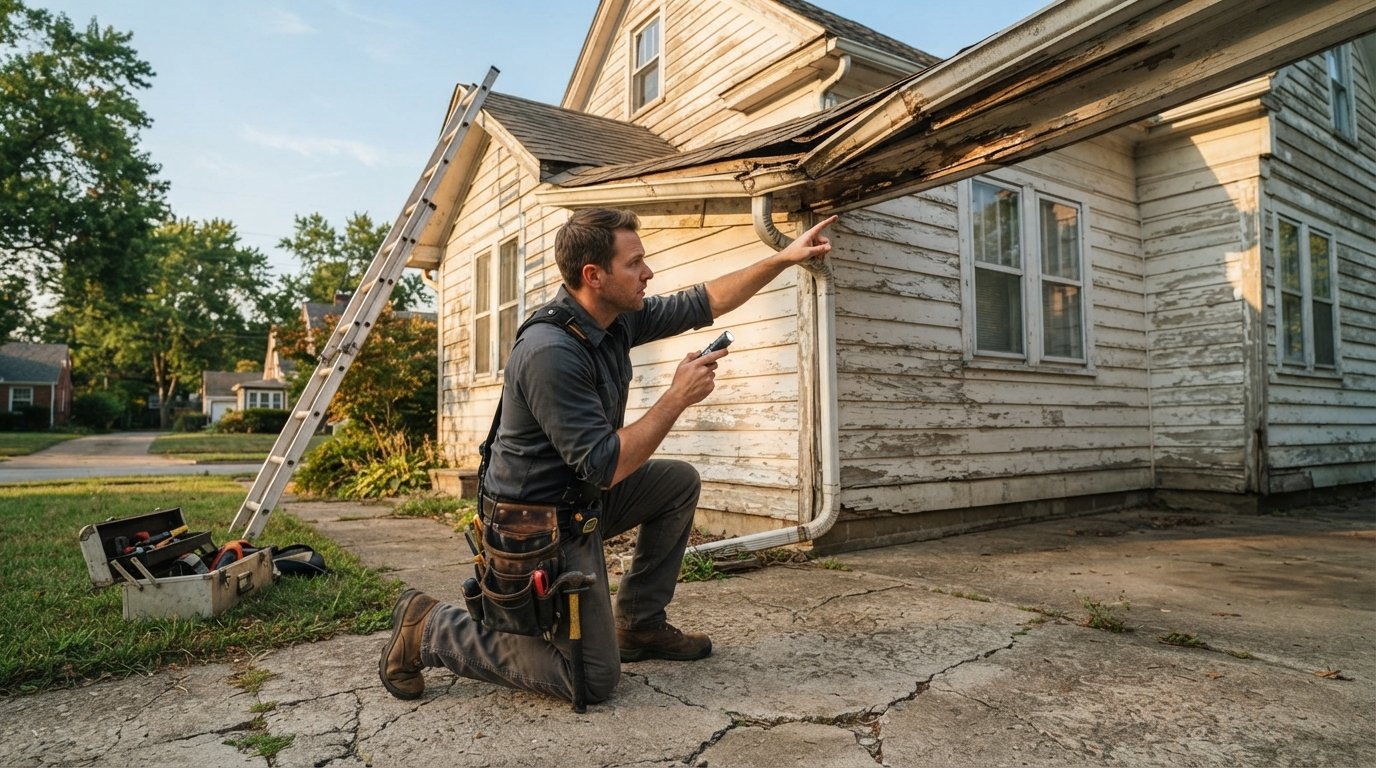
Some exterior issues are more than cosmetic; they signal underlying structural problems. Water stains on your ceiling, cracks in your foundation, or sagging rooflines are all red flags that require immediate attention from a professional. Ignoring these signs can lead to mold growth, wood rot, and even compromise your home's integrity.
A professional contractor can diagnose the root cause of the problem and recommend the right solution. For example, a small crack in your foundation might be a simple fix, or it could indicate a serious settling issue that requires underpinning. Without the right tools and knowledge, you might mask the symptom while the underlying problem worsens. Hiring an expert ensures the repair addresses the source, not just the surface.
If you notice any of the following, schedule a professional inspection right away:
- Cracks in the foundation or walls that are wider than 1/8 inch or growing over time.
- Gaps around windows or doors that let in water or drafts.
- Bubbling or peeling paint that could indicate moisture trapped in the walls.
- Wood rot on siding, trim, or fascia boards.
These issues rarely get better on their own. Early intervention by a professional can save you from a much larger and more expensive repair down the road.
When DIY Is a Viable Option
Of course, not every exterior repair requires a professional. If you're handy and have the right tools, there are several tasks you can safely handle yourself. These include:
- Cleaning gutters and downspouts.
- Replacing a single missing shingle (if you can safely access the roof from a ladder).
- Painting a fence or a single wall that is at ground level.
- Caulking around windows and doors to seal air leaks.
- Repairing a small crack in a concrete walkway with a patch kit.
These tasks are low-risk, require minimal tools, and won't affect your home's structural integrity if done imperfectly. However, even for these jobs, you need to be realistic about your skills and the quality you can achieve. A professional painter, for example, will usually deliver a smoother, longer-lasting finish than a homeowner with no experience. If you're not confident in your abilities, or if the job is bigger than it initially seemed, don't hesitate to call a pro.
The Case for Hiring a Professional
Beyond safety and complexity, there are several compelling reasons to hire a professional for exterior home repairs. First, professionals bring a level of expertise and craftsmanship that ensures the repair is done correctly the first time. They have the experience to anticipate problems and the skills to solve them efficiently. This translates to a higher-quality result that can increase your home's curb appeal and resale value.
Second, hiring a professional often saves you money in the long run. A botched DIY repair can end up costing more to fix than the original job would have cost. For example, a poorly sealed window might lead to water damage that costs thousands to repair. Professionals also have access to trade discounts on materials, which can offset some of the labor costs.
Third, professionals are licensed, insured, and bonded. This means they are accountable for their work and have the financial protection to cover any damages or injuries that occur on the job. You won't have that protection if you DIY. Finally, professionals offer warranties on their work, giving you peace of mind that the repair will last.
When you decide to hire a professional, the next step is finding the right one. This is where a service like HomeRemodelingsContractors can be invaluable. They help homeowners connect with experienced, vetted contractors in their area. You can get free estimates and compare options without the hassle of cold-calling or worrying about scams.
How to Vet a Contractor
Once you've decided to hire a professional, you need to choose the right one. Not all contractors are created equal, and a poor choice can lead to subpar work, delays, or even legal issues. Here's a step-by-step process to vet potential contractors:
- Ask for referrals from friends, family, or neighbors who have had similar work done. Personal recommendations are often the most reliable.
- Check online reviews on platforms like Google, Yelp, or the Better Business Bureau. Look for patterns in feedback, not just a single bad review.
- Verify licenses and insurance. Every contractor should be able to provide proof of a valid license and liability insurance. Worker's compensation is also crucial to protect you from liability if a worker is injured on your property.
- Get multiple written estimates. A detailed estimate should break down the cost of materials, labor, and any permits. Be wary of quotes that are significantly lower than others, as they may indicate subpar materials or hidden costs.
- Ask for references and follow up with them. A reputable contractor will be happy to share contact information for past clients.
Taking these steps will help you find a contractor who is reliable, skilled, and fits your budget. Remember, the cheapest quote is not always the best value. Focus on the quality of work and the contractor's reputation.
Planning Your Project and Budget
Before you hire a professional, it's wise to have a clear plan and budget. This will help you communicate your expectations and avoid scope creep. Start by defining the exact repairs you need. Are you fixing a specific issue, or are you planning a larger exterior renovation? If you're looking to boost your home's curb appeal, you might consider a broader approach. In our guide on exterior home renovation on a budget, we share practical tips for maximizing impact without breaking the bank.
Once you have a plan, set a realistic budget. Research the average costs for the type of repair in your area. A professional's estimate will give you a more accurate figure, but having a ballpark number helps you negotiate and prioritize. Remember to set aside a contingency fund of 10 to 20 percent for unexpected issues that may arise during the project.
Finally, establish a timeline. Discuss the project duration with your contractor and make sure it aligns with your schedule and the weather. Some repairs are best done in specific seasons, so plan accordingly. A clear timeline prevents misunderstandings and helps you manage your expectations.
The Bottom Line on Exterior Repairs
Deciding when to hire a professional for exterior home repairs comes down to a balance of safety, complexity, cost, and quality. If a repair poses a safety risk, involves structural elements, or is beyond your skill level, hiring a professional is almost always the right choice. The peace of mind and long-term savings far outweigh the upfront cost.
On the other hand, don't be afraid to tackle simple, low-risk tasks yourself. This can save you money and give you a sense of accomplishment. The key is to be honest about your limitations and to know when to call in the experts.
By taking a thoughtful approach to your home maintenance, you can protect your investment and keep your home looking its best for years to come. Whether you decide to DIY or hire a pro, the most important thing is to address exterior issues promptly. Small problems that are ignored can become major expenses, so act quickly and choose the path that ensures a safe, durable, and beautiful result.