
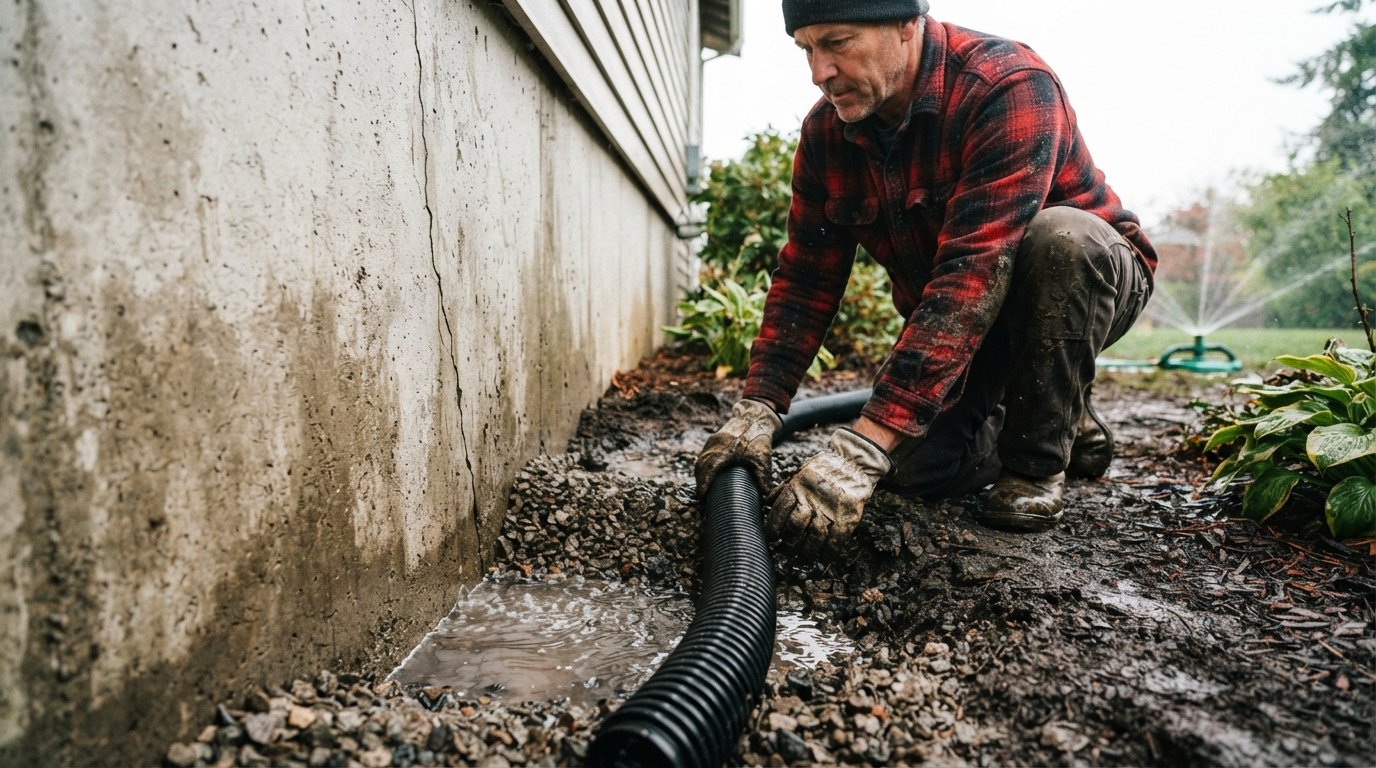
Stop Foundation Damage: Smart Yard Drainage Fixes
Learn how landscape drainage solutions to protect your home's foundation can prevent costly structural repairs and keep your family safe.

By Leo Cross
Learn more about Home Waterproofing for guides, costs, and what to expect.
Compare Home Waterproofing Pros Near You

Enter your ZIP code to compare top-rated local professionals and request free quotes.
Your home's foundation is its most critical structural element, yet many homeowners overlook the quiet threat lurking in their own yards. Poor drainage does not just create muddy patches or dying grass; it can lead to costly foundation cracks, bowing walls, and expensive structural repairs. In fact, the solution often lies not in the foundation itself, but in how water moves across your landscape. Implementing effective landscape drainage solutions to protect your home's foundation is one of the smartest investments you can make, potentially saving you thousands of dollars in future repairs. This guide walks you through the warning signs, the best drainage strategies, and how to implement them without breaking the bank.
Why Your Foundation Is at Risk from Water
Water is the primary enemy of any concrete or masonry foundation. When soil around your home becomes oversaturated, it expands and exerts tremendous hydrostatic pressure against your foundation walls. Over time, this pressure can cause cracking, bowing, and even shifting. Conversely, during dry spells, the same soil shrinks and pulls away, creating gaps that allow water to pool directly against the foundation when it rains. This cycle of swelling and shrinking is the leading cause of foundation settlement and structural damage in many regions.
Beyond the structural concerns, excess moisture in your soil creates a perfect environment for termites and other pests, and it can seep into your basement or crawl space, leading to mold growth and poor indoor air quality. The key is to manage water at the surface and below it, directing it away from your home before it can do any harm. This is not just about protecting your investment; it is about safeguarding your family's health and safety. A proactive approach to yard drainage is far more affordable than reactive foundation repair, which can cost anywhere from a few thousand to tens of thousands of dollars.
Common Signs Your Drainage Is Failing
Before you can fix a problem, you need to know it exists. Many homeowners ignore subtle clues until the damage becomes severe. Take a walk around your property after a heavy rain and look for these warning signs. Addressing them early can prevent a minor issue from becoming a major financial headache.
- Pooling water or persistent soggy spots in your yard, especially near the foundation.
- Cracks in your foundation walls or slab, which may be horizontal, vertical, or stair-step patterns.
- Doors or windows that begin to stick, indicating your foundation is shifting.
- Mold or mildew odor in your basement or crawl space.
- Gutters that overflow during rain, or downspouts that discharge water right next to the house.
If you notice any of these signs, you should act quickly. The longer you wait, the more extensive and expensive the damage becomes. Start with simple fixes like extending downspouts and re-grading the soil, but if the problem persists, you will likely need a more robust drainage system. Keep a record of where water tends to accumulate; this will help you and any contractor you hire determine the best solution.
Effective Landscape Drainage Solutions
There is no one-size-fits-all answer to yard drainage. The right solution depends on your soil type, the slope of your property, your local climate, and the specific areas where water accumulates. Here are the most effective and commonly used landscape drainage solutions to protect your home's foundation. A combination of these methods often yields the best results.
Proper Grading and Swales
The most fundamental and cost-effective solution is ensuring your yard has the correct slope. The ground around your foundation should slope away from the house at a rate of at least 6 inches over the first 10 feet. This simple grade prevents water from pooling against the walls. If your property is flat or slopes toward the house, you can create a swale, which is a shallow, vegetated ditch that redirects surface water to a safe discharge point, like a storm drain or a rain garden.
Grading is often the first step in any drainage project. It can be done by hand for small areas, but for larger properties, you may need to rent a bobcat or hire a professional. The key is to create a smooth, continuous slope without low spots that can trap water. If you are dealing with heavy clay soil, which drains poorly, you may need to amend the soil with compost or sand to improve percolation before you finish grading. This is a labor-intensive but essential task that sets the stage for all other drainage methods.
French Drains and Trench Drains
For subsurface water problems, a French drain is a time-tested solution. It is a trench filled with gravel and a perforated pipe that collects and redirects groundwater away from your foundation. The trench is typically lined with landscape fabric to prevent soil from clogging the gravel. Water enters the pipe through the perforations and flows downhill to an outlet, such as a daylight point on your property or a dry well.
French drains are excellent for areas where water tends to seep into basements or crawl spaces. They can be installed along the foundation footing or deeper to intercept groundwater before it reaches your home. Trench drains, on the other hand, are used to capture surface water from paved areas, like driveways or patios, before it flows toward the house. They are covered with a grate and connect to a pipe that carries the water away. Both systems require careful planning to ensure proper slope and outlet placement. While a DIY French drain is possible, hiring a professional can ensure it is done correctly, especially if you are dealing with high water tables or complex soil conditions.
Downspout Extensions and Rain Barrels
Often, the simplest fix is right above your head. Your gutters and downspouts are your first line of defense against roof water. If your downspouts discharge water directly at the base of your foundation, you are essentially directing a waterfall onto the most vulnerable part of your home. Installing downspout extensions that carry water at least 5 to 10 feet away from the foundation is a cheap and immediate fix. You can use rigid or flexible extensions, or even bury a pipe that connects to a French drain or daylight outlet.
Another eco-friendly option is to install rain barrels or cisterns to collect roof water. This not only reduces the volume of water hitting your foundation but also provides a free source of water for your garden. However, it is crucial to ensure that your rain barrels have an overflow system that directs excess water away from the house. A barrel that overflows right next to the foundation is worse than no barrel at all. If you have a large roof, consider channeling the water into an underground storage tank or a rain garden designed to handle the overflow. This method is both practical and sustainable, addressing drainage while conserving a valuable resource.
Choosing the Right Contractor and Solutions
While some drainage fixes are DIY-friendly, others require professional expertise. If you are dealing with significant foundation issues, complex grading problems, or a high water table, it is wise to consult with a professional. A qualified landscaping contractor or a foundation specialist can assess your property, identify the root cause of your drainage issues, and recommend a comprehensive solution. They will have the equipment and knowledge to handle large-scale excavation, install intricate drainage systems, and ensure everything is graded perfectly.
When looking for a contractor, it is essential to get multiple quotes and ask for references. Look for a professional who specializes in drainage and understands the local soil and climate conditions. They should be able to explain their proposed solution clearly and provide a detailed written estimate. You can find trusted local contractors through platforms like HomeRemodelingsContractors, which connects homeowners with vetted professionals for a variety of home improvement projects. Getting free estimates allows you to compare prices and approaches without any obligation, ensuring you get the best value for your investment. Remember, the cheapest quote is not always the best; prioritize experience and a clear plan.
Step-by-Step Plan to Implement a Drainage Solution
If you are ready to tackle this project, whether on your own or with professional help, a structured approach will save you time and money. Here is a step-by-step plan to guide you from initial assessment to final inspection.
- Assess and Map: Walk your property during and after a rainstorm. Note where water pools, where it flows, and where the low spots are. Sketch a rough map of your yard, including the house, downspouts, and existing drainage features.
- Identify the Outlet: Determine where you can legally and safely discharge water. Options include a storm drain, a dry well, a rain garden, or a point on your property that slopes away from the house. Never discharge water onto a neighbor's property or into a septic system.
- Start with Surface Fixes: Before digging, install downspout extensions and regrade any small areas that slope toward the house. This simple step may solve the problem without more complex systems.
- Choose Your System: Based on your assessment, decide whether you need a French drain, a swale, a trench drain, or a combination. For deep water issues, a French drain is usually the best choice. For surface runoff from a driveway, a trench drain is more appropriate.
- Excavate and Install: If you are DIYing, rent a trencher or use a shovel. Dig the trench with a consistent slope of about 1 inch per 8 feet. Lay the pipe, add gravel, and cover with landscape fabric and topsoil. If you are hiring a professional, they will handle this step.
- Test Your System: After installation, run a hose at the source of the problem and observe how the water flows. Make sure it exits at the designated outlet and does not pool anywhere along the path.
- Maintain and Monitor: Clean your gutters regularly, inspect your drains for clogs, and check your grading after heavy rains. Over time, soil can settle, so you may need to add more topsoil to maintain the proper slope.
Following this plan will help you avoid common pitfalls, such as poor slope or inadequate outlets, which are the most frequent reasons for drainage system failure. The goal is to create a system that works quietly and efficiently for decades, protecting your home's foundation and your peace of mind.
The Cost-Benefit of Investing in Drainage
Many homeowners hesitate to invest in landscape drainage because it does not have the visual appeal of a kitchen remodel or a new deck. However, it is one of the most financially prudent home improvements you can make. The average cost to install a French drain ranges from $2,500 to $6,500, while foundation repair can easily cost $10,000 or more. By proactively addressing drainage, you are avoiding much larger expenses down the road.
Moreover, good drainage improves the overall health of your landscape. It prevents soil erosion, keeps your basement dry, and reduces the chance of pest infestations. If you ever decide to sell your home, a property with a well-managed drainage system will be more attractive to buyers and will pass home inspections more easily. You can think of it as an insurance policy that pays dividends in the form of a safer, more durable home. For homeowners looking to manage their budget effectively, investing in drainage now, with the help of free estimates from local contractors, is a proactive step that prevents unexpected, costly surprises in the future.
Protecting your home's foundation is not a luxury; it is a necessity. By understanding the role of water in foundation damage and implementing the right drainage solutions, you are taking a critical step toward preserving the value and safety of your most significant asset. Whether you choose to tackle a simple grading project yourself or hire a professional to install a comprehensive drainage system, the effort you put in today will pay off for years to come. Do not wait for the first crack to appear; take action now to keep your home on solid ground.