
Smart Home Upgrades That Boost Resale Value
Discover the smart home upgrades that truly boost resale value, from smart thermostats to security systems, and plan your next project with confidence.

By Oliver Grant
Learn more about Smart Home Installation or Repair for guides, costs, and what to expect.
Compare Smart Home Installation or Repair Pros Near You

Enter your ZIP code to compare top-rated local professionals and request free quotes.
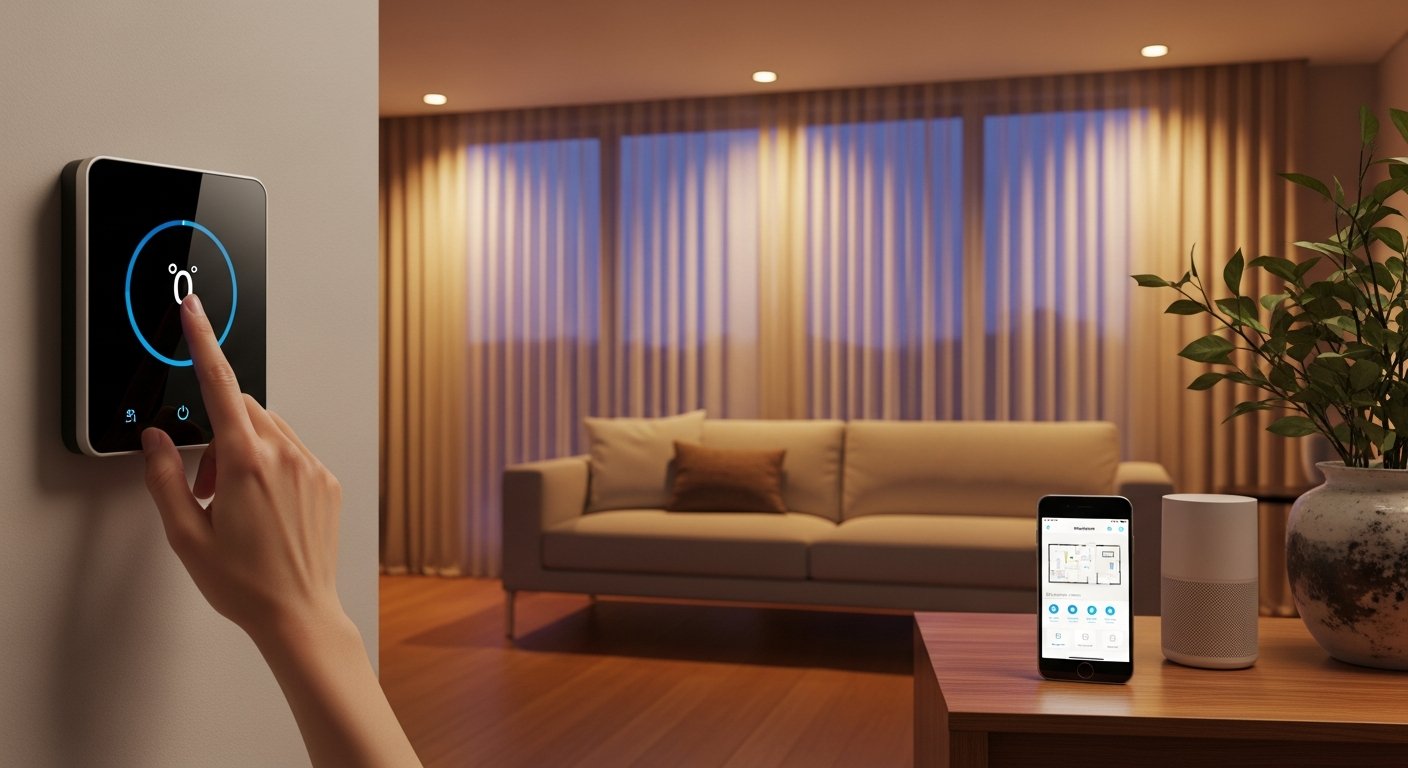
Imagine walking into your home after a long day, and the thermostat has already adjusted to your preferred temperature, the lights dim to a cozy glow, and your security system sends a quiet confirmation that everything is locked and safe. This is not science fiction. It is the reality of a modern smart home, and for homeowners in 2026, these upgrades are no longer just cool gadgets. They are strategic investments that can significantly increase your property's appeal, improve energy efficiency, and even boost its resale value. However, navigating the world of connected devices can feel overwhelming, especially when you are trying to balance cost, complexity, and actual return on investment. This guide will walk you through the smart home upgrades that genuinely matter, helping you make informed decisions that align with your budget and your long-term goals.
Before you start buying every connected gadget on the market, it is crucial to understand what adds value and what simply adds clutter. A smart home upgrade should simplify your life, enhance security, or reduce energy consumption. It should not create a complicated web of apps and devices that require a degree in computer science to operate. The goal is to create a cohesive ecosystem that works for you and appeals to future buyers. In this article, we will break down the most impactful upgrades, from entry-level options to more comprehensive systems, and provide you with a clear framework for planning your own smart home transformation.
Why Smart Home Upgrades Matter in 2026
The real estate market has evolved, and so have buyer expectations. A recent survey by the National Association of Realtors found that over 60% of home buyers are willing to pay more for a home with smart technology already installed. This is not just about convenience; it is about perceived value. Buyers see smart homes as modern, efficient, and secure, which translates to peace of mind and potential long-term savings on utility bills. For sellers, this means that strategic smart home upgrades can be a powerful differentiator in a competitive market, potentially leading to a faster sale and a higher final price.
But the benefits extend far beyond the day you hand over the keys. For you, the current homeowner, these upgrades offer immediate, tangible advantages. Smart thermostats can cut heating and cooling costs by up to 15%, smart lighting can reduce electricity usage, and smart security systems can lower your home insurance premiums, sometimes by up to 20%. These savings add up month after month, effectively paying for the initial investment over time. Moreover, a well-integrated smart home simplifies daily routines. Imagine being able to control your entire home with a single voice command or a simple app on your phone, whether you are on the couch or on vacation. This is the true value of a smart home: it gives you more control, more convenience, and more peace of mind.
Planning Your Smart Home Upgrade: Start with a Strategy
Diving into the world of smart home technology without a plan is a recipe for frustration and wasted money. The most successful smart home setups are built on a foundation of thoughtful planning. First, identify your primary goals. Are you looking to enhance security? Reduce energy bills? Add convenience to your daily routine? Or are you preparing your home for sale? Your answers will guide every subsequent decision, from which devices to prioritize to the overall complexity of the system.
Once you have defined your goals, it is time to consider the ecosystem. The two dominant players in the smart home space are Amazon Alexa and Google Home, with Apple HomeKit also holding a significant share. Choosing a primary ecosystem is important because it determines how your devices communicate with each other and how you control them. While many devices are compatible with multiple platforms, sticking to one primary ecosystem simplifies setup and ensures a more seamless experience. For example, if you are an Apple household, prioritizing HomeKit-compatible devices will allow you to control everything through the Home app and Siri. If you prefer Google, look for devices that work with Google Assistant. This initial choice will save you countless headaches down the road.
Another critical planning step is to conduct a home network assessment. Smart home devices rely heavily on your Wi-Fi network. If you have an older router or a large home with dead zones, your smart devices will be unreliable and frustrating. A strong, stable network is the backbone of any smart home. You may need to invest in a mesh Wi-Fi system to ensure consistent coverage throughout your property. This is not the most glamorous upgrade, but it is arguably the most important one. Without a solid network, even the best smart devices will fail to perform.
High-Impact Smart Home Upgrades You Should Consider
Now that you have a strategy in place, let's explore the specific upgrades that offer the best return on investment and the greatest improvement to your daily life. We have categorized them by their primary benefit to help you prioritize based on your goals.
1. Smart Thermostats: The Energy-Saving Champion
Smart thermostats are the undisputed king of smart home upgrades. They are relatively affordable, easy to install (though professional installation is recommended for HVAC compatibility), and they deliver immediate, measurable savings. Devices like the Google Nest Learning Thermostat or the ecobee SmartThermostat learn your schedule and preferences, automatically adjusting the temperature when you are asleep or away. This proactive management can reduce your heating and cooling bills by 10-15%, according to the U.S. Department of Energy. Beyond the cost savings, a smart thermostat offers unparalleled convenience. You can adjust your home's temperature from your phone, whether you are in bed or on your way home from work. Some models even work with room sensors to eliminate hot and cold spots, ensuring consistent comfort throughout your home.
When choosing a smart thermostat, consider your existing HVAC system. Most are compatible with standard systems, but it is always wise to check with a professional if you have a heat pump or a multi-stage system. Also, look for features like geofencing, which uses your phone's location to automatically adjust the temperature when you leave or approach home, and energy reports, which provide insights into your consumption patterns. A smart thermostat is a perfect first step into the smart home world because it is functional, cost-effective, and universally appreciated by future homebuyers.
2. Smart Security Systems: Peace of Mind and Lower Premiums
Home security is a top priority for most homeowners, and smart technology has revolutionized this space. Modern smart security systems go far beyond simple alarms. They include video doorbells, smart locks, motion sensors, and indoor and outdoor cameras, all of which you can monitor and control from your smartphone. The most popular entry point is the video doorbell, such as the Ring Video Doorbell or the Google Nest Doorbell. These devices allow you to see and speak with visitors from anywhere, providing a powerful deterrent against package theft and unwanted solicitors. They also capture video footage that can be invaluable in the event of a security incident.
For a more comprehensive approach, consider a full smart security system with a central hub, door and window sensors, and security cameras. These systems can be professionally monitored for a monthly fee, or you can opt for self-monitoring through your smartphone. Many insurance companies offer discounts of up to 20% on homeowners insurance for homes with smart security systems, which can significantly offset the initial cost. When planning your security setup, think about your home's vulnerabilities. Are there dark entry points? Do you have valuable items that need extra protection? A professional contractor can help you design a system that addresses your specific concerns and integrates seamlessly with your other smart devices. For example, you can set up automation so that your exterior lights turn on when a camera detects motion, or your smart lock locks automatically when you arm the system.
3. Smart Lighting: Ambiance and Efficiency
Smart lighting is one of the most versatile and affordable smart home upgrades. It allows you to control every light in your home from your phone or voice, set schedules, and create custom scenes for different moods and activities. For example, a “Movie Night” scene can dim the living room lights and turn on the bias lighting behind your TV, while a “Wake Up” scene can gradually brighten your bedroom lights to mimic a sunrise. This level of control not only enhances your daily life but also contributes to energy efficiency. Smart bulbs use LED technology, which is significantly more energy-efficient than incandescent bulbs. Additionally, the ability to turn off lights remotely means you will never have to worry about leaving them on when you leave the house.
Smart lighting also plays a crucial role in home security. You can set your lights to turn on and off at random intervals while you are on vacation, creating the illusion that someone is home. You can also integrate them with your security system so that if a motion sensor is triggered, the lights in that area will turn on, potentially scaring off a would-be intruder. The installation is straightforward: for most fixtures, you simply replace the bulb. For recessed lighting, you may need a compatible smart dimmer switch, which is a job best left to a licensed electrician. When planning your smart lighting, focus on high-traffic areas and entry points first, then expand to other rooms as your budget allows.
4. Smart Locks and Entry Systems: Convenience and Control
Smart locks are a simple yet transformative upgrade. They eliminate the need for physical keys, allowing you to lock and unlock your door with a keypad, a smartphone app, or your voice. This is incredibly convenient, especially when your hands are full of groceries or when you have guests arriving. You can create temporary access codes for house cleaners, dog walkers, or vacation rentals, and you will receive an alert every time someone enters your home. This provides a level of control and peace of mind that traditional locks simply cannot offer.
There are two main types of smart locks: those that replace the entire lock and those that replace just the interior deadbolt. Both are relatively easy to install with basic tools, but if you are not confident in your DIY skills, a professional locksmith or handyman can do it quickly. When choosing a smart lock, look for one that integrates with your chosen ecosystem and offers features like auto-lock, which locks the door automatically after a certain period, and a built-in alarm. The best smart locks are also durable and weather-resistant, ensuring they will function reliably for years to come. For the ultimate in convenience, you can integrate your smart lock with your smart thermostat and lighting, so when you unlock your door, the lights turn on and the temperature adjusts to your preferred setting.
5. Smart Home Hubs: The Central Command Center
As you add more smart devices, you will quickly realize the need for a central hub to control them all. A smart home hub, like the Amazon Echo Plus or the Google Nest Hub, acts as a bridge between your devices and your voice assistant. It allows you to create routines and automations that span multiple devices, such as a “Good Morning” routine that turns on the lights, starts the coffee maker, and adjusts the thermostat. While many devices can connect directly to your Wi-Fi, a hub can connect to devices that use other protocols, like Zigbee or Z-Wave, expanding your options and improving reliability.
A hub also provides a physical interface, often with a screen, that can display your security camera feeds, control your music, and show you a snapshot of your home’s status. Some hubs even have built-in speakers, serving a dual purpose as a smart speaker. When choosing a hub, consider the ecosystem you have committed to. If you are all-in on Alexa, an Echo Show is a natural choice. If you prefer Google, a Nest Hub Max is a strong option. The hub should be the center of your smart home, and it is worth investing in a quality model that will not become obsolete quickly.
Smart Home Upgrades on a Budget
You do not need to spend a fortune to enjoy the benefits of a smart home. There are many affordable upgrades that can make a big difference. Here are a few budget-friendly ideas:
- Smart Plugs: These small devices plug into your existing outlets and allow you to control anything that is plugged into them. Use them to turn off lamps, small appliances, or holiday lights remotely or on a schedule. They are the cheapest way to add smart functionality to your home.
- Smart Bulbs: As mentioned earlier, smart bulbs are a low-cost way to add control and ambiance to any room. They are particularly useful in fixtures that are hard to reach or in areas where you frequently forget to turn off the lights.
- Smart Power Strips: These are similar to smart plugs but offer multiple outlets, allowing you to control a group of devices simultaneously. This is perfect for a home office setup or a media center.
- Smart Sensors: Small sensors that detect motion, temperature, or door/window openings can be placed around your home to trigger automations. For example, a motion sensor can turn on a hallway light at night, or a door sensor can send an alert when a door is opened.
These budget-friendly options are an excellent way to start your smart home journey without a significant financial commitment. They are easy to install, require no professional help, and can be moved around as you experiment with different setups.
When to Hire a Professional for Smart Home Installation
While many smart home devices are designed for DIY installation, there are situations where it is wise to bring in a professional. Complex systems that require electrical wiring, such as hardwired security cameras, smart thermostats connected to multi-zone HVAC systems, or whole-home audio systems, should be installed by a licensed electrician or a professional smart home integrator. A professional can ensure that the wiring is correct and safe, that the devices are properly configured, and that they integrate seamlessly with your home’s existing infrastructure. This is especially important for older homes where the electrical system may not be up to current code.
Hiring a professional also guarantees that your new devices are set up correctly and that you are getting the most out of their features. They can help you design a system that meets your specific needs, recommend the best products for your budget, and provide training on how to use everything. While there is an upfront cost to professional installation, it often saves you money in the long run by preventing costly mistakes and ensuring that your system is reliable. When you are ready to undertake a major smart home project, use a platform like BuySellRemodel to find and vet experienced local contractors. You can request free estimates from multiple professionals, compare their proposals, and choose the one that best fits your needs and budget. This approach ensures that your smart home upgrade is done right, from the first wire to the final configuration.
Making Your Smart Home Upgrades Resale-Ready
If your primary motivation for upgrading is to increase your home’s resale value, you need to think like a buyer. Focus on the upgrades that are universally desired and that offer clear benefits. Smart thermostats, security systems, and doorbells are excellent choices because they are practical, easy to understand, and have a proven track record of appealing to a wide audience. Avoid highly customized or niche devices that might confuse or overwhelm a potential buyer. The goal is to create a smart home that feels intuitive and accessible, not a tech project that requires a manual.
Documentation is key. When it comes time to sell, provide the new owners with a clear guide to your smart home system. Include the make and model of each device, how to use the apps, and the login information for the primary accounts (or ensure that the devices are easily reset). This simple step can be a huge selling point. Also, make sure that all devices are in good working order and that the subscription services, such as professional monitoring, are either paid up or clearly explained. A smart home that is a headache to operate will not add value; it will be a liability. By keeping your system simple, reliable, and well-documented, you transform it into a compelling feature that can help your home sell faster and for a higher price.
In conclusion, smart home upgrades are a smart investment for any homeowner. They offer immediate benefits in terms of convenience, security, and energy savings, and they can significantly enhance your home’s resale value. By starting with a clear strategy, focusing on high-impact upgrades, and knowing when to call a professional, you can create a smart home that works for you and appeals to future buyers. Whether you are making a few small changes or undertaking a whole-home transformation, the key is to make deliberate choices that align with your goals and your budget.
Your home is your largest asset, and smart technology is a powerful tool to protect and enhance it. The journey to a smarter home begins with a single step. Take the time to plan, research your options, and consult with experienced professionals. With the right approach, you can enjoy the many benefits of a connected home and reap the rewards when it is time to sell. Start exploring your options today, and see how smart home upgrades can transform the way you live.
Learn more about Smart Home Installation or Repair for guides, costs, and what to expect.
Compare Smart Home Installation or Repair Pros Near You
Enter your ZIP code to compare top-rated local professionals and request free quotes.