
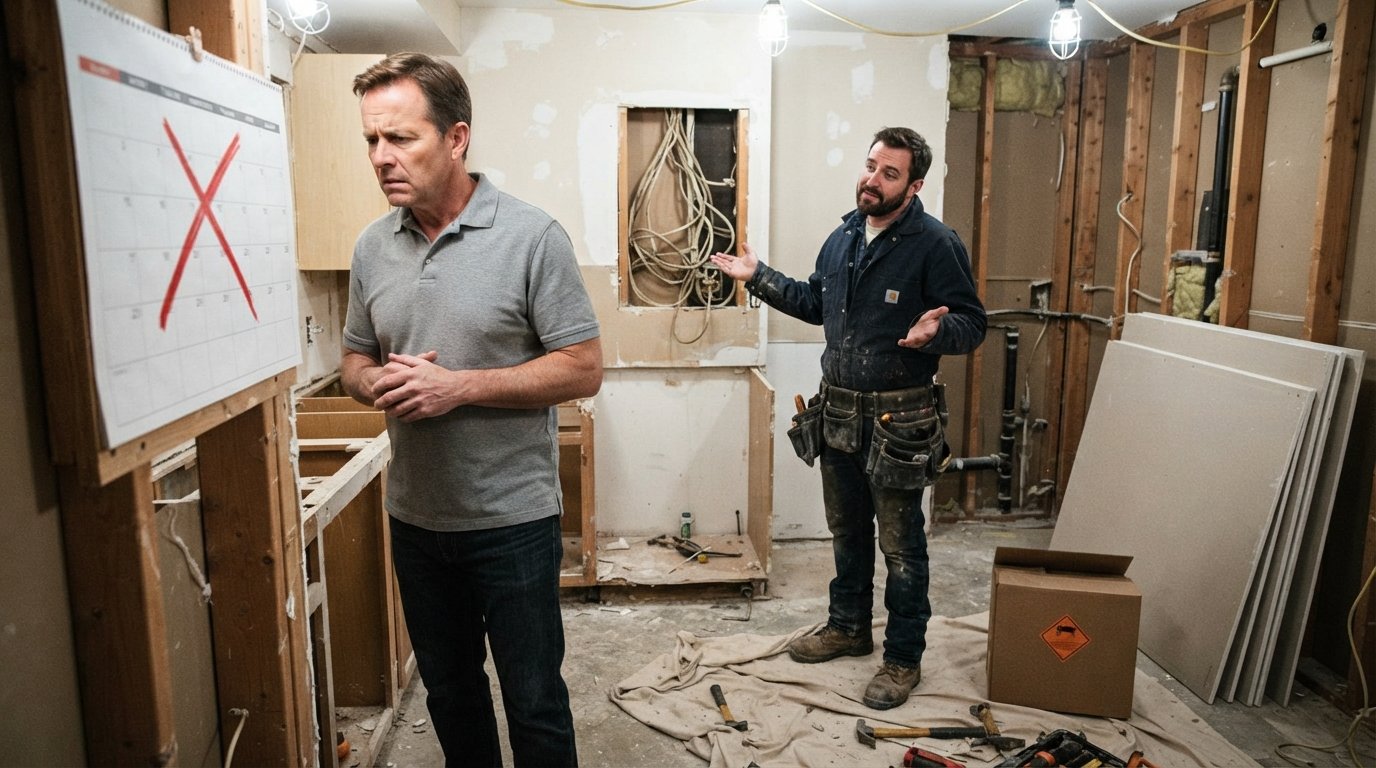
Renovation Delays: How to Handle Them Like a Pro
Practical strategies for handling unexpected home renovation delays, protecting your budget, and keeping your project on track without losing your cool.

By Liam Weston
Learn more about Home Remodeling for guides, costs, and what to expect.
Compare Home Remodeling Pros Near You

Enter your ZIP code to compare top-rated local professionals and request free quotes.
You planned the timeline, ordered the materials, and cleared your calendar. Then the demolition crew found rotted subflooring, the custom cabinets arrived with the wrong finish, and the city inspector flagged an outdated electrical panel. Suddenly, your six-week kitchen remodel looks like a four-month project. Unexpected home renovation delays are not a matter of if, but when. The difference between a stressful ordeal and a manageable setback often comes down to how you respond in the first 48 hours. This guide walks you through practical, proven strategies for navigating these disruptions without blowing your budget or your cool.
Why Most Renovation Delays Happen (And What They Cost You)
Understanding the root causes of delays helps you separate minor hiccups from major red flags. While every project is unique, most setbacks fall into one of three categories: discovery issues, supply chain problems, and contractor scheduling conflicts. Discovery issues surface when walls open up and reveal hidden problems like mold, outdated wiring, or structural damage. Supply chain delays have become increasingly common, with specialty items like windows, tile, and fixtures taking weeks longer than quoted. Contractor scheduling conflicts occur when your pro overbooks or a subcontractor fails to show up.
The financial impact of these delays extends beyond the obvious carrying costs. If you are paying for temporary housing or storage, every extra week adds up quickly. Material price fluctuations can also bite, especially if you locked in a quote that expires before installation begins. Perhaps most costly is the ripple effect on your daily life, as meals out, disrupted routines, and extended time away from normal family activities take their toll.
Reading the Warning Signs Early
Some delays announce themselves clearly, while others creep up silently. A contractor who stops returning calls promptly, a supplier who becomes vague about ship dates, or a subcontractor who keeps pushing back their start date are all early indicators. When you notice these patterns, address them immediately with a direct conversation. Ask specific questions about current status, expected completion dates, and any obstacles the team is facing. Document everything in writing, even if the initial conversation happens over the phone. A quick follow-up email summarizing what was discussed creates a paper trail that proves invaluable later.
Your Immediate Action Plan When Delays Hit
When you first learn about a significant delay, your instinct might be to panic or get angry. Instead, take a structured approach that protects your interests while maintaining a productive working relationship. The first 24 to 48 hours are critical for setting the tone and establishing your expectations.
Begin by requesting a revised timeline in writing. This should include the new completion date, the reason for the delay, and a plan for accelerating work where possible. Ask your contractor to identify which tasks can proceed in parallel to make up lost time. For example, if the custom tile shipment is delayed, can the team install the vanity and paint the walls in the meantime? Next, review your contract to understand your rights regarding delays. Many contracts include force majeure clauses or specific provisions about material backorders, but most do not penalize contractors for delays beyond their control.
Here is a practical checklist to guide your immediate response:
- Request a written revised schedule with specific dates for remaining milestones.
- Ask which parts of the project can proceed despite the delay and which are blocked.
- Confirm whether your contractor has alternate suppliers or substitute materials available.
- Review your contract for delay clauses, penalty provisions, or change order procedures.
- Check with your insurance agent to see if additional living expenses are covered.
After working through this list, schedule a follow-up meeting or call for 48 hours later. This gives your contractor time to investigate options and gives you time to process the situation. Approach this second conversation with solutions in mind rather than blame. A collaborative stance often yields better results than an adversarial one, especially when your contractor has some flexibility in how they allocate their crew and resources.
How to Handle Unexpected Home Renovation Delays Without Breaking Your Budget
Budget management becomes significantly more complex when timelines stretch. Your original cost estimate may no longer hold, especially if the delay involves storage fees, extended equipment rental, or price increases on materials. To handle unexpected home renovation delays financially, you need a clear picture of what the delay actually costs and which expenses you can control.
Start by separating delay costs into two buckets: those caused by the contractor and those outside everyone's control. If the delay stems from your contractor's error, such as ordering the wrong material or failing to pull a permit on time, you have legitimate grounds to request they absorb related costs like storage or extended rental fees. If the delay results from a nationwide lumber shortage or a manufacturer discontinuing a product line, those costs typically fall to you as the homeowner. Your contract should clarify who bears responsibility for each scenario.
Next, look for ways to minimize the financial damage. If you are paying for temporary housing, ask your contractor if they can prioritize the areas that would allow you to move back home sooner. For example, finishing the kitchen so you can cook again might be more valuable than completing a guest bathroom. Consider whether any work can be deferred to a later phase, freeing up budget to cover delay-related expenses. You might also negotiate with your contractor to apply unused labor hours toward additional upgrades once the project resumes, turning a frustrating pause into an opportunity for added value.
For homeowners managing their own project coordination, disciplined financial tracking becomes essential. Maintain a separate spreadsheet for delay-related costs, including every receipt for meals, storage, and incidental expenses. This documentation supports any insurance claims and provides leverage if you need to negotiate cost-sharing with your contractor. If you are working with a lending institution or using a home equity line, check whether your draw schedule allows for extended timelines without penalty.
Legal Rights, Contract Clauses, and When to Walk Away
Most renovation delays do not require legal action, but understanding your rights helps you negotiate from a position of strength. Standard construction contracts often include a clause about "time is of the essence," which means both parties agree that completing the work on schedule is a fundamental part of the agreement. If your contractor misses substantial deadlines without a valid reason, they may be in breach of contract. However, courts typically allow reasonable delays for unforeseen circumstances, so you need to distinguish between legitimate setbacks and poor performance.
Before considering legal action, review your contract for specific remedies. Some contracts include liquidated damages provisions, which specify a daily amount the contractor owes you for every day the project runs late. Others include dispute resolution procedures that require mediation or arbitration before litigation. Even without these clauses, you can often negotiate a resolution directly with your contractor. Offering to extend the deadline in exchange for a discount on the final invoice or a commitment to prioritize your project once materials arrive can resolve the situation faster than legal threats.
Walking away from a contractor mid-project is a drastic step that should be your last resort. Breaking a contract can trigger financial penalties, and finding a new contractor to take over a partially completed project is notoriously difficult. Many pros are reluctant to assume liability for someone else's workmanship. If you do decide to terminate the agreement, consult an attorney first to understand your exposure. Document all communications, take extensive photos of the work completed, and prepare a detailed list of what remains unfinished. This documentation becomes critical if you need to pursue reimbursement or defend against a lien claim from unpaid subcontractors or suppliers.
Communication Strategies That Keep Your Project Moving
Effective communication is your most powerful tool for managing delays. Homeowners who maintain clear, consistent, and professional communication with their contractors typically experience shorter delays and better outcomes. Establish a regular check-in cadence, whether that is a weekly status call or a daily text update. During these check-ins, ask for specific progress updates rather than vague assurances. Questions like "What tasks will be completed by Friday?" and "What obstacles are you currently facing?" yield more useful information than "How is it going?"
When communicating about delays, focus on facts rather than emotions. Instead of saying "I am so frustrated this is taking forever," try "I need to understand the revised timeline so I can adjust my schedule accordingly." This approach invites collaboration rather than defensiveness. If your contractor is waiting on a supplier, ask to be included on the communication with that supplier. Many homeowners find that a polite phone call to the manufacturer's customer service line can expedite a shipment that has been languishing in a queue.
Your relationship with your contractor is a partnership, and like any partnership, it requires honest, transparent dialogue to thrive. Be clear about your priorities, constraints, and expectations. If a delay threatens an important deadline, such as hosting a family gathering or moving into the home, communicate that urgency early. Contractors often juggle multiple projects and may prioritize based on client responsiveness and relationship quality. Being a communicative, engaged client can move your project up the list when schedules get tight.
Preparing Your Home and Family for Extended Timelines
Renovation delays affect more than your bank account; they disrupt your entire household. The psychological stress of living in a construction zone for weeks longer than expected can strain relationships and test your patience. Proactive preparation helps your family adapt to the extended timeline with less friction. Designate clear zones within your home that remain off-limits to construction, creating a sanctuary where you can escape the dust and noise. Establish routines that minimize disruption, such as setting up a temporary kitchen in a laundry room or garage if your main kitchen is out of commission.
Practical adjustments can also reduce the strain. If you are cooking with limited facilities, plan simple meals that require minimal preparation or invest in a slow cooker and microwave. If your bathroom is under renovation, create a schedule for using the remaining facilities to avoid morning traffic jams. Communicate the revised timeline to everyone in the household, including children, so they understand when normal life will resume. For families with young children or pets, consider whether a temporary relocation might be worth the cost for everyone's sanity.
Avoid making irreversible decisions based on temporary frustration. Selling the home mid-renovation, canceling the project entirely, or making drastic changes to the scope while emotions run high often lead to regret later. Instead, build flexibility into your expectations. Add a buffer of two to four weeks to any timeline your contractor provides, treating the official schedule as optimistic rather than guaranteed. This mental adjustment reduces stress when delays occur and leaves you pleasantly surprised when the project finishes on time.
Insurance, Claims, and Getting Help When You Need It
When renovation delays stem from events like water damage, fire, or vandalism discovered during construction, your homeowner's insurance policy may provide coverage. Many policies include provisions for additional living expenses (ALE), which reimburse you for hotel stays, restaurant meals, and other costs incurred when your home becomes uninhabitable. Review your policy carefully to understand your coverage limits and any time restrictions on claims.
Filing a claim requires thorough documentation. Photograph the damage that caused the delay, keep all receipts for temporary housing and meals, and maintain a journal of how the delay has impacted your daily life. Submit your claim promptly, as most policies have strict deadlines. If your claim is denied, you have the right to appeal, and consulting a public adjuster may help you navigate the process.
Sometimes, the best help comes from professional guidance. A construction attorney can review your contract and advise on your rights. A project manager or owner's representative can oversee your contractor and ensure the work proceeds efficiently. Even a trusted friend or family member with construction experience can provide valuable perspective when you feel overwhelmed. For general guidance on keeping your project on track from the very beginning, our comprehensive guide on planning a complete home renovation offers strategies for avoiding pitfalls before they occur.
If you are struggling to find a reliable contractor for future phases of your project, platforms like HomeRemodelingsContractors connect homeowners with vetted local professionals who understand the importance of clear timelines and honest communication. Getting a second opinion on your revised schedule or a fresh estimate for remaining work can provide peace of mind and a benchmark for evaluating your current contractor's performance.
Turning Setbacks into a Better Outcome
Every renovation delay, no matter how frustrating, offers an opportunity to improve your project. When you receive extra time, use it wisely. Research the remaining decisions more thoroughly, compare alternative materials, or add details you previously cut from the budget. Many homeowners report that their final results improved because a delay gave them time to reconsider design choices they had rushed earlier.
Delays also reveal the true character of your contractor. A professional who communicates honestly, protects your interests, and works diligently to minimize the impact of setbacks is worth keeping, even if the timeline slipped. Conversely, a contractor who goes silent, blames everyone else, or cuts corners to make up time may warrant a serious conversation about the future of your relationship. Trust your instincts, but verify your concerns with evidence before making any major decisions.
As your project finally approaches completion, take time to reflect on what you learned. Document the lessons that will help you in future projects, whether that means building a larger contingency fund, insisting on more detailed contracts, or simply setting more realistic expectations. With the right mindset and strategies, you can handle unexpected home renovation delays while protecting your budget, your home, and your peace of mind.