
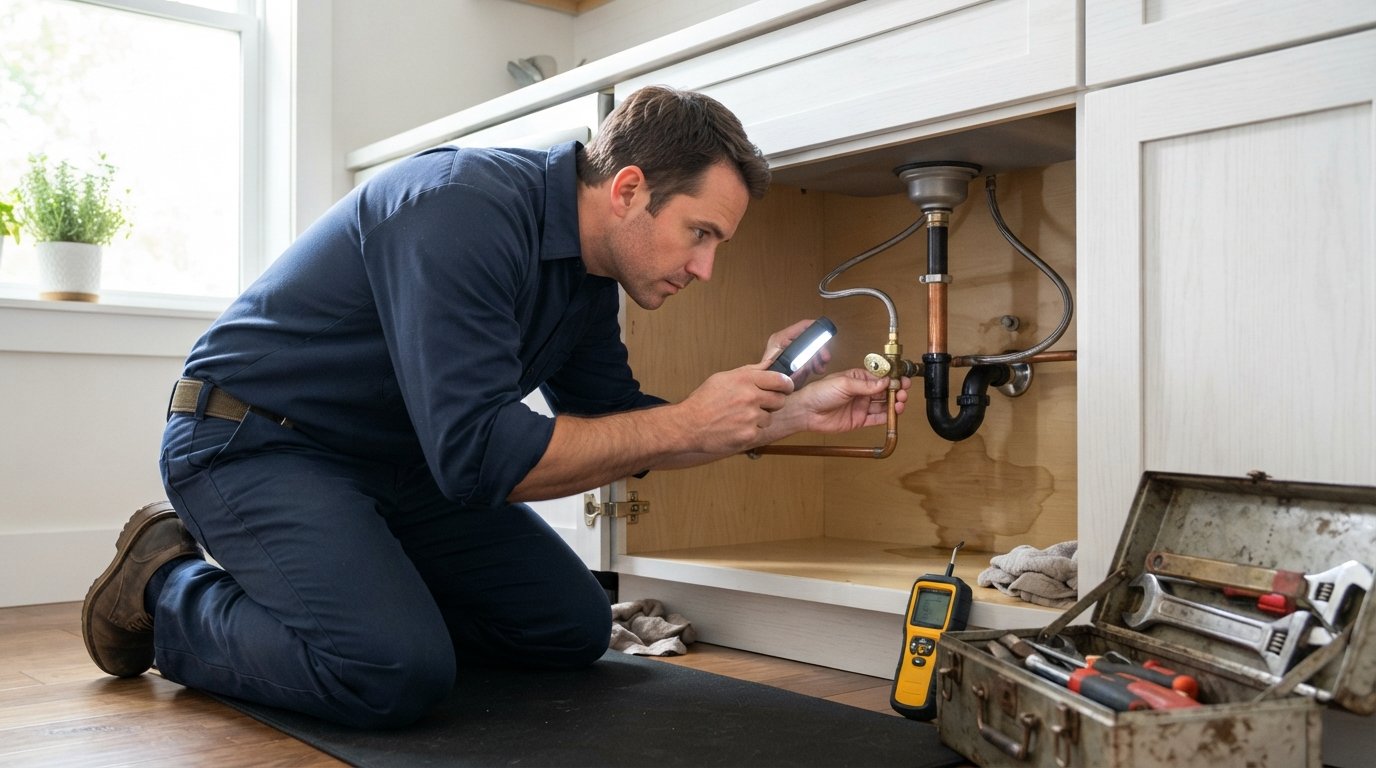
Preventative Plumbing Maintenance to Avoid Costly Leaks
Preventative plumbing maintenance to avoid costly leaks starts with seasonal checks and early warning signs. Call (833)-365-8755 to find a trusted local pro.

By Liam Weston
Learn more about Plumbing Inspection for guides, costs, and what to expect.
Compare Plumbing Inspection Pros Near You

Enter your ZIP code to compare top-rated local professionals and request free quotes.
Your home's plumbing system is a lot like your car: it runs quietly in the background until something breaks, and by then, the repair bill can be staggering. A single hidden leak can rot framing, spawn mold, and send your water bill soaring, often costing thousands before you even notice a problem. The good news is that most catastrophic plumbing failures announce themselves months in advance through small, easy-to-miss clues. With a disciplined approach to preventative plumbing maintenance to avoid costly leaks, you can catch those clues early, protect your home's value, and keep emergency plumbers off your speed dial.
This guide walks you through a practical, season-by-season maintenance routine that any homeowner can follow. You will learn which checks actually matter, how to winterize vulnerable pipes and hose bibs, which warning signs demand immediate attention, and where the line sits between a quick DIY fix and a call to a licensed professional. Along the way, we will point out how connecting with the right local experts through HomeRemodelingsContractors.com can simplify everything from free estimates to scheduling annual inspections.
Why Preventative Plumbing Maintenance Pays for Itself
Water damage is one of the most expensive categories of home insurance claims, and insurers increasingly scrutinize whether homeowners have performed routine maintenance. A slow drip under a sink can waste thousands of gallons per year and quietly soften cabinetry. A pinhole leak in a supply line behind a wall can spray inside the cavity for weeks before a stain appears on the drywall. By the time visible symptoms show up, the hidden damage is usually far more expensive than the leak itself.
Preventative maintenance flips that equation. A one-hour inspection each season costs little more than your time, and it routinely catches worn supply hoses, corroded fittings, failing shutoff valves, and early signs of water line trouble. Homeowners who document their maintenance routine also put themselves in a stronger position when filing claims, because they can show a pattern of responsible care. Perhaps most importantly, routine checks give you leverage: you choose when to replace a worn part instead of paying emergency rates on a holiday weekend.
Think of preventative plumbing maintenance to avoid costly leaks as an insurance policy you actually control. The steps below are not complicated, but they need to be consistent. A single annual glance under the sinks is not enough; water systems change with the seasons, and each season stresses your pipes in different ways.
Seasonal Plumbing Checks That Catch Small Leaks Early
Plumbing problems do not follow a calendar, but they do follow temperature and usage patterns. Building a seasonal routine around those patterns means you are checking the right components at the right time, before small issues have a chance to grow into water line repairs or slab leaks.
Spring: Inspect for Winter Damage
Spring is damage-assessment season. As temperatures rise, any freeze-related cracks or loosened fittings from winter reveal themselves. Walk the perimeter of your home and check outdoor hose bibs for drips or cracks, then look at the water meter with every fixture off to confirm nothing is running. Inside, inspect under every sink and around the water heater for moisture, rust, or mineral crust, which often signals a slow leak. Flush the water heater to remove sediment, test sump pumps if you have them, and check that your irrigation system did not suffer frost damage.
Summer: Watch for High-Demand Stress
Summer puts maximum demand on supply lines, outdoor spigots, and irrigation. High water pressure is a silent killer of pipes and appliances, so attach an inexpensive pressure gauge to an outdoor spigot and confirm your home sits between 40 and 60 psi. Anything above 80 psi deserves a call to a professional, since a pressure-reducing valve may be failing. Check washing machine hoses for bulges, inspect the supply lines to the refrigerator and dishwasher, and look for damp spots in the yard that could indicate a buried line leak feeding the irrigation system.
Fall: Prepare the System for Cold
Fall is your last chance to prevent freeze damage. Disconnect garden hoses, shut off and drain outdoor spigots, and insulate any exposed pipes in the garage, crawlspace, or attic. Locate your main water shutoff valve and test that it actually turns, because a valve that has seized open is useless in an emergency. Drain and store hoses, blow out irrigation lines if your climate freezes, and have the heating system serviced before the first cold snap, since warm air keeps interior pipes safer.
Winter: Monitor and Protect
During freezing months, keep cabinet doors open under sinks on exterior walls so warm air reaches the pipes, and let a pencil-thin stream drip from the farthest faucet during hard freezes. Know where your shutoff is, and check it again after any deep freeze. If you leave town, do not set the thermostat below 55 degrees Fahrenheit, and ask a neighbor to check the house. A frozen pipe that bursts can release hundreds of gallons per hour, so prevention during this window is the highest-value maintenance you can do all year.
Winter Freeze Precautions for Pipes, Hose Bibs, and Exposed Lines
Freezing is the single most common cause of sudden, catastrophic plumbing damage in cold climates, and it is almost entirely preventable. Water expands as it freezes, and that expansion splits copper, PEX, and even cast iron. The burst itself is not the worst part: the flood happens when the ice thaws and water escapes through the crack, often while you are at work or asleep.
Start with identification. Walk your home and list every pipe that runs through an unheated space: the garage ceiling, the crawlspace, the attic, exterior walls, and any uninsulated basement. These are your priority zones. Fit them with foam pipe insulation, which is cheap and easy to install, and seal drafts around penetrations where cold air enters. For hose bibs, install frost-free sillcocks or use an interior shutoff valve to drain the line before winter. Exposed lines in crawlspaces benefit from heat tape, but only when installed according to the manufacturer's instructions and plugged into a GFCI-protected outlet.
If you suspect a pipe has frozen, never use an open flame to thaw it. Use a hair dryer, a space heater kept at a safe distance, or warm towels, and keep the faucet open so melting water can escape. If you cannot locate the frozen section or the pipe has already split, shut off the main valve and call a licensed plumber. For homeowners planning larger upgrades, such as rerouting supply lines during a remodel, it is worth reviewing common permit mistakes to avoid on home improvement jobs so that plumbing changes are properly inspected and documented.
One often-overlooked precaution is the water heater. If it sits in an unheated garage, insulate the tank and the first few feet of both the hot and cold lines. A frozen line feeding the heater can starve the unit and cause a pressure buildup. Similarly, if you have a vacation property, install a smart water leak detector and a automatic shutoff valve. These devices pay for themselves the first time they stop a flood while you are hundreds of miles away.
Early Warning Signs of a Failing Water Line or Hidden Leak
Hidden leaks rarely appear without warning. The challenge is that the warnings are subtle and easy to dismiss. Training yourself to recognize them is a core part of preventative plumbing maintenance to avoid costly leaks, because early detection is what separates a fifty-dollar fix from a five-thousand-dollar water line repair.
Watch for these signals and act on them promptly:
- Unexplained water bill spikes: A sudden increase with no change in usage almost always points to a leak, often a running toilet or a hidden supply line.
- Damp or discolored spots: Stains on ceilings, bubbling paint, or soft drywall indicate moisture behind the surface.
- Musty odors or mold: Persistent smells in a basement, crawlspace, or cabinet suggest long-term dampness.
- Sound of running water when everything is off: A faint hiss or trickle can mean a pipe is leaking inside a wall or under a slab.
- Warm spots on the floor: A hot spot under tile can indicate a slab leak in a hot water line.
You can confirm a hidden leak with a simple meter test. Turn off every fixture and appliance that uses water, including the ice maker and irrigation system, then watch your water meter for fifteen minutes. If the dial moves, water is flowing somewhere it should not. For a more precise check, note the reading before and after a two-hour period with no water use. Any movement warrants a professional inspection, especially if you cannot trace it to a toilet flapper or a dripping faucet.
Another reliable signal is a drop in water pressure at multiple fixtures. A failing main line or a corroded galvanized pipe often restricts flow before it fails completely. If pressure is fine at one tap but weak at another, the problem is likely local; if it is weak everywhere, the issue may be at the meter, the main line, or the pressure regulator. A licensed plumber can perform a camera inspection or pressure test to pinpoint the cause without tearing into walls unnecessarily.
DIY Fixes Versus Calling a Licensed Professional
Not every plumbing task requires a pro, and knowing the difference protects both your budget and your home. Simple maintenance items are well within reach for most homeowners, while anything involving supply lines inside walls, gas, sewer, or main water lines should be handled by a licensed plumber. The rule of thumb is straightforward: if the fix involves a fixture you can see and reach, it is often DIY; if it involves the system behind the walls or under the slab, call a professional.
These tasks are generally safe and sensible DIY projects:
- Replacing worn washing machine and dishwasher supply hoses with braided stainless steel versions.
- Testing and replacing toilet flappers and fill valves to stop silent leaks.
- Cleaning aerators and showerheads to restore flow and remove mineral buildup.
- Insulating exposed pipes in crawlspaces and garages.
- Testing the main shutoff valve and labeling it clearly for emergencies.
Call a licensed plumber for anything involving a leak you cannot see, a water heater that is leaking or failing, low water pressure throughout the house, sewer odors or backups, gas line work, and any repair that requires opening a wall or breaking concrete. The same applies if you are planning a remodel that moves plumbing fixtures; a professional can confirm code compliance and coordinate inspections. If you are unsure how to find a qualified pro, resources like HomeRemodelingsContractors.com help homeowners compare local contractors and request free estimates, which takes the guesswork out of hiring.
One final note on cost: a professional inspection every year or two typically costs far less than a single emergency repair, and many plumbers offer maintenance plans that include priority scheduling. That kind of plan is especially valuable in older homes with galvanized or polybutylene piping, where failures are more a question of when than if.
Preventative plumbing maintenance to avoid costly leaks is not glamorous work, but it is among the highest-return habits a homeowner can build. A few hours each season, a handful of inexpensive parts, and a willingness to act on early warning signs will protect your home, your budget, and your peace of mind for years to come.