
Kitchen Cabinet Refacing vs Replacing: Cost and Results
Compare kitchen cabinet refacing vs replacing cost and results. Call (833)-365-8755 for free estimates and expert advice on your remodel.

By Zoe Harper
Learn more about Cabinet Refinishing and Repair for guides, costs, and what to expect.
Compare Cabinet Refinishing and Repair Pros Near You

Enter your ZIP code to compare top-rated local professionals and request free quotes.
Your kitchen cabinets take up a huge share of your remodeling budget, often as much as 40 percent. So when they start looking tired, the decision between refacing and replacing can feel overwhelming. You want a kitchen that looks fresh and functions well, but you also do not want to overspend. The good news is that both options can deliver impressive results, and the right choice depends on your budget, your timeline, and the condition of your existing cabinet boxes. In this guide, we will break down the kitchen cabinet refacing vs replacing cost and results so you can make a confident, informed decision for your home.
What Cabinet Refacing Actually Involves
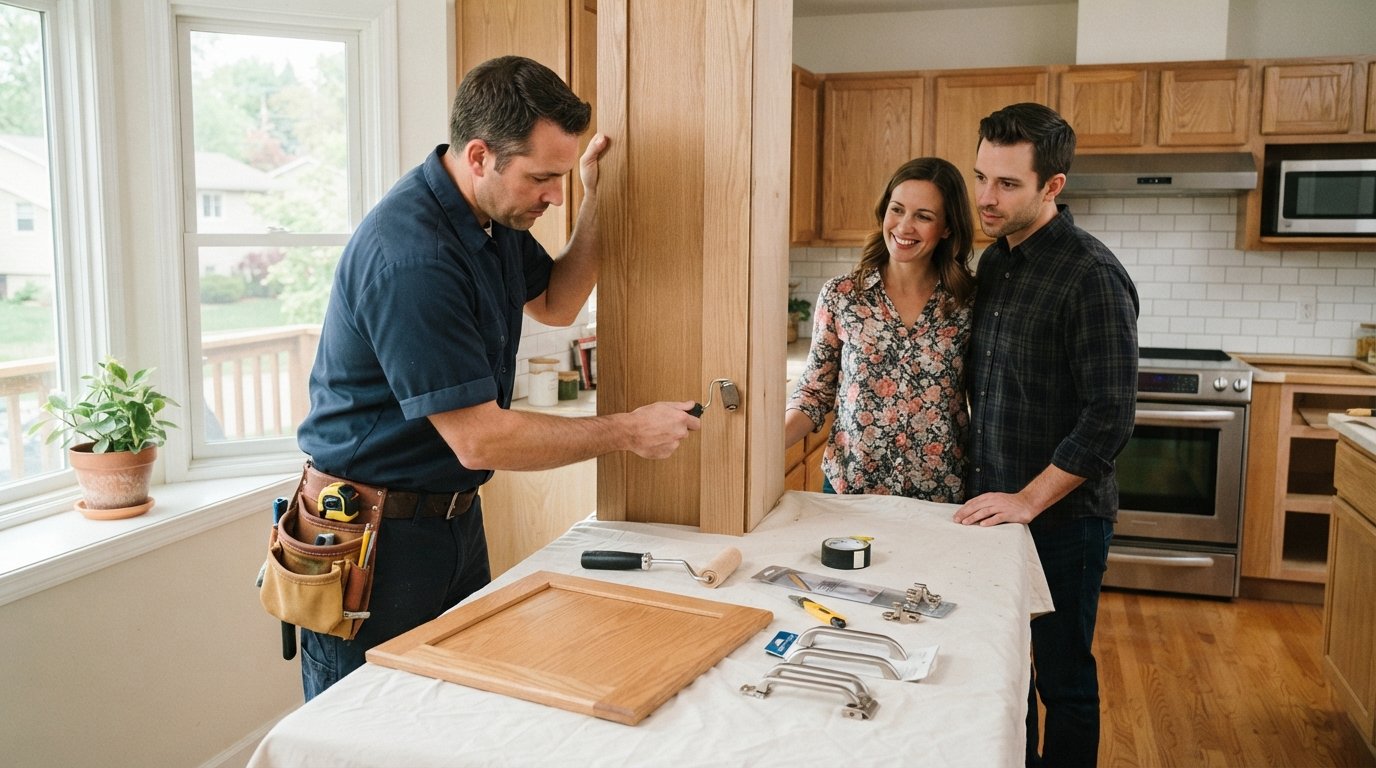
Refacing is often described as a facelift for your cabinets. Instead of tearing out the entire cabinet structure, a professional removes the existing doors and drawer fronts and covers the visible face frames with a thin veneer or rigid laminate. New doors and drawer fronts are then installed, along with new hardware such as knobs, pulls, and hinges. The cabinet boxes themselves stay in place, which means your kitchen layout, sink location, and appliance openings remain unchanged.
The materials used for refacing typically include real wood veneer, rigid thermofoil, or laminate. Real wood veneer offers the most natural look and can be stained or painted to match your desired finish. Rigid thermofoil and laminate are more affordable and come in a wide range of colors and patterns, including realistic wood grains. Because refacing only touches the visible surfaces, it is a much less invasive process than a full replacement.
It is important to understand what refacing does not cover. The interior of your cabinets, the shelves, and the cabinet boxes themselves are not replaced. If your boxes have water damage, warping, or structural issues, refacing alone will not solve those problems. For a deeper dive into cabinet materials and how they affect your remodel budget, see our guide on kitchen cabinets cost and materials.
Cost Comparison: Refacing, Painting, and Full Replacement
Cost is usually the number one factor driving the refacing versus replacing debate. According to national remodeling data, refacing typically costs between $4,000 and $9,000 for an average-sized kitchen, while a full cabinet replacement can run from $12,000 to $30,000 or more. Painting existing cabinets is the cheapest option, often falling between $1,500 and $4,000, but it does not change the door style or add new hardware unless you pay extra.
Here is a quick breakdown of the typical cost ranges for a standard 20-linear-foot kitchen:
- Painting: $1,500 to $4,000, depending on prep work and number of coats.
- Refacing: $4,000 to $9,000, including new doors, veneer, and hardware.
- Full replacement: $12,000 to $30,000+, varying by material (stock, semi-custom, or custom) and installation complexity.
These numbers are national averages and can vary significantly by region, cabinet size, and material choice. For example, refacing with real wood veneer costs more than laminate, and full replacement with custom cabinetry can easily exceed $40,000 in high-cost markets. The cost gap is clear: refacing generally saves you 50 to 70 percent compared to replacement. That savings can be redirected toward new countertops, a tile backsplash, or upgraded appliances, which can dramatically change the look of your kitchen without the hefty price tag of new cabinets.
It is also worth noting that refacing often includes new hardware, which can instantly modernize the feel of your kitchen. If you are handy, you might consider painting as a DIY project, but refacing is best left to professionals because it requires precise measurements and a flawless finish. For homeowners who want a turnkey solution, hiring a local contractor through a platform like HomeRemodelingsContractors can simplify the process and help you get free estimates from vetted pros.
How Cabinet Box Condition Determines Viability
Before you decide between refacing and replacing, you need to assess the condition of your existing cabinet boxes. Refacing is only a viable option if the boxes are structurally sound, level, and free of major damage. Here are the key things to check:
- Water damage: Look for soft spots, swelling, or discoloration under the sink or near the dishwasher. If the particle board or plywood has swollen, refacing will not fix it.
- Structural integrity: Open and close doors and drawers. Do the hinges hold? Are the shelves sagging? Are the boxes square and firmly attached to the wall?
- Pest damage: Termites or carpenter ants can hollow out wood, making boxes unsafe to reuse.
- Layout satisfaction: If you want to change the kitchen layout, add an island, or relocate the sink, refacing is not the right choice because it keeps the existing configuration.
If your boxes pass inspection, refacing can be a smart, cost-effective upgrade. If they fail, replacement is the safer investment. In some cases, you can replace only the damaged boxes and reface the rest, but this hybrid approach can complicate the project and may not save as much as you expect. A professional contractor can help you evaluate the condition and recommend the best path forward.
Timeline and Kitchen Downtime
Another major difference between refacing and replacing is the timeline and how long your kitchen will be out of commission. Refacing is typically a two-to-four-day project. On day one, the crew removes doors and drawer fronts and preps the surfaces. By day two, they apply the veneer or laminate to the face frames. On day three, they install the new doors, drawer fronts, and hardware. You can usually use your kitchen in the evenings, although the contents of your cabinets will be temporarily inaccessible while the work is happening.
Full cabinet replacement, on the other hand, can take two to six weeks or more, depending on the availability of materials and the complexity of the installation. During that time, your kitchen is essentially unusable. You will need to empty all cabinets, disconnect plumbing and appliances, and possibly set up a temporary kitchen elsewhere. The demolition phase alone can create dust and noise that disrupts your entire home. If you have a busy family or work from home, that downtime can be a significant drawback.
For homeowners who need a fast turnaround, refacing is the clear winner. It minimizes disruption and lets you enjoy your updated kitchen almost immediately. Replacement, while more disruptive, gives you the opportunity to reconfigure the space and choose completely new cabinetry with modern features like soft-close drawers and pull-out shelves.
Durability and Resale Value: Which Holds Up Better?
When it comes to durability, both refaced and replaced cabinets can last for decades if installed correctly and maintained well. Refaced cabinets are essentially new on the outside, but the boxes remain the same age as your home. If the boxes were built with solid plywood and are in good shape, a refaced kitchen can easily last 15 to 20 years. However, if the boxes are older particle board, they may start to fail sooner, especially in humid areas.
Full replacement gives you brand-new everything: boxes, doors, drawers, and hardware. You can choose high-quality materials like plywood boxes and solid wood doors that will stand up to daily use for 30 years or more. That said, the upfront cost is much higher, and you may not recoup the full investment at resale. According to real estate experts, minor kitchen remodels (which often include refacing) typically return about 70 to 80 percent of their cost at resale, while major upscale remodels return closer to 50 to 60 percent.
If you are planning to sell your home in the next few years, refacing can be a smart way to boost your kitchen's appeal without over-improving for the neighborhood. Buyers appreciate a fresh, modern look, and refacing delivers that at a fraction of the cost. If you plan to stay in your home for many years and want a completely custom kitchen, replacement may be worth the investment. Ultimately, the best choice depends on your long-term plans and how much you value a complete overhaul versus a cosmetic refresh.
Making the Right Choice for Your Kitchen
Deciding between refacing and replacing comes down to three key questions: What is the condition of your cabinet boxes? How much can you afford to spend? And how long do you plan to stay in your home? If your boxes are solid and your layout works for you, refacing offers an excellent return on investment and a quick, low-stress transformation. If your boxes are damaged or you want a new layout, replacement is the better long-term solution.
Whichever route you choose, getting multiple estimates from qualified professionals is essential. A reputable contractor can inspect your cabinets, explain your options, and provide a detailed quote so you can compare costs and results. With the right information and the right pro, you can create a kitchen you love without breaking your budget.