
DIY vs Pro for Kitchen Cabinet Refacing: Which Wins?
Compare DIY vs pro for kitchen cabinet refacing: costs, skill, time, and durability. See which approach delivers the best result for your home.

By Zoe Harper
Learn more about Cabinet Refinishing and Repair for guides, costs, and what to expect.
Compare Cabinet Refinishing and Repair Pros Near You

Enter your ZIP code to compare top-rated local professionals and request free quotes.
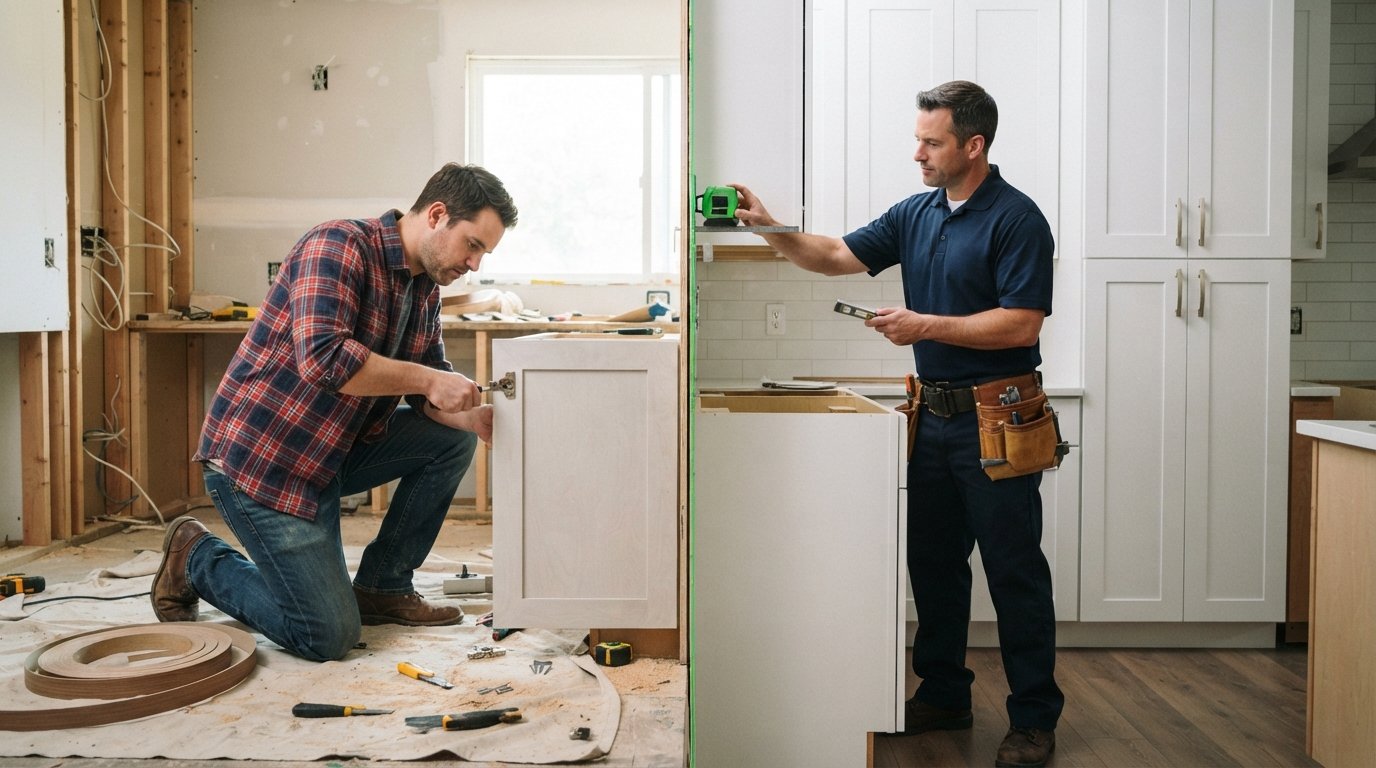
Kitchen cabinet refacing is one of the smartest ways to transform your kitchen without the cost and disruption of a full remodel. But once you decide to reface, a bigger question appears: should you do it yourself or hire a professional? The choice between DIY vs pro for kitchen cabinet refacing is not just about skill. It affects your budget, your timeline, and the final look of your most-used room.
Many homeowners start with a DIY mindset, drawn by videos that make refacing look simple. Others quickly realize that a pro brings precision, speed, and warranties that DIY cannot match. This article breaks down the real differences, costs, risks, and results so you can choose the path that fits your home and your confidence level.
What Kitchen Cabinet Refacing Actually Involves
Refacing replaces the visible surfaces of your cabinets while keeping the existing box structure. This includes new doors, drawer fronts, veneers or laminate for the frame, and updated hardware. It is not the same as repainting, which is simpler, and it is not the same as full replacement, which is far more expensive.
The process requires careful measuring, removing old doors and hardware, applying new veneer to the cabinet frames, installing new doors, and adjusting hinges and drawer slides. Each step demands precision. A 1/8-inch mistake in measuring can ruin a door fit. Veneer application requires clean cuts and bubble-free adhesion. Hinges must align perfectly for doors to close evenly.
Because of this complexity, the DIY vs pro for kitchen cabinet refacing decision often comes down to how comfortable you are with detailed, unforgiving work. If you have experience with woodworking or finish carpentry, DIY is feasible. If not, the learning curve can be steep.
Cost Comparison: DIY vs Pro for Kitchen Cabinet Refacing
Cost is the first thing most homeowners compare. A professional refacing project typically runs between $4,500 and $10,000 for an average 10-by-10-foot kitchen. That price includes materials, labor, and disposal of old parts. High-end materials or custom door styles can push the total higher.
DIY costs are lower at first glance. You will pay for new doors, veneer, adhesive, primer, paint or laminate, hardware, and tools. If you already own quality tools, expect to spend $1,500 to $4,000 for materials. If you need to buy tools like a router, clamps, or a heat gun, add another $300 to $700.
But DIY has hidden costs that many people miss. Mistakes require buying replacement materials. If you damage a cabinet frame, you may need to call a pro anyway. Your time also has value. A professional crew finishes in two to four days. A DIY project often takes two to four weekends, and that does not include the time spent planning and shopping.
Here is a quick cost breakdown for a typical 10-by-10-foot kitchen:
- Professional refacing: $4,500 to $10,000 installed, including warranty
- DIY materials only: $1,500 to $4,000, not including tools
- DIY tools (if needed): $300 to $700 extra
- Mistake buffer (recommended): 10% to 20% of material cost for reorders or repairs
When you add up all the numbers, the savings from DIY shrink significantly. The real question is whether you are willing to trade your time and risk for that remaining difference. For many, the peace of mind from a professional installation is worth the extra cost. For others, the savings are meaningful enough to justify the effort.
Skill and Precision: The Core of the DIY vs Pro Debate
Cabinet refacing is finish work. It lives or dies by precision. When you open a cabinet door, the eye catches the seam where the veneer meets the frame. If that seam is uneven, it will be visible every day. Professionals train for years to make those seams invisible. They use industrial-grade tools and have the experience to handle uneven walls, out-of-square cabinets, and tricky corners.
DIY refacing kits have improved, but they still require careful attention. Self-adhesive veneer is easier than traditional wood veneer, but it still bubbles if not applied with pressure and heat. Cutting veneer to fit around hinges and edges takes a steady hand. If your kitchen has unusual angles or older cabinets that are not perfectly square, the difficulty level rises quickly.
Ask yourself a few honest questions before choosing DIY:
- Have you successfully completed similar finish work, like installing trim or building furniture?
- Do you own a table saw, router, clamps, and a heat gun, or are you willing to rent them?
- Are your cabinets in good structural shape with flat, undamaged frames?
- Can you handle the stress of redoing a section that did not come out right?
If you answered no to any of these, a pro will likely deliver a better result. Professionals also bring specialized tools like panel routers and vacuum presses, which are not practical for a one-time DIY project. They know which adhesive works best for your cabinet material, whether it is particleboard, plywood, or solid wood.
Time and Disruption: What Is Your Kitchen Worth?
Your kitchen is one of the busiest rooms in your home. During a refacing project, you lose access to your cabinets and countertops. A professional team works around your schedule, often finishing in two to four days. They handle the mess, the disposal, and the cleanup. You are without full kitchen function for less than a week.
DIY stretches that disruption over weeks. Most people work evenings and weekends, meaning your kitchen is in various states of disassembly for a month or more. Every meal becomes a negotiation with half-finished cabinets and stored dishes. If you have a family, this can wear on everyone.
Your time also matters beyond the kitchen. Professional refacers are efficient because they do this every day. They know the fastest way to remove old hinges, apply veneer, and hang doors. A DIYer who is learning as they go will spend hours watching tutorials, making trips to the hardware store, and correcting mistakes.
Consider your schedule realistically. If you have a busy job or young children, a pro is often the better choice. If you genuinely enjoy hands-on projects and have the time to commit, DIY can be satisfying. Just be honest about how many uninterrupted hours you actually have each week.
Warranty and Long-Term Durability
One of the biggest advantages of hiring a professional is the warranty. Most reputable companies offer a one-to-five-year warranty on labor and materials. If a door sags, veneer peels, or a hinge fails, they come back and fix it at no cost. That protection is built into the price you pay.
DIY projects have no warranty. If your veneer starts to lift in six months, you are the one who has to fix it. If a door you hung slightly crooked causes the frame to wear unevenly, you live with it. The materials themselves are often the same quality, but the installation is on you.
Durability also depends on technique. Professionals use contact cement or pressure-sensitive adhesives that are rated for cabinet use. They know how to prepare the surface so the veneer bonds permanently. They also use commercial-grade hinges that are designed for heavy daily use. Many DIY kits include decent hardware, but it may not match the durability of what a pro installs.
When you compare DIY vs pro for kitchen cabinet refacing, think about how long you plan to stay in your home. If you are refacing to sell, a professional job can be a selling point. If you plan to stay for years, you want surfaces that will hold up to daily cooking, cleaning, and temperature changes.
When DIY for Kitchen Cabinet Refacing Makes Sense
DIY is not always the wrong choice. There are situations where doing it yourself is practical, even smart. If you have a small kitchen with only a few cabinets, the scope is manageable. A single wall of cabinets with three or four doors can be a weekend project for a determined DIYer.
DIY also makes sense if you already own the right tools and have experience with similar projects. If you have refinished furniture or installed laminate countertops, you know how to work with veneer and adhesives. Your comfort level with measuring and cutting is already proven.
Another reason to consider DIY is if you plan to reface in stages. Maybe you can only afford to do the upper cabinets this month and the lower ones later. DIY lets you control the pace. Professionals usually quote the entire project at once, though some will work in phases if you ask.
Finally, if your cabinets are in rough shape, DIY might not be the right fit at all. Refacing requires a solid, square structure. If your cabinet boxes are warped, water-damaged, or falling apart, new veneer will not fix that. In that case, you may need to replace the boxes entirely, which is a job best left to a pro. Our guide on kitchen cabinets cost and materials can help you decide whether refacing or full replacement is the smarter route.
When to Hire a Pro for Kitchen Cabinet Refacing
Hiring a professional is the right choice for most homeowners, especially if your kitchen is large, your cabinets are older, or you want a flawless finish. Pros handle the entire process, from measuring to installation, and they bring the right tools for every step. They also know how to work around plumbing, electrical outlets, and awkward corners without damaging your walls or floor.
Professionals also offer design help. Many refacing companies have showrooms where you can see door styles, colors, and hardware in person. They can recommend materials that fit your budget and your lifestyle. If you have children, they might suggest a durable laminate over real wood. If you are selling, they can help you choose a style that appeals to buyers.
Hiring a pro also protects your investment. A poorly done DIY reface can lower your home's value, especially if the flaws are visible during a home inspection. A professional job, on the other hand, can boost resale value. If you are planning to sell within a few years, the cost of a pro may pay for itself in a higher sale price.
When you decide to go pro, take the time to vet contractors. Look for reviews, ask for references, and verify licenses and insurance. Get at least three written estimates. The right pro will walk you through the process, show you samples, and give you a clear timeline. You can compare options and get free estimates through sites like HomeRemodelingsContractors, which connects homeowners with local remodeling pros.
How to Make the Final Call on DIY vs Pro
Start by measuring your kitchen and counting the number of cabinet doors and drawer fronts. That gives you a sense of the project's size. Then, honestly assess your skills, your tools, and your available time. If you are still unsure, do a small test project first, like refacing a single cabinet or a bathroom vanity.
Next, set a realistic budget. Compare the cost of professional quotes against the cost of materials for DIY, including a 15% buffer for mistakes. Remember to factor in the value of your time. If you earn $30 an hour and a DIY project takes 60 hours, that is $1,800 of your time. That does not mean you should not do it, but it should be part of your calculation.
Finally, consider the emotional cost. A kitchen project that drags on can cause stress, especially if it disrupts your family's routine. Professional refacers minimize that disruption. They also bring a level of polish that is hard to achieve without years of practice.
For most homeowners, the DIY vs pro for kitchen cabinet refacing decision comes down to this: if you want the lowest upfront cost and have the skills and time to handle the work, DIY can be rewarding. If you want a guaranteed result, a shorter timeline, and a warranty, hire a professional. Either way, you are investing in a room that matters. Choose the path that gives you the most confidence and the best chance of enjoying your kitchen for years to come.