
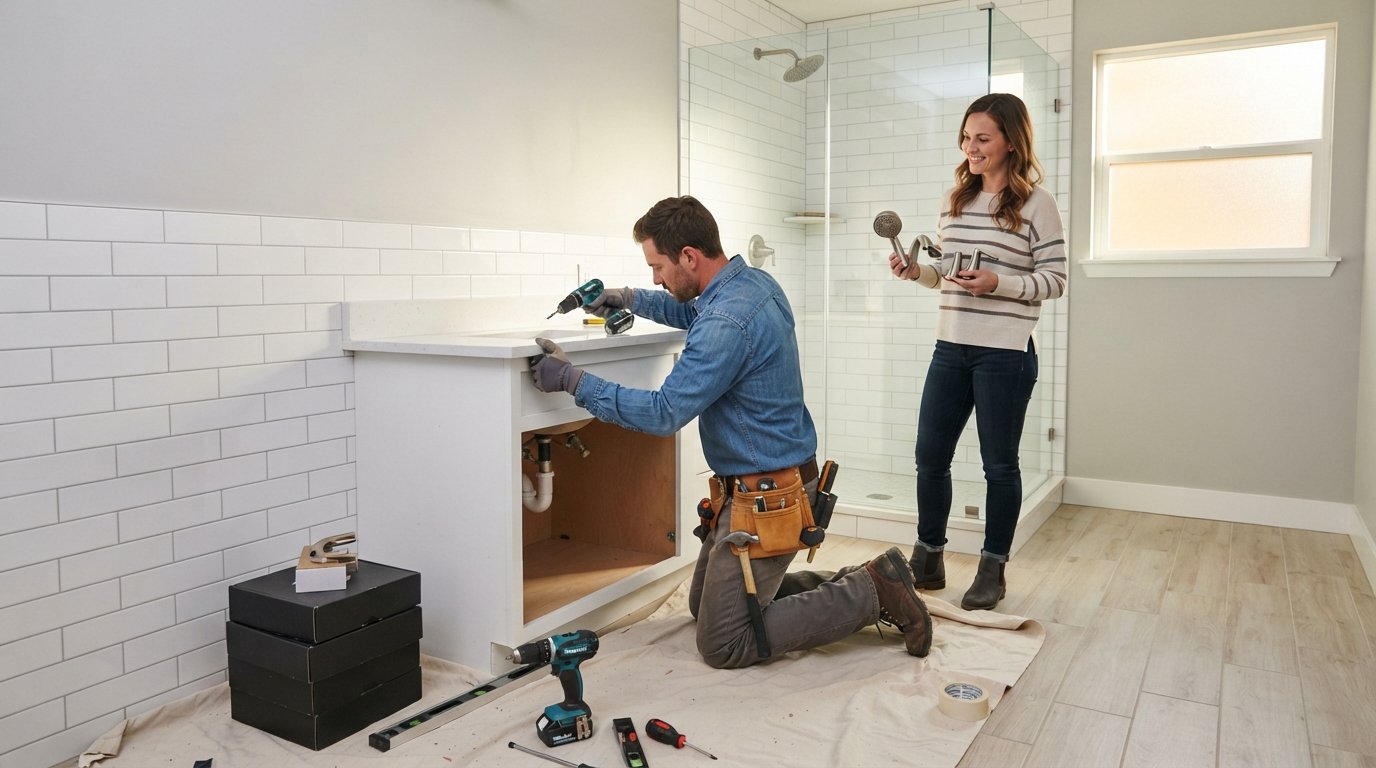
Bathroom Remodel ROI: Smart Upgrades That Pay Off
Discover how to maximize bathroom remodel ROI with smart upgrades, avoid costly mistakes, and hire the right contractor for your project.

By Liam Weston
Learn more about Bathroom Remodel for guides, costs, and what to expect.
Compare Bathroom Remodel Pros Near You

Enter your ZIP code to compare top-rated local professionals and request free quotes.
When you stand in an outdated bathroom, the vision of a fresh, modern space is exciting. Then the question of cost appears, and excitement turns to hesitation. You want a beautiful bathroom, but you also want to make a smart financial decision. The truth is that a bathroom remodel ROI is one of the most favorable in the entire home improvement industry. Unlike a luxury pool or a high-end media room, a well-executed bathroom renovation offers a strong return when you sell your home, and it delivers daily value while you continue to live there.
Understanding the numbers behind your investment is the first step. Real estate reports consistently show that mid-range bathroom remodels recoup between 60% and 70% of their cost at resale. This figure is not a guarantee, but it is a powerful indicator. You are not just spending money on tile and fixtures; you are investing in one of the most used rooms in your house. This article breaks down the specific factors that drive your bathroom remodel ROI, the upgrades that matter most, and the mistakes that can sink your return.
What Determines Your Bathroom Remodel ROI?
Several variables influence how much of your investment you get back. The most significant factor is the scope of the project. A full gut renovation that changes the floor plan and moves plumbing will cost more, but it can also deliver a higher percentage return if the result is a functional, desirable master bath. A simple cosmetic refresh, such as replacing the vanity, mirror, and lighting, costs less and might return an even higher percentage, though the total dollar amount added to your home value will be lower.
Location also plays a massive role. In coastal markets or major metropolitan areas where buyers expect updated homes, a dated bathroom can be a dealbreaker. In more conservative markets, an over-improved bathroom might price you out of the neighborhood. You need to match your renovation level to the general standard of homes around you. Overbuilding is a common mistake that hurts your bathroom remodel ROI. If every other house in your area has standard fiberglass tubs and you install a luxury steam shower with a glass enclosure, you might not see that money again.
The quality of workmanship is the final key variable. A shoddy tile job or crooked cabinet installation will not fool anyone, least of all a home inspector or a savvy buyer. Professional installation protects your investment. This is where choosing the right contractor matters more than choosing the most expensive tile.
High-Value Upgrades That Maximize Return
Not all bathroom features are created equal. To maximize your bathroom remodel ROI, focus on upgrades that combine high perceived value with practical function. Buyers are looking for cleanliness, light, and space. They are not usually looking for extreme personalization. Your goal is to create a neutral, spa-like retreat that appeals to the broadest range of potential buyers.
Here are the top three areas where spending money yields the best financial outcome:
- Lighting and Ventilation: Bright, layered lighting makes a small bathroom feel larger and cleaner. Install a dimmable overhead light, sconces beside the mirror, and a quiet, efficient exhaust fan. Poor ventilation leads to mold and mildew, which is an instant red flag for buyers.
- Water Efficiency: Modern low-flow toilets and WaterSense-labeled fixtures are not just eco-friendly; they are a selling point. Buyers know these features reduce utility bills, making your home more attractive to own.
- Storage Solutions: A floating vanity with soft-close drawers and a dedicated linen cabinet or recessed medicine cabinet adds tremendous functionality. Clutter is the enemy of a relaxing bathroom, and smart storage solves that problem.
These upgrades are relatively affordable for a contractor to install, but they offer a high perceived value. They signal that the home is modern, efficient, and well-maintained. This perception directly supports a higher asking price and a faster sale.
The Cost vs. Value Breakdown: Mid-Range vs. Upscale
Industry data makes a clear distinction between mid-range and upscale remodels. A mid-range bathroom remodel, which typically involves replacing the tub with a new porcelain-enameled steel model, installing a standard vanity, and updating fixtures, might cost around $25,000 in many markets. The resale value of this project often hits around $17,000, giving you a 65% to 70% return on investment.
An upscale remodel, however, tells a different story. This project might include a custom tile shower, a freestanding soaking tub, heated floors, and high-end designer fixtures. The cost can easily climb past $50,000. While the absolute value added to your home is higher, the percentage return often drops to around 55% to 60%. The reason is simple: you are paying for luxury finishes that not every buyer is willing to pay extra for in the home price.
This breakdown does not mean you should avoid an upscale remodel. If you plan to stay in your home for the next ten years, the daily enjoyment of a heated floor and a rain shower might be worth the lower percentage return. Your bathroom remodel ROI is not just about resale; it is about your quality of life. However, if your primary goal is to sell within the next year or two, a mid-range remodel is the financially safer path.
Critical Mistakes That Kill Your ROI
Even with a solid budget, you can make choices that dramatically reduce your return. The most common error is removing a bathtub to create a larger walk-in shower. For families with young children, a bathtub is a non-negotiable necessity. For older buyers, it might be a safety concern, but they often prefer a tub-shower combo. If you have a full bath that serves children, keep the tub. If you are remodeling a primary ensuite that already has a separate tub or shower in a guest bath, then a shower-only design is acceptable.
Another significant mistake is choosing very trendy or bold design elements. A bright orange vanity or a black and white checkerboard floor might be fashionable today, but it will look dated in five years. Buyers who do not share your taste will see a costly demolition project, not a dream bathroom. Stick to neutral palettes like whites, grays, and soft beiges. Add color and personality through towels, rugs, and art, which you can take with you when you move.
Finally, do not compromise on the plumbing. The plumbing behind the walls is the most critical part of the bathroom. If you are doing a full remodel, replacing old galvanized pipes or corroded drain lines is essential. It is not glamorous, but it prevents catastrophic leaks and water damage that can destroy your drywall and flooring. A buyer's home inspection will reveal old or shoddy plumbing, often leading to renegotiations that eat into your profits.
How to Budget and Plan Without Overspending
Setting a realistic budget is the foundation of a profitable remodel. The average cost of a bathroom remodel in the United States ranges from $10,000 to $30,000, depending on the size and scope. A good rule of thumb is to allocate about 1% to 2% of your home's value to a bathroom remodel. If your home is worth $300,000, a $3,000 to $6,000 budget is appropriate for a minor update, while a $15,000 to $25,000 budget is right for a full renovation.
You should always set aside a contingency fund of 10% to 15% of your total budget. This fund covers unexpected issues like rotten subflooring, outdated electrical wiring, or a cracked drain pipe that you only discover after the old tile is ripped out. Without this buffer, you might be forced to make cheap compromises at the end of the project, which ruins the entire look and lowers your bathroom remodel ROI.
To get an accurate picture of costs, you need detailed quotes from multiple contractors. Do not rely on a single estimate. A professional will visit your home, measure the space, and discuss your goals before giving you a price. This is where BuySellRemodel simplifies the process. You can submit one request and receive free estimates from vetted local contractors who specialize in bathroom remodeling. This lets you compare pricing and scope side by side without spending days on the phone.
Hiring the Right Contractor for the Job
The success of your remodel depends heavily on the contractor you choose. The cheapest bid is rarely the best value. A low price often means lower-quality materials, rushed labor, or a lack of insurance. Conversely, the most expensive bid is not always the best either. You need a contractor who communicates clearly, provides a detailed written contract, and has a portfolio of similar work.
When you interview contractors, ask specific questions about their process. How do they protect your home from dust and debris? Who will be on-site every day? How do they handle change orders? A change order is a formal document that outlines any changes to the original scope of work and the associated cost adjustments. A reputable contractor will use these to protect both of you from misunderstandings.
Finding this contractor is easier when you use a curated network like BuySellRemodel. Instead of scrolling through endless online reviews from strangers, you get connected with professionals who have already been vetted. This saves you time and reduces the risk of hiring an unlicensed handyman. You can then focus on the design and material selection, knowing that the installation is in capable hands. This peace of mind is part of the value you get, and it protects your project from costly delays and errors that would otherwise hurt your return.
When to Remodel vs. When to Move
Sometimes, the math does not justify a remodel. If your bathroom is functional but just ugly, and you plan to sell soon, a deep clean and minor cosmetic changes might be enough. Replacing the caulk, painting the cabinets, and updating the hardware can cost under $500 and make a significant difference. This is not a remodel, but it can be a smart pre-sale move.
You should consider a full remodel when the bathroom is not just ugly but also dysfunctional. This includes leaking fixtures, cracked tiles, insufficient lighting, or poor ventilation that has caused mold. These are functional issues that a buyer will likely ask you to fix anyway. Fixing them now allows you to control the design and the cost, ensuring you get the best possible bathroom remodel ROI.
If your home has multiple bathrooms, prioritize the one that makes the biggest first impression. The primary ensuite bathroom is often the deciding factor for buyers, but a visible main floor guest bathroom is also critical. If you only have the budget for one remodel, focus on the one that is most likely to be seen during a tour. A stunning master bath that is hidden upstairs is less influential than a beautiful hall bath that everyone will see.
In the end, the decision comes down to your timeline and your budget. A remodel adds value and comfort, but it also takes time and energy. If you are not ready for the disruption, a strategic refresh might be the better option. If you are ready to invest, a well-planned remodel is one of the best financial decisions you can make for your property.
Your bathroom remodel ROI is not a fixed number; it is a result of your planning, your choices, and your contractor. By focusing on functional upgrades, neutral design, and professional installation, you position yourself to recoup a significant portion of your costs. And you get to enjoy a beautiful, functional space in the meantime. That is a win-win scenario for any homeowner. To get started, request your free estimates today and see what your bathroom could become.