
Aging in Place Home Modifications That Boost Home Value
Smart aging in place home modifications that boost home value, from curbless showers to wider doorways, protect your independence and your equity.

By Liam Weston
Learn more about Home Modification for Accessibility for guides, costs, and what to expect.
Compare Home Modification for Accessibility Pros Near You

Enter your ZIP code to compare top-rated local professionals and request free quotes.
Most homeowners assume that aging in place modifications are purely functional upgrades, the kind of changes you make for safety and comfort with little thought to resale. That assumption costs money. A growing share of American households include at least one adult over 65, and buyers in every age bracket now tour homes asking the same question: could my parents live here, or could I stay here for the next twenty years? Universal design features answer that question before it is asked. When you choose the right aging in place home modifications that boost home value, you protect two things at once: your independence today and your equity tomorrow.
The key word is right. Not every grab bar or ramp recoups its cost, and some projects signal institutional care rather than comfortable living. The modifications that pay off share a common trait: they look like thoughtful design, not medical equipment. Wider doorways, curbless showers, and better lighting read as quality upgrades to any buyer, whether or not they have ever thought about accessibility. This guide walks through the projects with the strongest return, the ones to approach with caution, and how to plan the work so it fits your budget and your long term plans.
Why Aging in Place Upgrades Pay Off at Resale
The demographic math favors these renovations. According to AARP surveys conducted over the past several years, roughly three in four adults over 50 say they want to remain in their current home as they age. That preference has spilled into the broader housing market. Younger buyers who purchase a home often plan to host aging parents, and they value main floor bedrooms, step free entries, and bathrooms that can be used without risk of falling. A home that works for multiple generations simply appeals to more people, and broader appeal supports stronger offers.
There is also a practical inspection angle. Standard home inspections flag trip hazards, poor lighting, and bathrooms without safety features, especially in older housing stock. Buyers use those findings as negotiating leverage. When your home already addresses those issues, you remove ammunition from the negotiation and shorten the list of repairs a buyer can demand. That translates into fewer concessions at closing, which is real money in your pocket.
Finally, consider the alternative cost. A single fall can lead to a hospital stay, rehabilitation, and in many cases a permanent move to assisted living, which runs tens of thousands of dollars per year in most states. Preventive modifications that cost a few thousand dollars compare very favorably against that outcome. Even if you never sell, the improvements function like insurance with a visible asset attached.
The Modifications With the Strongest Return on Investment
Not all accessibility projects are created equal. The following upgrades consistently appear on real estate agent wish lists, appraiser notes, and buyer tour feedback. They combine safety, aesthetics, and broad market appeal, which is the combination that protects value.
- Zero threshold or curbless showers. A walk in shower with a low or eliminated curb is the single most requested bathroom feature among older buyers. It also photographs beautifully, which matters in online listings.
- Wider doorways and hallways. Expanding a 28 inch doorway to 32 or 36 inches costs far less during a larger remodel than as a standalone job. It makes the whole main floor feel more open.
- Main floor primary bedroom and laundry. If your home already has these, highlight them. If it does not, converting a den or dining room into a first floor bedroom is often the highest value accessibility project you can complete.
- Lever style door and faucet handles. Inexpensive, easy to install, and universally appreciated. They also update the look of older fixtures.
- Improved lighting with motion sensors. Bright, layered lighting reduces falls and makes rooms feel larger. Motion activated night lights in hallways and bathrooms cost very little.
Notice a pattern: none of these features scream accessibility. A curbless shower looks like a spa feature. Lever handles look modern. Motion lighting looks smart. That is exactly why they hold value. Buyers pay for homes that feel current and comfortable, and these modifications deliver both while quietly removing barriers.
If your project also touches the exterior, pair it with strong street presence. Our guide to curb appeal ideas that boost home value fast covers low cost exterior upgrades that complement an interior accessibility remodel and help the whole property show better.
Bathroom Modifications: The Highest Impact Room
Bathrooms cause more falls than any other room in the house, and they are also the room buyers scrutinize most closely. That makes them the best place to start an aging in place plan. A well executed accessible bathroom can return a large share of its cost at resale, especially when the design avoids a clinical look.
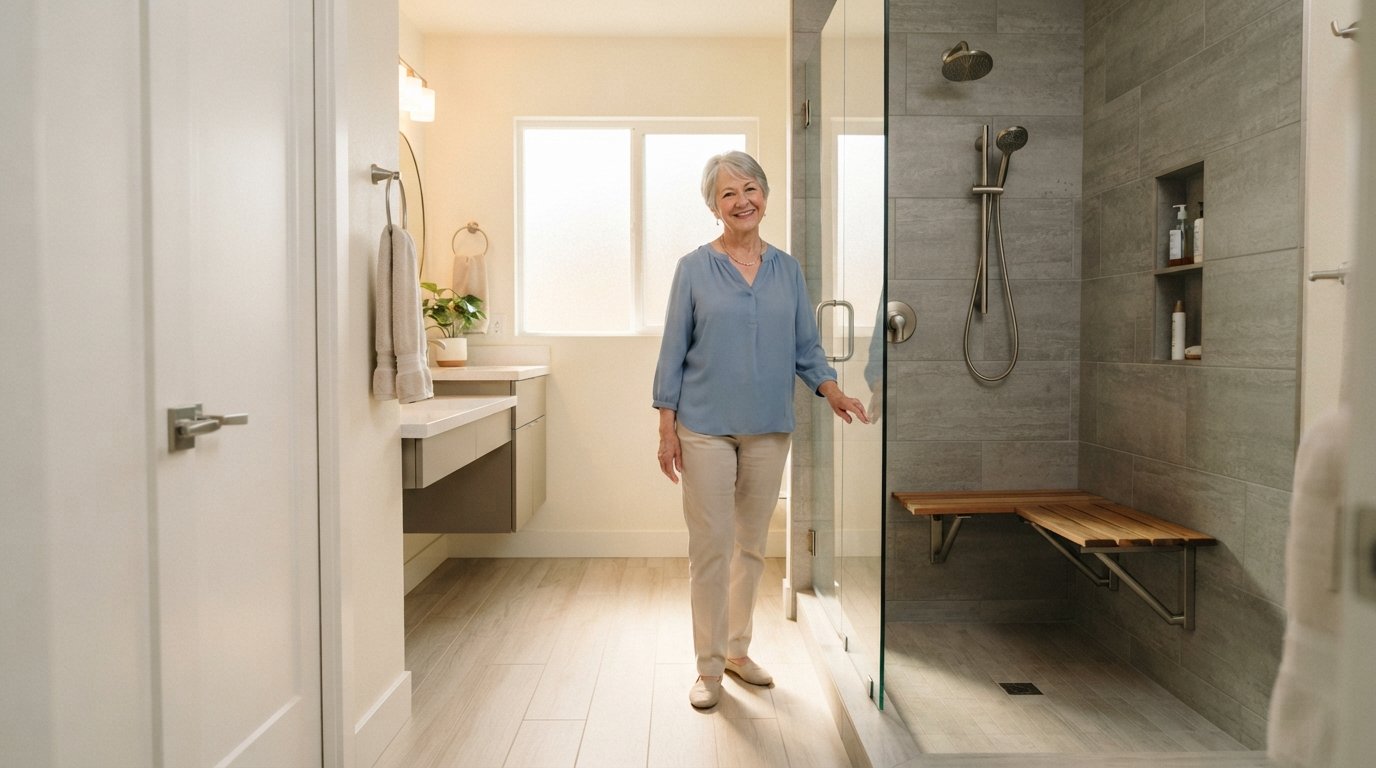
The centerpiece is the shower. A curbless design with a linear drain, a built in bench, and a handheld shower head serves everyone: an older resident, a parent bathing a child, or a buyer who simply likes the clean look. Add blocking in the walls during construction so grab bars can be installed later without tearing out tile, or install bars that match the finish of the fixtures so they read as design details rather than hospital hardware.
Other high value bathroom changes include comfort height toilets (about 17 to 19 inches tall), non slip flooring with a matte finish, and a vanity with open space underneath that can accommodate a stool or wheelchair. If you are already planning a larger renovation, fold these choices into the scope from the beginning. Retrofitting later costs significantly more because it means undoing finished work. For homeowners weighing a full remodel, our partners at HomeRemodelingsContractors help plan affordable improvements and connect you with experienced local pros, which is a smart first step before committing to a design.
Kitchen and Living Space Upgrades That Work for Every Age
Kitchens present a different challenge. The goal is not to make the room look accessible but to remove the small obstacles that accumulate with age. A few targeted changes accomplish that without a full gut renovation.
Start with the work triangle: the distance between sink, stove, and refrigerator. A layout that requires long carries across the room becomes exhausting over time. If you are remodeling anyway, tighten that spacing and add a landing area beside the stove and fridge so hot pans and heavy items never travel far. Pull out shelves, deep drawers instead of lower cabinets, and a microwave built into a lower cabinet reduce reaching and bending. These features are also popular with younger buyers, who see them as modern conveniences.
In living areas, the priorities shift to flooring and lighting. Thick carpet and loose area rugs are trip hazards, so hard flooring with a subtle texture, or low pile carpet with a firm pad, is the safer and more valuable choice. Rocker style light switches and outlets placed higher on the wall reduce strain and cost very little to install during an electrical update. If you have a two story home, adding a chair lift or planning space for one later is worth discussing with a contractor, though the return on a stairlift itself is modest since many buyers remove them.
Entryways, Doorways, and Outdoor Access
The path into a home is where accessibility problems begin. A step at the front door, a narrow threshold, or a slippery walkway can undo every improvement inside. Fortunately, these fixes often improve curb appeal at the same time, which doubles their value.
A no step entry is the gold standard. This can mean a gently sloped walkway, a low profile threshold, or a small landing with a gradual ramp integrated into the landscaping. When the ramp is designed as part of a paver walkway or a widened porch, it reads as architecture rather than a medical addition. Widening the front door to 36 inches and installing a lever handle completes the entry upgrade. Interior doorways matter too: a 32 inch clear opening allows a walker or wheelchair to pass, and the change makes moving furniture easier for everyone.
Outdoor living areas deserve the same attention. Non slip decking, sturdy handrails on stairs, and even lighting along paths reduce risk and extend the usable season. These improvements overlap heavily with general outdoor living upgrades, so if you are already planning a patio or deck project, add the accessibility details during construction and capture both benefits at once.
Smart Home Technology as an Accessibility Feature
Smart home devices have quietly become some of the most cost effective aging in place tools available, and they add resale value at the same time. A video doorbell lets you see who is at the door without crossing the house. Smart locks mean no fumbling with keys. Voice assistants control lights, thermostats, and even door locks from a chair or bed.
For households planning ahead, a few additions are especially worthwhile. Smart lighting that turns on automatically at night reduces falls on the way to the bathroom. A smart thermostat eliminates trips to adjust the temperature and can lower energy bills, which buyers appreciate. Medical alert systems and fall detection devices are worth evaluating, though they are personal purchases rather than permanent fixtures and generally do not transfer with the home.
One caution: avoid technology that becomes obsolete quickly or that requires a subscription the next owner may not want. Hardwired, standard protocol devices (such as those using common smart home platforms) hold value better than proprietary gadgets. If you are unsure what to prioritize, a local contractor familiar with both electrical work and smart home integration can help you choose systems that will still make sense in five years.
Planning Your Project and Budget
The smartest way to approach aging in place modifications is to phase them, starting with the changes that deliver the most safety and value per dollar. A reasonable sequence looks like this:
- Audit the home. Walk through each room and note trip hazards, hard to reach storage, poor lighting, and bathroom risks. Include the entry and outdoor paths.
- Fix the highest risk items first. Bathroom safety and entry access usually top the list, followed by lighting and door hardware.
- Bundle accessibility upgrades with planned renovations. If a bathroom or kitchen remodel is already on your list, add the accessible features during that project to avoid paying twice for labor.
- Get multiple estimates. Costs vary widely by region and contractor. Request free estimates from at least three vetted local professionals so you can compare scope and pricing fairly.
- Keep documentation. Save permits, receipts, and product specifications. At resale, documented upgrades reassure buyers and support your asking price.
Budget expectations vary by scope. Simple changes such as lever handles, motion lighting, and grab bars can be completed for a few hundred dollars. A curbless shower conversion typically runs several thousand dollars depending on tile and plumbing work. Structural changes like widening doorways or converting a room to a main floor bedroom cost more but deliver the largest lifestyle and resale gains. The most important rule is to spend on features that look like upgrades, not medical adaptations, because those are the ones buyers reward.
If you are not sure where to start, begin with a conversation rather than a contract. A reputable local contractor can walk your home, identify the projects with the best combination of safety and value, and give you a realistic estimate before you commit. That small step prevents the most common mistake in this category of remodeling: overbuilding accessibility in ways that do not match how you actually live or what your local market values.
Aging in place modifications are not a concession to getting older. They are a practical investment in comfort, safety, and long term property value, and the best ones blend so naturally into a home that guests never notice them. Whether you plan to stay for decades or sell in a few years, the upgrades that remove barriers while elevating design will keep paying you back.